When the sessions for Brilliant Trees reconvened in London, following the initial gathering at Hansa Tonstudio in Berlin, the location was JAM studios situated in Tollington Park, North London. Joining co-producer Steve Nye for this stint was engineer Peter Williams. ‘JAM was owned by two brothers, the Nordmarks, Swedes, and their sister Lena ran the whole place. It was the old Decca 4 studio and became JAM. We used that a lot because it was a reasonable price, the quality of the equipment was good, and so we did a number of things there,’ Peter told me. ‘JAM, from memory, was a Harrison desk, Studer 24 track and Studer ½” 30 inch per second mastering, and a pair of big Urei speakers, 513s or whatever they are called, a bunch of amps etc.’
A familiar and reliable set up was no doubt welcome to David Sylvian and co-producer Steve Nye, who had battled technical issues in Hansa’s basement, hindering the album’s progress despite the fact that creative spirits had run high. Sylvian: ‘I wasn’t in the best studio in the building, it was like falling to pieces actually. For the first week we couldn’t record anything, you know, it was just trying to get the machine into record…I didn’t get as much done as I wanted by the end of that period of time, and then I decided I’m definitely not going to carry on recording there, you know, it was becoming so slow. I went back to London, wrote some more material, and went back into the studio there.’
Peter’s introduction to the project came through Nye. ‘I met Steve and then we first worked together on the Murray Head album, Shade. We also did an ep for The Cure called The Walk. I really liked working with Steve, he’s incredibly talented. Prior to being a producer he was an engineer at Air in Dave Harries’ stable of engineers, and so he had a really good engineering background, but his skill, I think, was much more in the production and interpretation of the artist’s intentions.
‘I had heard Japan’s songs on the radio, but did not have the albums, so I was not overly familiar. I was happy to be working and being paid for what I enjoyed doing.
‘Steve was in Germany with David and did those sessions, and he brought back a whole bunch of 24-tracks which were in various states. They were engineered well because Steve was there and he knew engineering, so they were technically very good. We recorded some new stuff and then we did a bunch of overdubs on the backing tracks from Hansa.’
Three new tracks would emerge from the recordings in London: ‘Nostalgia’, ‘Backwaters’ and ‘The Ink in the Well’. The first stage was often a home recording. Sylvian: ‘Sometimes I write on a four track, I just put down some very rough ideas and just start building up on that until something starts to form. Pieces like ‘Nostalgia’…tend to come out of that – really just a rhythm with a drone, building things on top of it.’ He described the process that yielded ‘Nostalgia’ as ‘just messing about, waiting for something to happen. They’re the pieces I don’t think about much: they fall into place fairly naturally.’ (1986)
Peter Williams: ‘David obviously did demos and would come in and play a piece to Steve. They’d have a conversation about that and I’d just listen to it and think, “Oh, I see where this is going to go,” and then cook up stuff in my head.’
Whereas the time at Hansa is well documented through the photographs of various participants and visitors to the studio, less has surfaced about the work at JAM. But through Peter’s memories we can get a sense of the proceedings and an insight into some of the technicalities of engineering the album. ‘I remember Steve doing piano arranging with David, where he’d show him something and David would resonate with that. I always thought Steve had a very light touch, and so he’d listen to what the artist wanted and then give it structure. And because he was a really quite talented musician in his own right with the Penguin Cafe Orchestra and so on, he’d often just fiddle with the piano and figure out, well this would work and that wouldn’t. A light hand on the tiller would be my description.
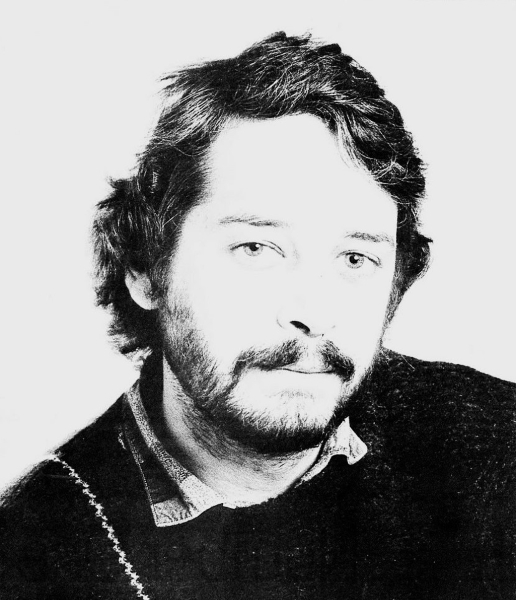
‘He would get to the gist of whatever the particular song was quite quickly, in terms of framing out what the song was about, what was the intention and then helping to transform that into something that was a piece of music, had a beginning, a middle and an end, etc., and putting all the structure around it. Steve was very empathetic to whatever the artist was trying to get to. And he was a very deep thinker as well. He was very detail oriented, so was David, and in those days that was what I did, I was particularly good at getting soundscapes to “sit” in a particular way.
‘I was pretty technical even back in those days. I would bring my old dual trace oscilloscope and look at the phase of stuff and just go, “Oh yeah, that’s really good” – or not. And I bought a little pair of BBC monitors, LS3/5As, which I would listen to stuff through.
‘Steve would pretty much let me get on with it. Sometimes he’d want to do a balance, or I would set it up and then he would sit and fiddle with it. And often he would be fiddling to see what would happen if he changed this or that, what that emphasis would be. But he pretty much let me do whatever I was doing because I apparently was pretty good at it.
‘Steve was pretty easy to work with for most of the time. The pressure was on him because he was the producer and I was just an engineer and I was being paid hourly. But I had a certain amount of influence. Like the whole Mark Isham connection was through me.’ (Read more here.)
Holger Czukay is credited with performances on both ‘Nostalgia’ and ‘Backwaters’, and I’d long wondered whether his contributions were fragments from the Berlin sessions or whether Sylvian and he had reignited their evident chemistry back in the UK. Peter: ‘Yes, he was there with his little dictaphone machines. He was truly an eccentric, in the nicest possible way. Recording those things was weird. We used the room sometimes to get the ambience that we wanted, though the character of the sound was primarily what came out of the dictaphone. I would get something and Steve would say, “yeah, I really like that.” Because all of the Sylvian stuff was very much about taking a sonic landscape and filling it in, making it complete. That really amounted to where David’s head was at, and Steve’s head. And we made a landscape that was quite interesting.
‘Holger’s got these little devices, and I’m trying not to think, “This is a joke!” But no, he was really serious about what he wanted out of it, and so it’s, “Ok, you’re the boss.” So we’d figure out what we want to take direct, what we want to mic, to give him what he wanted within the context of what David was looking for. Because Holger is playing with basically a lot of recorded sounds, it’s very easy for that to be put in a little box, and that isn’t the tone or the style of this record. So you’d maybe add a bit of reverb with one of the Lexicons or something, and a little bit of double tracking, give it a bit of depth. You’re trying to look for something that fits in to this particular part of the whole sonic landscape and fitted musically, because some of those little musical refrains were in fact really like a little solo. So, the challenge was: how do you take a cassette thing through into a solo instrument that sounded credible?
‘In these circumstances, different people have different relationships with the engineering type in the room. Holger knew what he wanted, so my job was to make that happen in the context of what Steve wanted and what David wanted, and make everybody happy. He had his way of doing it.
‘The quality of the output of Holger’s devices was not hi-fidelity, but that wasn’t the point.’
Sylvian has observed that the degraded nature of these borrowed sounds and voices convey something far more emotionally compelling than a clean recording might achieve. ‘It was the organic nature of what he was doing,’ says Peter. ‘Because here was a pretty primitive machine. It wasn’t digital, but you were trying to make this organic sounding thing. In my brain, I was equating it to the sound of an owl or the sound of a bird, or a sound of something in the jungle trying to eat you. It was all those sounds which were very very organic – but he’d done it with this dictaphone thing.’
‘Listening to the album, you can feel real emotions which is not the case with pop or rock music at the moment,’ said Sylvian in an interview to mark the album’s release. ‘Like the feeling emanating from the Arabic singing at the start of ‘Nostalgia’?,’ enquired his interviewer. Sylvian: ‘Absolutely. I love this kind of music. This vocal part comes from a record actually. The album [Brilliant Trees] is composed of many different vocal samples but they are not meant to represent a particular country or region of the world, but instead they represent emotions, landscapes, follies…’
Whether it was Sylvian or Czukay who selected the beguiling sample for the opening of the song is unknown to me, but it is taken from an album first released in 1971 entitled Persian Love Songs and Mystic Chants, sung by Shusha Guppy. ‘This recording,’ state the liner notes, ‘dedicated entirely to her Persian roots, captures a performance of exquisitely beautiful songs of love, betrothal, separation and mystical wisdom, sung in the intimate and sensitive style that has made Shusha an internationally known performer. These are songs of deep, heartfelt sincerity and unpretentious subtlety, that transcend all cultural or national boundaries, touching the listener’s spirit.’

‘Masnavi’ is a stand-out track for me from the collection, a traditional mystic chant from The Book of Rumi, a flute and Shusha’s voice exchanging call and response. However, the opening of ‘Nostalgia’ comes from the track, ‘The Silver Gun’, which is performed unaccompanied, being a traditional song ‘Tofung-e-noqreh’ from Shiraz, southern Iran. The introductory chant before the lyric is what we hear on Sylvian’s record, the words subsequently proclaiming (in translation):
‘They say a man’s best friend is his horse.
But I say it’s his gun,
For what can a horseman do without a gun?
I sold my silver-barrelled gun
And bought a brocade gown for my beloved:
She sent it back, refused it,
Now I have no gun and no love!’
Where Guppy’s vocal is acapella on the original recording, now her voice is anchored by the deliciously deep drone of a synthesiser and surrounded by a sparse arrangement of percussion and drum strikes. We can even hear the surface noise of the vinyl, as a nod to the source material.
‘Steve Jansen was really good, a great drummer,’ recalls Peter. ‘We wanted a tonal output from the drums as much as we wanted an impact part. With the JAM room, when I mic’d drum kits I’d be very conscious of the placement of the ambient mics, and again I’d use the oscilloscope to make sure that everything is in phase. So you could have a certain ambience which would not detract from the sound. So if you were looking for like a tone, the whole thing would be additive rather than it then reverberating and negating that tone.
‘It was a fairly physics-oriented way of thinking about how to record drums which I realised later was not generally how people thought about these things, but that’s because I’m a geek! I very much liked using whatever the room could bring to the tonal quality of whatever it is. And again, creating this space, this sound space or stage, into which you would put whatever set of instruments, so that the whole thing would have a vertical and a horizonal and a depth aspect to it.
‘With a drum kit, you’ve got the actual impact of the first strike. You want to capture that, but that’s going to have a very fast rise time and it’s very peaky. You still want that, but you want it in the context of the room in which it’s occurring. So you’d mix the direct, the snare drum mic which would be like a Shure 57 or an AKG414 which is pointed at the drum and then a pair of U87s sitting off in the distance, or AKG414s, which would take the ambience, and then you’d blend that in. Then you’d make a decision as to how dynamic you want that. If the drummer’s really good, that’s part of the equation… With the calibre of musicians we had with David, that was never an issue.
‘Depending on what records you were trying to make, the constraint of going to vinyl itself limited what you could do… you couldn’t have some of the dynamics you can have today with cd and digital. So you were very mindful of trying to effectively make a three-dimensional space into which you were going to paint your audio picture.’
Sylvian’s vocal is ushered in by bright guitar, invading the scene like the gold of dappled sunlight through a canopy of trees, and as he sings there is a faint harmony from the female voice.
‘Voices heard in fields of green
Their joy their calm and luxury
Are lost within the wanderings of my mind
I’m cutting branches from the trees
Shaped by years of memories
To exorcise the ghosts from inside of me
The sound of waves in a pool of water
I’m drowning in my nostalgia’
Sylvian was asked about the line, ‘the sound of waves in a pool of water’: ‘Is it a metaphor?’ ‘That could be taken so many ways,’ he replied. ‘It means more than one thing for me. ‘The sound of waves in a pool of water’ could mean that a small thing can conjure up something, an image in your mind or a memory, bring back something of great strength to you, of importance to you. A very small thing can spark it off. It has that quality about it…’
The words may, in part, be imagery borrowed from the title of Yukio Mishima’s novel The Sound of Waves, following on from the earlier reference to ‘sun and steel’ in ‘Bamboo Music’ and, most famously, Forbidden Colours (read more here). Whatever the truth in that, Sylvian was clear that the lyric was an integral part of the song. ‘By taking it out of its context and just talking about that one line, you are isolating it and not giving it its power that it could have within the context of the rest of the lyrics and the music…The whole thing goes along with the piece of music…it’s the words in the context of the music that allows the imagination its freedom to run.’
Asked about the album’s themes, he shared: ‘Very often I think I know what a song is about while I’m writing it, only to realise later I meant something totally different. However, I can tell you that I’m mainly talking about myself, my own experience. ‘Nostalgia’ for example talks about changing skin, changing one’s concept of relationship with the people in your life.’
Elsewhere he would be more specific: ‘That was definitely about the breaking up of the band and losing the friendship of the people involved in the band, letting it all go. Because that was harder than letting go of the band musically, letting go of the friendships. And there was a lot of hostility in the initial break up. It was hard.’ (2003)
The few lines of lyrics contain echoes for all Japan fans. The commercial success of the band’s hit ‘Ghosts’ was still recent history when the words were penned, and Exorcising Ghosts would be the title of a Virgin double-album compilation of their work, released in November 1984 just months after Brilliant Trees. Coincidence or not, the instrumental b-side to Mick Karn’s 1982 single ‘Sensitive’ was entitled ‘The Sound of Waves’.
There was also a question as to whether the track took its title from Andrei Tarkovsky’s 1983 film Nostalghia, which Sylvian admitted had ‘left a major impression’ on him (2021). Sylvian has stated that the song wasn’t specifically named after the movie, although when questioned he said, ‘There is some of that because I’m such a film fan, but it’s always turned back to reflect on my own life.’ (2003)
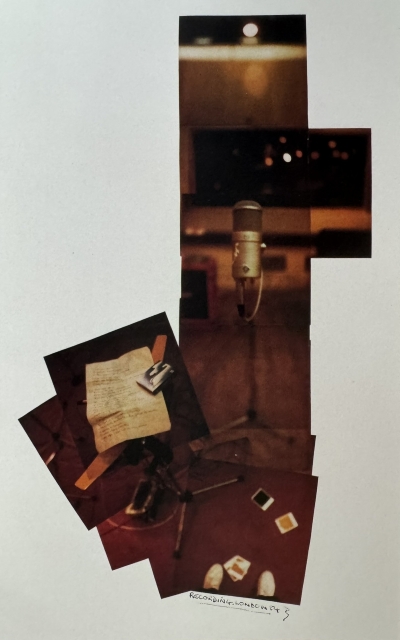
Peter Williams remembers recording Sylvian’s vocals in London. ‘David’s obviously got a really strong vibrato in his voice and it was tricky sometimes to get it to “sit” because he’d sing something and there’s be too much variation. And yet you didn’t want to squish it down so much so it lost its dynamics or its key character.
‘So there was quite a bit of fiddling round with choice of microphones and where you’re putting them, and of course this was all back in the day when you had the coat hanger with the nylon stocking across to stop the sibilance. And again, the room gave a certain character to things. So generally I would run it through some sort of compressor or limiter just to make sure that I’m not getting something that’s going to over-saturate the tape, and then I’d generally do as little EQ as I could get away with and rely on the microphone positioning. And David would sing his heart out.
‘Part of it was to make sure that in his cans he had the right balance to spur him to get the particular thing we were looking for. Steve Nye sometimes would listen to what was going to be sent out and change it, so that he could accentuate or take down a particular element because he wanted David to sing to basically what he was hearing. He’d want to listen to that so he could adjust what David was going to hear.’
The music paints a luxurious scene in our mind’s eye, Sylvian’s guitar to the fore until the flugelhorn breaks through. David said that ‘Nostalgia’ was an exception to the approach taken across much of the album of allowing the musicians significant freedom to interpret the material. ‘I had nearly everything worked out except the trumpet solo…I didn’t have to struggle with it, like I do with some pieces sometimes. It was a very easy track to record.’ It was Kenny Wheeler’s playing with pianist John Taylor (who would subsequently record with Sylvian, notably on ‘Laughter and Forgetting’) and vocalist Norma Winstone that had particularly caught his attention. ‘I tended to lean towards the work he did with Azimuth more than his own albums,’ he said, drawing attention to the ‘purity of tone’ that was in evidence, whereas Kenny’s solo records represented ‘a far more dynamic form of music.’ The invitation to the JAM sessions was likely a surprise: ‘I don’t think he’s very aware of the kind of music I’m doing.’ (1986)
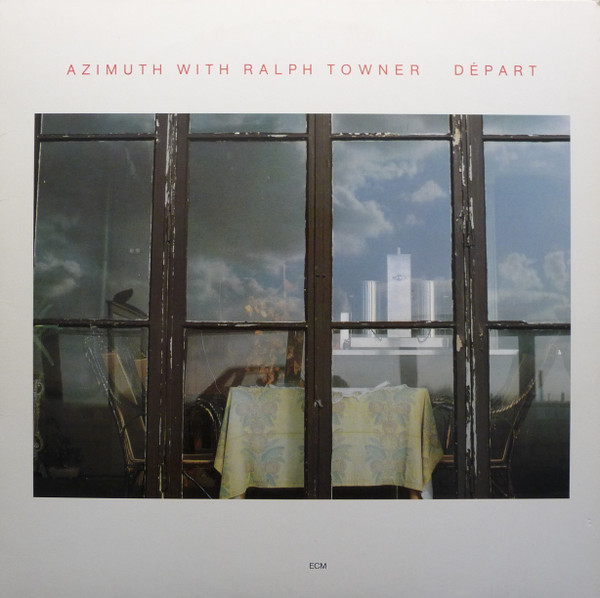
Azimuth had released three albums on ECM Records by this time, of which the latest was Départ (1980), featuring guest guitarist Ralph Towner. For the opening track, ‘The Longest Day’, Wheeler’s playing is surrounded by the swirl of a wordless Winstone vocal echoing Taylor’s piano lines, the brass bearing all the qualities that Sylvian described. Some of the inflections heard here would become familiar to listeners of David’s work over multiple releases to come.
David had heard Kenny’s work because the LPs were in his girlfriend’s collection. The trumpeter told a fan after a 1988 gig that it was ‘Yuka Fujii’s admiration of his “softer” style of playing that resulted in his association with David Sylvian,’ further commenting that, ‘it was a real change just to be himself’ in the recording session.
‘I choose my musicians carefully,’ said Sylvian. ‘I feel if I listen to a piece of music and it moves me emotionally then I have something, somewhere in common with the person who is performing it. Maybe not in character, but emotionally. So I feel if I go by those guidelines I can’t go wrong. If I bring them in to play on the right pieces something will always happen, given time and the right environment…
‘I give them as much scope as possible because I’m not a soloist. All I can do is create the right environment for them to work in, or what I feel is the right environment for them to work in. Which sometimes can relate very closely to their own recordings, which is something I do sometimes. Or sometimes I try to draw them away, but not too far that they would feel alienated by it. Kenny is probably the exception to that rule.’ (1986)
Wheeler: ‘I didn’t like sessions at all. I hated it, but it helped me to bring up my family. I used to get a lot of those sessions where I’d go in and have to play some kind of solo over something and they were often very unpleasant…They would say, “Well, we like that note and that bar, but could you change that note on the second bar.” You personally had no idea what they were after, but they seemed to know. I really dreaded and hated them. So, it was a pleasant surprise to go and work with David when they told me to play over that track and never interfered or bothered with me and most of the time they liked what I did and it was very nice.’ (1990)
As was Sylvian’s primary method of working, studio work was done one-on-one with each musician. ‘The melancholic feeling in the Azimuth albums,’ he said, ‘was maybe in keeping with the character that you meet in Kenny Wheeler’ (1986). Peter Williams had a practical recollection of the session: ‘All English horn sections are always slightly behind the beat. Everybody in England was always just behind it. That was just part of the thing, you know.’ ‘I never met the other musicians,’ remembered Wheeler, ‘at least I didn’t meet them at recording, I met them by sound, over the tape and in my cans…It was a very pleasant surprise playing with him.’ (1990)
Mixing was also undertaken in London, with the album credits indicating that the majority of tracks were mixed by Steve Nye, assisted by David Sylvian and Peter Williams (the exceptions being ‘The Ink in the Well’ and ‘Backwaters’ where the final mix was by David Sylvian and Nigel Walker, assisted by Matt Butler).
I was intrigued to find out more about the process from Peter. ‘Generally the way it would work is we’d set up a mix, so I’d have the 24 track and we’re going to go to half inch 30 inches per second tape. I would set up a basic mix, a basic balance. So I’d listen to everything individually, get it all to sit, and then Steve would take over and he’d tweak some stuff, or he’d play with it and get it so he’s like, “yeah, that’s pretty good.” And then often we’d have a conversation – “shall we try a bit of this on that?” or “this is what I’ve done to the bass, I think we could do a bit more of that…”
‘Then we’d play it back, and often you’re actually moving the faders, this is pre-automation, and so bring something up, take something down. I know I did the basic mixes, got the basic sound structures, laid it all out how I thought it would work, and then Steve would often modify that in a sort of empathetic way that he wanted it to come across. Then David would listen to it, and generally we were already at the 80% plus stage of where it was going to be. We were already tuned in to the same thing, everybody was pretty much on the same page, it was not something where it was, “Oh, that sounds like sh*t let’s get rid of it!”
‘But there would then be decisions: “Well, do we want to lift this out more?”, and so there’d be little things that you’d do. Sometimes I might do the mix and I might lift a few things here and there, and we’d record it and we’d play it back and Steve would say, “That’s good, I really like that,” as he’d smoke another cigarette, or “Change that, do this.” So he would tell me what he wanted me to do and I would do that. I am remembering it as fairly collaborative. At the time I very much deferred to Steve, but I had my own ideas. Steve was pretty welcoming about adopting them when they fitted in with what he wanted. Or I might do something that he hadn’t thought of, because I’m creative, and he’d go, “Oh I really like that”.’
Did Holger’s material lead to particular challenges? ‘Well, he comes and he does the recording and that’s fine, but then mixing it you’re going, “Ok, this is what I’ve got to work with.” So, for instance, I do not want a whole bunch of hiss on it that’s been generated, so I’m going to clean that out. There are tricks you can do. You can sort of hide the hiss. Or you selectively pull out like a comb filter, you pull out certain frequencies with very high Q – so very steep – and that will still give you the ambience that the hiss gives, which is what Holger was thinking was a good thing, and yet not make it so it’s unrecordable or you couldn’t cut it into a vinyl record, because it would be so much high frequency hiss and it would just kill it. It’s like trying to figure out a bit of a puzzle.’
What are Peter’s lasting impressions of his involvement with Brilliant Trees, a time he told me was the peak of his music recording career? ‘David as a person: wonderful human being, very ethereal, very intellectual, just a really good person – which in the music industry is not necessarily the case. He was very much a perfectionist. And the album sounds great. I had a lot to do with that, but I don’t want to downplay either Steve’s or David’s input. Because, you know, David was the artist, I was just trying to make a record he wanted made, but to get the best out of him.’
As for Sylvian, looking back on ‘Nostalgia’ across the decades: ‘I felt good about the track on completion. It spoke to a particular moment in time. I’m not prone to feelings of nostalgia in general (there’s only the eternal now). The evolution of a life is far from linear but how undesirable to be the same person at 40 that we were at 25? At 63?
‘To create work is experience enough. It’s something offered to those willing to listen and embrace. It’s not for the writer to indulge in. It’s released into the world and stands or falls based on its own merits or lack thereof.’ (2021)
‘Nostalgia’
Holger Czukay – dictaphone; Steve Jansen – drums, percussion; Steve Nye – synthesiser; David Sylvian – vocals, guitars, synthesisers, tapes; Kenny Wheeler – flugelhorn
Music and lyrics by David Sylvian
Produced by David Sylvian and Steve Nye. From Brilliant Trees, Virgin, 1984
Mixed by Steve Nye, assisted by David Sylvian and Peter Williams
Brilliant Trees was recorded in London and Berlin, 1983/1984
Lyrics © copyright samadhisound publishing
‘Nostalgia’ – official YouTube link. It is highly recommended to listen to this music via physical media or lossless digital file. If you are able to, please support the artists by purchasing rather than streaming music.
Download links: ‘Nostalgia’ (Apple); ‘The Silver Gun’ (Apple); ‘Masnavi’ (Apple); ‘The Longest Day’ (Apple)
Physical media links: Brilliant Trees (Amazon) (coloured vinyl reissue burningshed); Persian Love Songs and Mystic Chants (discogs); Départ (discogs)
Thank you to Peter Williams for his generous contribution to this article. Quotes from David Sylvian are from interviews conducted in 1984 unless otherwise indicated. Full sources and acknowledgements for this article can be found here.
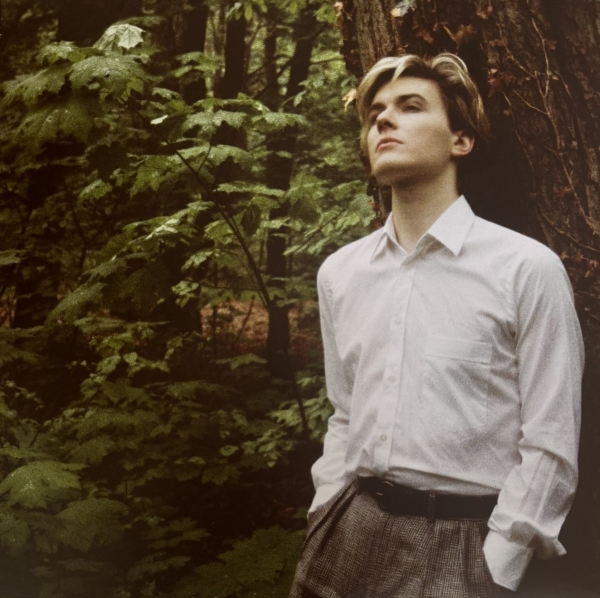
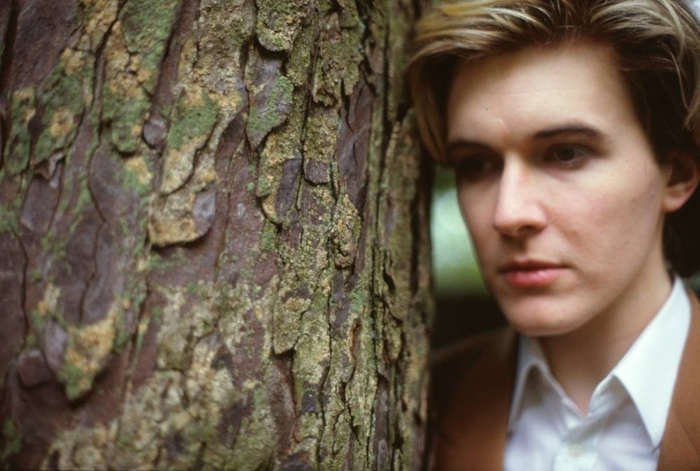
The featured image is from the inner sleeve of the black vinyl reissue of Brilliant Trees, a photograph by Yuka Fujii taken from the sessions for the cover picture at Parc de Saint-Cloud, southwest of Paris.
‘The lyric is clearly (I hope) about being unable to let go of the recent past. An intense sense of loss.’ David Sylvian, 2021
More about Brilliant Trees:
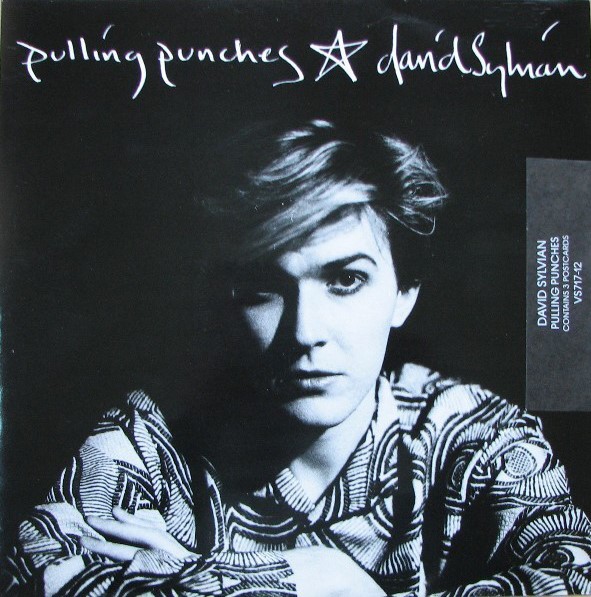
Pulling Punches
The Ink in the Well
Red Guitar
Weathered Wall
Brilliant Trees
related:
Forbidden Colours (version)

Excellent as always. Really interesting read. Thank you for taking such pains.
LikeLiked by 1 person
Thanks, a fascinating deep dive into the recording process with Peter. So timely to hear The Silver Gun and reflect on life in Iran. Nostalgia is such a beautifully crafted song. Shusha’s voice sets it up perfectly.
LikeLiked by 1 person
The longer one is around, the more relevant is the concept, in my view. The feelings are more intense, proportionate to the happiness, excitement of the memories…
I liked David’s reference to (initial) four track recording (something I’ve tinkered with, on my Yamaha), if a harmonic structure or even an early melodic riff is strong enough, it will come through…
It’s great seeing a photo of Steve Nye, after fifty years of knowing (and owning – vinyl LP, CD and digital) his work and up to today – not being able to put a face to his work…
In fact a great selection of photos the VB, to accompany the great writing. Thanks. J.
LikeLiked by 1 person
Thank you for the kind words, they are truly appreciated.
I have been reminded in a social media comment that The Sound of Waves is a novel by Yukio Mishima. I will add this reference to the text. (Thank you, Nick Currie).
LikeLike
Amazing track. Wonderful piece. Thank you!
LikeLiked by 1 person
I have always loved this track and the album, so much so that when I started creating my own music I made a cover of Nostalgia
https://youtu.be/AfniATEoIc8?si=XppuRpXgqid_09v3
LikeLike