Cancelled Pieces – Playground Martyrs (reprise)

Injecting creativity

Anja Garbarek’s 2001 album Smiling & Waving is notable for a number of reasons. Firstly, two tracks are produced by Mark Hollis of Talk Talk: an extremely rare foray into music after his self-titled album, released in 1998, signalled a retreat from public to private life. That album had been playing in a London record store when Anja visited whilst preparing for the recording of Smiling & Waving. ‘I heard the most beautiful music,’ she told Anil Prasad in an interview for his Innerviews site. ‘It had the same spirit I wanted to achieve with the music I was currently working on. It turned out to be Mark Hollis’ solo album. I went straight home and called the record company and asked them what my chances were of working with Mark. I presumed he was still active, but they told me that he had retired from the music industry after releasing his solo album. Somehow, they managed to set up a meeting with him and we got on really well.’ (2019)

Continue reading “Cancelled Pieces – Playground Martyrs (reprise)”

Life Without Buildings

‘an exciting shift’

‘One of the main influences for me is travelling. I really enjoy travelling and it stimulates the imagination,’ shared Mick Karn in a 1996 interview with Anil Prasad for his Innerviews website. ‘I think a lot of the way I write is actually to think of a place and to imagine that place, what pictures come up. It’s an old trick that we used to use a lot in Japan actually, where we would just give each other a name of a country and we would all go away and think about this country and then get together and try and write a piece.’

Continue reading “Life Without Buildings”

Let the Happiness In – Gone to Earth – live

‘building a bridge into another world’

On 9 July 1987 the Penguin Cafe Orchestra performed at the Royal Festival Hall in London, a concert captured for the album When in Rome, released by E.G. Records the following year. Among the performers that night were several names familiar to followers of David Sylvian’s music. Simon Jeffes, co-founder of the group, had by this time been invited by Sylvian to contribute to sessions for the ‘Bamboo Houses’ /‘Bamboo Music’ single with Ryuichi Sakamoto, and to provide an orchestral arrangement for ‘Wave’ during its development for Gone to Earth, although ultimately Jeffes’ contributions didn’t make the final mixes for either project. Steve Nye, producer of Japan’s Tin Drum and Sylvian’s solo work throughout the ’80s, was also on stage. Nye had been one of the founder members of Penguin Cafe Orchestra back in 1973, when the line-up was a quartet, his principal contribution being piano and harmonium at the Royal Festival Hall. And finally there was Jennifer Maidman who mainly shared percussion duties with Julio Segovia that night, although she took up bass guitar for the exuberant opener, ‘Air à Danser’. Maidman’s bass propels a trio of tracks on Gone to Earth, none more so than the opening track and lead single ‘Taking the Veil’ (see here for an earlier conversation with Jennifer about that song).

Continue reading “Let the Happiness In – Gone to Earth – live”
Nightporter

‘influenced by something relatively untouched’

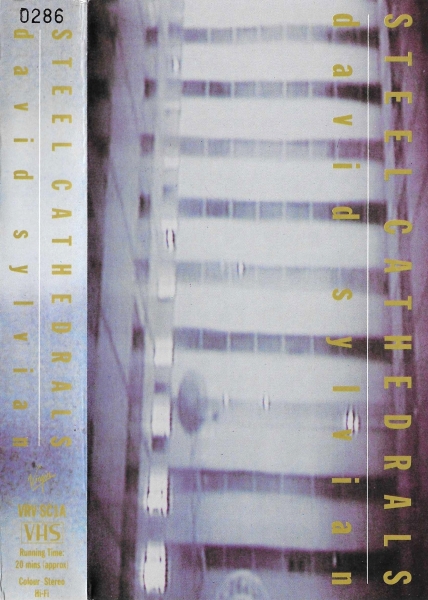
Teenage musical memories often take hold for a lifetime. Early in the ’80s a friend of mine held a party at his family’s home. These were always good nights, an opportunity to spend time with friends outside of sixth form classes and the common room at school. A time to enjoy the music that was in and around the charts, and favourite past tracks from Bowie and others. At the end of the evening, most people having by now drifted away, someone took out the vinyl of Gentlemen Take Polaroids and dropped the needle mid-way through side B for ‘Nightporter’. I knew the song, of course, but here it was being played on a quality sound system and at a volume that wouldn’t have been possible back at home. The person who selected it then sat cross-legged on the floor, head bowed, eyes closed, transfixed by the music.

Continue reading “Nightporter”

Life in Tokyo

‘propulsive repetition’

In the liner notes to his 1989 Sound and Vision retrospective collection, David Bowie recalls how ‘one day in Berlin, Eno came running in and said, “I have heard the sound of the future.” And I said, “Come on, we’re supposed to be doing it right now.” He said, “No, listen to this,” and he puts on ‘I Feel Love’ by Donna Summer. Eno had gone bonkers over it, absolutely bonkers. He said, “This is it, look no further. This single is going to change the sound of club music for the next fifteen years.” Which was more or less right.’

Continue reading “Life in Tokyo”