The opening track to Side 2 of Japan’s iconic final studio album, Tin Drum, sequenced between the China-influenced ‘Canton’ and ‘Visions of China’, stands alone in the construction of its rhythm track, pointing forward to new ways of working for the band’s drummer, Steve Jansen. ‘Still Life in Mobile Homes’, Steve said, was ‘the only drum track recorded piecemeal on that album.’ (2015)
Asked on his blog site, sleepyard, how Mick Karn and he put together the bass and drums for this particular song, Jansen explained, ‘In general the rhythm part would lead Mick to syncopate his notation to fall on certain beats and we would then work closely on arranging various changes and details. In other examples (such as ‘Sons Of Pioneers’), Mick had written the bass part without a drum pattern and I had to find something suitable. ‘Still Life In Mobile Homes’ is particularly rigid between the bass and drums and this was inspired by technology that was emerging at the time whereby computerised rhythm sections were locked in sync.’ (2017)
Thanks to Steve’s meticulous journalling and his sharing of details for one of Tim Burgess’ online listening parties, the precise series of events can be recounted over four decades after the recording. It was on 6 August 1981, at Odyssey Studios in London’s Marble Arch, that Steve ‘decided to use the Linn Drum for this track. It was a new bit of tech allowing synch to tape. I believe it was the first drum machine to do so. Studied manual overnight!
‘Next day recorded Linn bass drum, then added my own snare/hi-hat by playing along – this was the start of drums being recorded piecemeal.’ Fast forward to 1985 and Steve would be building his detailed parts for David Sylvian’s Words with the Shaman strike by strike, rather than ‘single take’ approach taken for his contributions to the Japan records, with the single exception of ‘Still Life in Mobile Homes’.
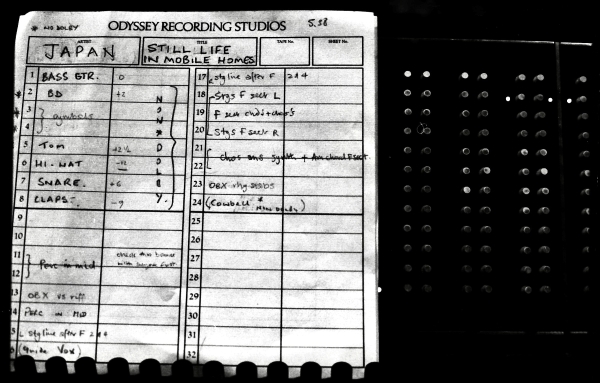
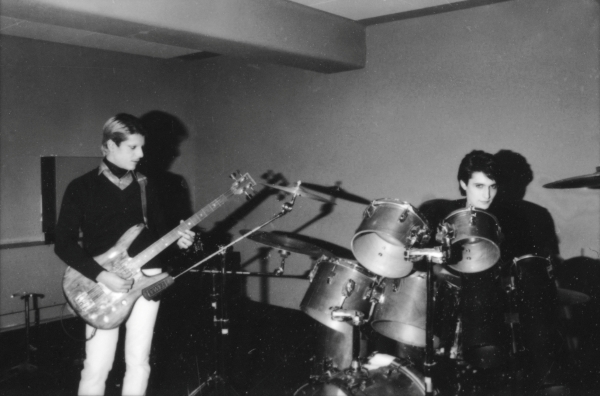
Steve and Mick had worked out some patterns in the rehearsal room, but incorporation of the latest technology meant there was honing to do in the studio. Jansen: ‘Mick spent a while on the bass as it was working so closely with the mechanised bass drum. The keyboards came much later and the vocals were recorded on 16 September.’
The bass is unmistakeably Mick. Less free-flowing than on ‘…Pioneers’, here he contrives phrases that serve to enhance the rhythmic feel of the track, left hand sometimes sliding from note to note along the neck of the fretless, at other times short bursts provide punchy punctuation. Steve cites ‘Still Life…’ as being an example of ‘turning the beat around’ which ‘was a conscious decision. Messing with the downbeat was always a bit of a habit of mine and Mick would design bass parts to complement this approach.’ (2018)
‘Mick’s bass…is very important, his bass riffs have so much personality,’ said Richard Barbieri after Tin Drum‘s release. ‘He’s in great demand now for other people’s projects and I think his style has had a lot of influence’ (1983). One of the reasons the album represents the pinnacle of the band’s powers for me is that every member seems to have perfected their individualistic musical expression.
Asked about the importance of the band some 15 years after the release of their final studio album, Mick told Anil Prasad of Innerviews, ‘It’s taken a long time to see the positive side of the Japan work. For a long time, I think we all would have turned around and said it’s fluff. But I’m beginning to see the uniqueness of the band now. I think the most interesting thing to me about Japan is that there were four musicians who were very original in their approach to their instruments, all in the same band. And I think that’s the amazing part – we were all in the same band. It’s okay if you get a really original drummer like Steve Jansen in a band that didn’t contain other musicians like that. But the fact that we all evolved together and learned to play our instruments together was really quite amazing. It really made us sound kind of different from the other bands. So, I think there’s some value there.’ (1996)
Recognition of the band members’ craft has only grown since Mick’s statement was made. The keyboards on ‘Still Life in Mobile Homes’ may have been added ‘much later’ than the bass and drums but listening now, everything fits so seamlessly together from the very first beat. The synth voices have an Asian flavour with the solo line for the first instrumental break (at around 1 min 30 seconds) seemingly mimicking the rise and fall of a human incantation. When the next break comes (at around 3 minutes) there is no contrivance. ‘They’re samples of traditional performers,’ explained Steve. ‘It’s all in Japanese.’ (2016)
A few days after this article was first published, a reader contacted me with precise details of the samples that the band incorporated into the song. I was thrilled to learn this after decades of familiarity with ‘Still Life in Mobile Homes’. It’s instructive too in pointing us to an album that members of the group were listening to at the genesis of Tin Drum.
The Explorer series of records on New York’s Nonesuch label brought world music to a new audience, not that the term was in use at the time. Their release Japan – Traditional Vocal & Instrumental Music came out in 1976 and is described by the imprint as follows: ‘Essentially a soundtrack to the tranquil beauty of ancient Japan, the tracks here are performed by the Ensemble Nipponia…The different genres of traditional Japanese music are represented here, including folk, religious, dramatic, lullaby and even narrative chanting – all showing a great diversity in instruments and their uses, as well as vocal techniques, formal construction and rhythmic patterns.
‘Historically, the almost total absence of a written tradition in many genres has resulted in the loss of much music composed before the 17th century, a process that was accelerated by the widespread disregard for traditional music in the early years of Japan’s self-imposed Westernisation. Since the end of WWII the government and concerned musicians have made concerted efforts to preserve and revive traditional music. Four of the most important of Japan’s traditional instruments are represented here, including the koto (a large zither, almost 6 feet in length), the shamisen (a three-stringed instrument close to a banjo), the shakuhachi (a bamboo flute), and the biwa (a Japanese lute).’
The samples on ‘Still Life…’ are performed by Ayako Hando, who accompanies herself on the biwa. Four separate phrases are taken from the song ‘Ogi no Mato (“The Folding Fan as a Target”)’. The sleeve-notes on the rear of the vinyl give the background to the composition: ‘This famous piece for voice and biwa is based on a complex legend similar to that of William Tell, in which a folding fan, instead of the famous Swiss apple, serves as the target. Most biwa music is quite ancient. Voice and instrument in the narrative chants tend to complement each other as in Western recitative; the large ornamental leaps for the voice are characteristic of the genre.’
Above: the break from Japan’s ‘Still Life in Mobile Homes’ containing samples of Ayako Hando performing ‘Ogi no Mato’.
Below: four isolated excerpts from ‘Ogi no Mato’, from which phrases were taken and incorporated within Japan’s song. They are presented here in the order in which they appear in ‘Still Life…’, the samples come from 7mins 40secs, 8mins 18secs, 8mins 31secs and 2mins 30secs within the source recording.
‘Sometimes the comfort of a room
Sometimes I’m quite alone
I pack to leave a foreign town
It seems I’ll never know
But I’ll rent new accommodation
We’ll make plans for mobile homes’
Sylvian’s words are typical of his Japan era writing – a series of images which the listener is left to piece together and bestow meaning upon. There are recurring themes, however. A restlessness to move on, to create a new reality for oneself. Far-off locations as a metaphor for expanding one’s horizons. The exotic tantalisingly within reach, juxtaposed with a very different home.
‘Slow boats moving with the tide
Drifting far from shore
It’s the nature of this country life
I’ve never known before
Still we’ll make plans for buildings and houses
From mobile homes’
‘The sound of wildlife fills the air
So warm and dry
The bushland burns in this southern heat
Like an open fire’
The track’s title brings to my mind the images that Steve Jansen captured on location around Bangkok which were featured on the artwork for the original single version of ‘The Art of Parties’ (backed with ‘Life Without Buildings’). Photographs taken of everyday life at the intercept of the river, forest and population. Or perhaps the junk boats of Hong Kong that the band would have seen on their visits East, a territory to which they would return in 1982 for a shoot with Fin Costello and for the Oil on Canvas video. Scenes that would be used to accompany the live version of this very song.
There is a play on words in the seemingly contradictory ‘still’ and ‘mobile’ of ‘still life in mobile homes’. Perhaps ‘still’ in this context means serene rather than stationary. Additionally, ‘Still Life’ is, of course, a term from the art world. The painting of every day inanimate objects, a study in composition and lighting. Surely the passing boats seen in the Far East must be the inspiration for the line, each a tableau encapsulating a life so far removed from the South London roots of the young men in the band?
‘Plant life
My life
Still life in mobile homes’
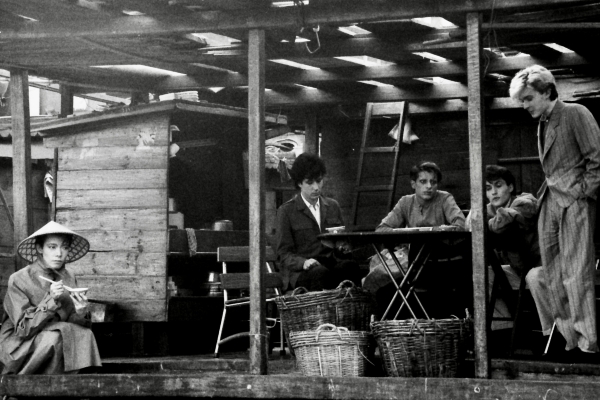

Sylvian also contributes a guitar solo (at around 3 mins 50 seconds). ‘In the studio David plays a Rickenbacker guitar with an E-Bow,’ explained Richard Barbieri, ‘but there are only two or three guitar solos on Tin Drum’ (1983). I’d forgotten just how extrovert this lead guitar line is, probably associating it more with Masami Tsuchiya given his rendition of the break for the Sons of Pioneers shows as captured for Oil on Canvas and radio broadcasts which quickly became bootlegs to track down. Sylvian’s playing personifies the cry from above.
‘A voice screams from heaven
As we start to sail
It’s the calling of the fatherland
I used to know so well’
Jansen’s diaries afford an insight into how the finalisation of the new material coincided with promoting earlier work that was now being re-released by Hansa, the label they had left for Virgin – and to some acclaim. ‘On the evening of 23 September we completed the mix of this track at Air studios, but earlier that day had filmed ‘Quiet Life’ for Top Of The Pops (our first appearance) which seemed odd having almost been there for ‘The Art of Parties’ four months previously.’ The earlier appearance had been cancelled due to a late schedule conflict with a televised football match.
When touring the material, Steve would perform the rhythm part that had been constructed using Linn technology. ‘Reproducing the recorded version – the most challenging was the machine played bass drum of ‘Still Life in Mobile Homes’,’ he said, the difficulty being ‘making each strike of equal velocity like the machine.’ (2025)
Looking back now, the ‘Still Life’ reference is a precursor to Oil on Canvas, another term borrowed from the world of visual arts as the title of Japan’s double-LP documenting their farewell tour. Sylvian was becoming increasingly fascinated with art, dabbling in drawing himself, soon meeting Andy Warhol in New York and being ‘blown away’ by a Frank Auerbach show that would lead to one of the artist’s paintings becoming the cover image for Japan’s live album epilogue (read more here).
Steve Jansen was developing a discerning eye for the composition of photographic images, documenting the life of the band and both people and scenes encountered on their travels. Mick too found a parallel expression in visual art. The recording of Tin Drum was book-ended with exhibitions of his sculpture, the first being held at London’s Hamiltons Gallery in December 1980.
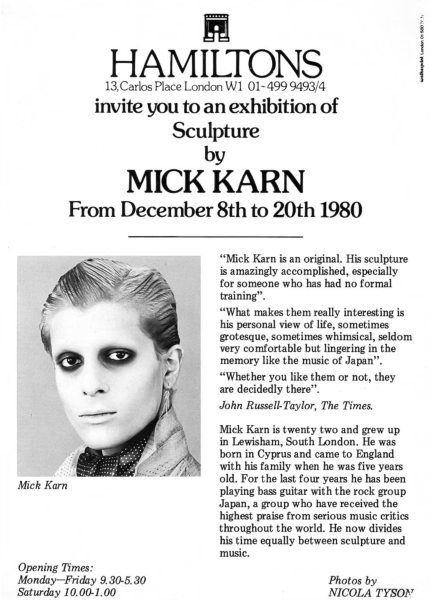
The Times newspaper of 9 December 1980 carried a review by their art critic John Russell Taylor: ‘Mick Karn [is] a very young sculptor (only 22) who leads an alternative life as a leading member of the immensely successful pop group Japan…His technical skill in modelling is sufficient to make the information that he is entirely self-taught seem irrelevant: it enables us to enter without difficulty into his own private world of the slightly grotesque, the weirdly fanciful and outright agonised.
‘Is the man within the mask laughing or screaming? Does the man with his brain laid open to examination stand to benefit from the operation – or does he even know that it is taking place? What of the woman sitting upright in bed, goblet and purple sheets flung aside? And are the butterfly ladies who impend gracefully over the clump of flowers tasting Elysian delights or suffering through an off-night in provincial panto?
‘We shall probably never know, but Mick Karn makes it disquietingly amusing to speculate – and to wonder where, as an artist, he will go from here.’
Mick recounted a moment of epiphany when he was travelling with the band in Europe between the completion of Obscure Alternatives and that album’s public release. ‘It was on one of those visits, to Germany in fact, that I was totally transfixed by some sculptures I saw through a gallery window. On sight of them, I entered a state of dream-like proportions, almost dizzy with excitement as the others walked on ahead.
‘It wasn’t admiration for the sculptures themselves that I felt, it was a sudden sense of rediscovery, a remembering of something I’d long forgotten. I knew I was going to make a sculpture when I got back home and couldn’t wait. I wondered why I hadn’t before, felt I was almost destined to. I ran to catch up with the others, hardly able to contain my euphoria.
‘My first sculpture was made in ’78, a hand I called ‘Satchmo’, which is still one of my favourite pieces. At last I had something in my room that was totally mine and had come to me without the aid of any drawings or tools, only by using my hands. I knew I’d discovered a latent gift that was calling to be let out. It had been trapped during my school years and pushed aside for music, but I’d always been sure of its existence.’
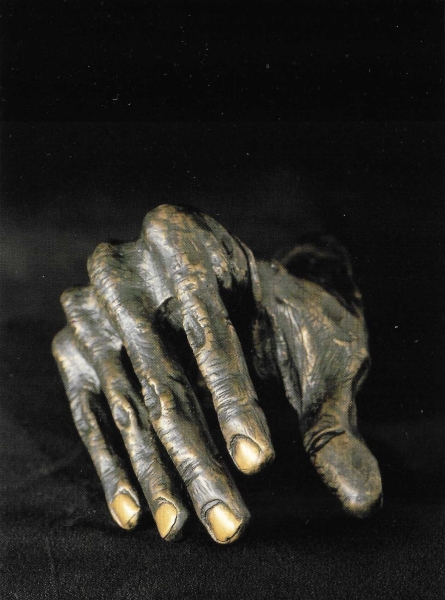
His clay creations were as instinctively devised as his hallmark basslines. There were parallels in style, both sculpture and music being fluid, expressive, bold. His approach to both media betrayed his distrust of learning what might be considered to be “the rules”. Asked on French TV whether he had studied at Art School, Karn replied: ‘No I haven’t. I think that would spoil the way I do things. It’s the same with music, I’ve never learnt how to read music. I don’t know what the notes are I’m playing, because I’m worried of it changing my style. I’d rather not know’ (1982). ‘There is a road from the eye to the heart, that does not go through the intellect,’ is a pertinent quote from G.K. Chesterton that Mick chose to preface a chapter on his art in his 2009 book, Japan and Self Existence.
On 21 August 1981, in the middle of the sessions for Tin Drum and the evolution of ‘Still Life in Mobile Homes’, photographer Virginia Turbett recalled: ‘I visited Mick Karn in his flat near Hammersmith. I was writing and photographing a series for Smash Hits called Rock Stars At Home. I hadn’t realised Mick was a sculptor and his flat was full of extraordinary creations – mostly people. I felt they very much reflected his own delicacy and spirituality.’ (2021)
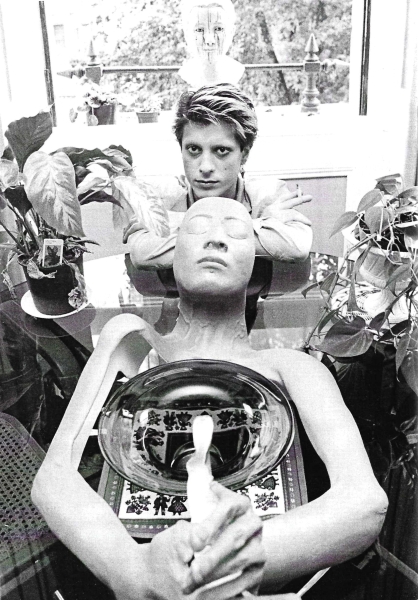
Below: Bronze of ‘Mask of Confidence’, signed postcard from the set Remnants 1978-1987.
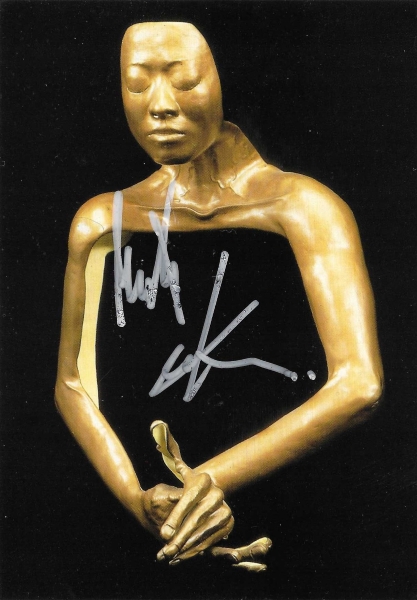
‘The reason I write music or sculpt the way I do, is because it’s me. If my work is considered unusual, strange or disturbing, it is merely reflecting my personality and vice versa, forever inseparable and saying more about me than words ever can. Forgive me for separating myself by only a few paragraphs from great masters, but the importance of individual personality, voice or character in one’s work, can’t be emphasised enough. The use of colour in Matisse’s paintings shows just how overjoyed with life he was, we can see Picasso’s restless personality through his confident, eclectic strokes, as easily as we can recognise a Van Gogh painting by its unique style, a sculpture by Rodin or Henry Moore.’
Whereas music was a shared experience for Mick, sculpting was an expression made by the individual alone. ‘To play bass in a band with four other people, you are playing something that everyone has experienced. But the sculptures are very personal. The sculptures are something that only I’ve experienced, and only I can express…It’s the same man, but much more what’s hidden inside.’ (1982)
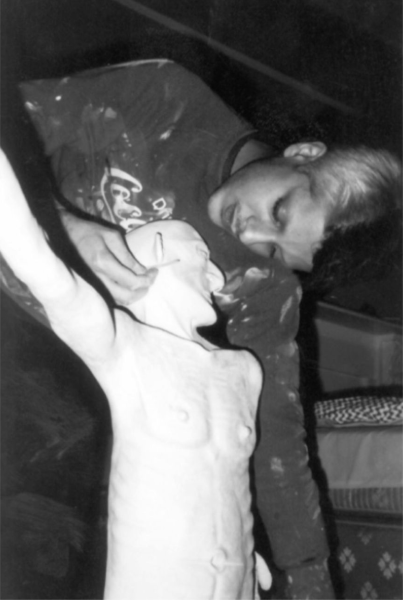
‘A lot of my time was devoted to sculpting, practically every day, in a disciplined manner of self discovery. Playing bass on my own was something I found too tedious to ever contemplate, whereas sculpting had, from the very beginning, been a solitary experience. And therein lies the essence of their compatibility, perfectly balanced, they co-exist together so well because of their opposite natures, it’s too easy to tie them together because of a shared vocabulary, as writers like to do. Music is constructed, shaped and built upon only for want of, and lack of, better words to describe its transient, non-visual, multi-dimensionality. Sculpture, on the other hand, IS constructed and shaped, can be walked around and touched, a glorious embodiment of three-dimensional expression.’
1981 would close with the release of Tin Drum on 13 November, the Visions of China tour which ran through December, and preparations for a collective exhibition showing photographs of Japan by Fin Costello, Koh Hasebe and Steve Jansen alongside Mick’s sculptures. The show opened at the Parco store in Tokyo in the first week of January 1982, subsequently moving to Sapporo and then onto Osaka.
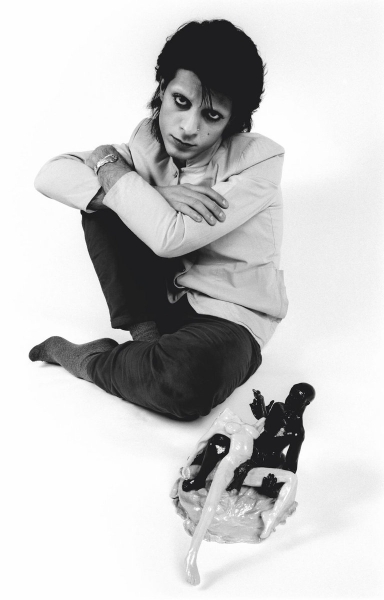
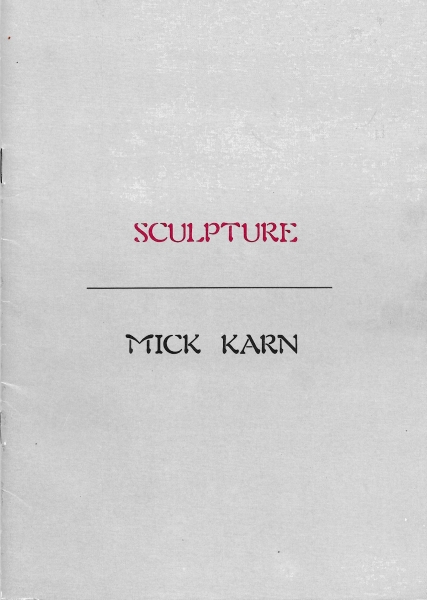
By the time Japan reconvened for their final “world” tour in October 1982, Mick had exhibited again at Hamiltons that April, a smartly produced brochure including an introduction by Angie Bowie and photographs with accompanying texts by Steve Jansen. He had also recorded his debut solo album, Titles. Karn was asked when he made the decision to record solo, and why? ‘I decided during the time we were recording Tin Drum, the last Japan album, because I’d realised that since I’d been a musician I’d always been playing with the same musicians, and I wanted to see how I could cope on my own, playing all the instruments myself. I wanted to see if I could do it. I didn’t think I could.’ (1982)
‘Lost Affections in a Room’ from the instrumental Side One of the LP shows that Mick was more than capable of the task, his credits extending to basses, bassoon, ocarinas, clarinet, keyboards and percussion, with the only other musician cited being Richard Barbieri who lent his keyboard programming skills. Mick: ‘I don’t like to write lyrics. I find it very difficult to express myself with words. I’d prefer to express myself with sculpture and music. I think they tell much more about me than words do.’ (1982)
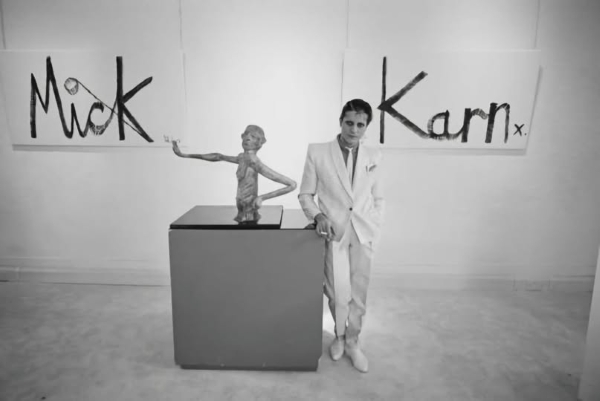
Below: Exhibition catalogue from the show at Hamiltons Gallery, March-April 1982.
‘I couldn’t live without them,’ Mick said of his creations, ‘they are my best friends.’ (1982)
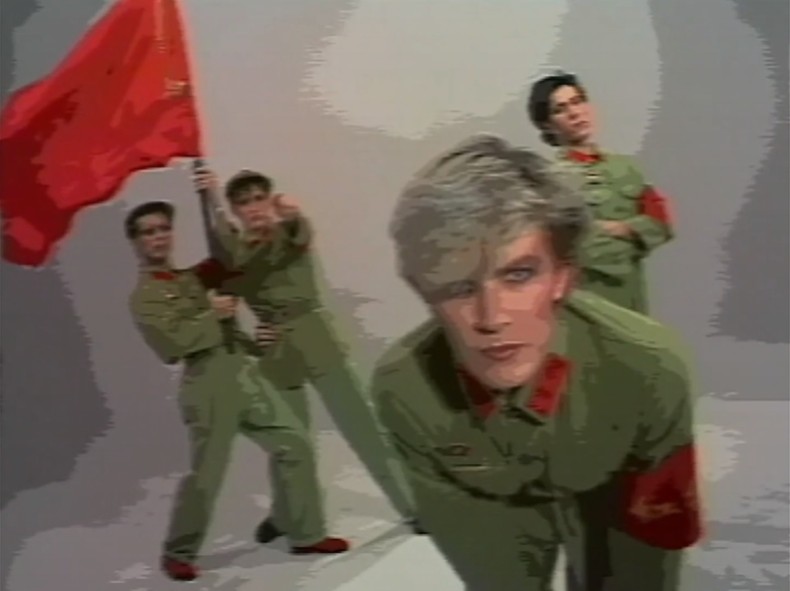
‘Still Life in Mobile Homes’
Richard Barbieri – keyboards, keyboard programming, tapes; Steve Jansen – drums, percussion, electronic and keyboard percussion; Mick Karn – fretless bass, African flute, dida; David Sylvian – keyboards, keyboard programming, tapes, guitar, vocals
from full album credits
Music and lyrics by David Sylvian
Produced by Steve Nye & Japan. From Tin Drum, Virgin, 1981
Lyrics © samadhisound publishing
‘Still Life in Mobile Homes’ – official YouTube link. It is highly recommended to listen to this music via physical media or lossless digital file. If you are able to, please support the artists by purchasing rather than streaming music.
Download links: ‘Ogi no Mato (“The Folding Fan as a Target”)’ (Apple); ‘Still Life in Mobile Homes’ (Apple), ‘Lost Affections in a Room’ (Apple)
Physical media links: Japan – Traditional Vocal & Instrumental Music (discogs); Tin Drum (Amazon); Titles (discogs)
All Mick Karn quotes are from 2009 and all Steve Jansen quotes from 2021 unless otherwise indicated. Full sources and acknowledgments for this article can be found here.
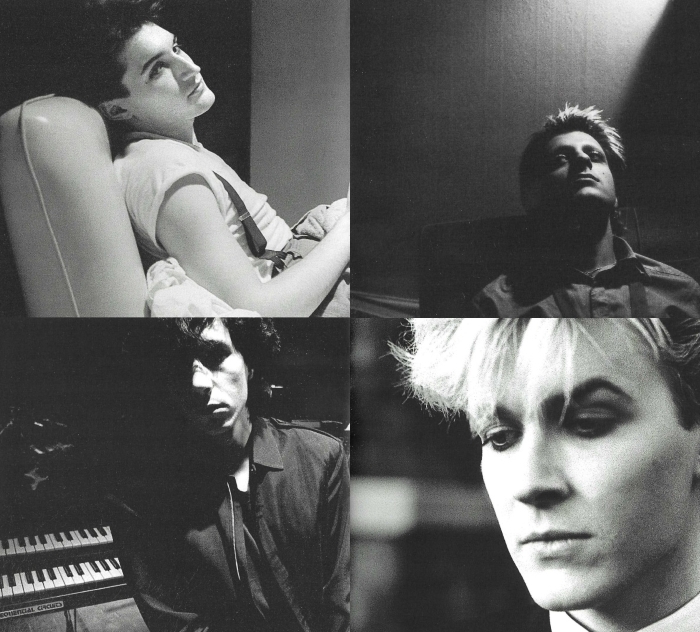
The featured image is a montage of photographs from the booklet for the Tin Drum boxset issued in 2003.
Virginia Turbett’s photograph of Mick can be found in the Hanging Around Books edition Here Comes the Quiet Life: Japan 1981/82, featuring a series of her images of the band from that period. Purchase here.
Steve Jansen has a range of photographic prints available for sale at his website here, including shots from the recording of Tin Drum. These are always meticulously reproduced.
The Tin Drum twitter listening party hosted by Steve Jansen can be replayed by visiting this link.
More of Mick’s sculptures can be viewed on his website here.
‘I wonder, given my psychological background, how I might have sought emotional reward and gratification had it not been for music and sculpture filling the void and providing me with an outlet for personal trauma.’ Mick Karn, 2009

Very good read always David, thank you.
LikeLiked by 1 person
Thank you, Stuart.
LikeLike
Mick was unique and burned bright in his person, his persona and in his musical and sculptural skills.
To be that good must have given him confidence and contentment in equal measure.
He had great personal style and good looks too.
I listen to Japan still, at least some part of every week.
Thanks David, another great one.
LikeLiked by 1 person
Incredible track, incredible album Tin Drum. Oil On Canvas also. Great time for music, remember fondly.
LikeLiked by 1 person
I’ve only recently discovered Japan and their music. It is with great interest that I now explore each members talent and how they became a band.Their early compositions and arrangements which on their journey changed and which this article has lead us to the album, Tin Drum. I’m always interested in reading and learning the individuals uniqueness and how each contributed to the sound of Japan. Thank you for another insight into their music.
LikeLiked by 1 person
Enjoy exploring the music!
LikeLike
brilliant stuff. This song always resonated with me and it is wonderful to dig deeper
thank you
earnie
LikeLiked by 1 person