In the Spring 2002 edition of BOMB magazine, Marc Ribot conducts an interview with Bill Frisell. It’s a fascinating exchange as the two musicians – the principal guest guitarists on David Sylvian’s Dead Bees on a Cake – share perspectives on their music making, drawing both parallels and distinctions.
‘Bill Frisell and I have some things in common,’ Ribot begins. ‘We both play guitar differently than other boys and girls. And, before Bill moved to Seattle, we both were “downtown guitarists”. But the occasional unfortunate record producer who called me because Bill Frisell was unavailable soon discovered how little that term described. Frisell has always sounded fluid, graceful, elegant, and most of all, melodic.
‘None of these things are easy to be on a guitar. It takes effort to bend one note into another. It takes enormous calculation to translate the pianistic harmonies Bill uses onto a six-stringed instrument. And every guitarist who has ever heard Frisell has wondered how he managed to get his guitar to produce notes that swelled in volume as they sustained, like a violinist or horn player, instead of steadily fading, like the notes on everyone else’s guitar. There was talk by the bar of a clever use of compression, echo, or volume pedals. I believed this until I heard him produce the same effect on an acoustic guitar, at which point I gave up trying to understand.
‘But there’s still the question of why. Why was Bill able to have melody? Even in the early eighties – not distanced by irony, not called into question by Minimalist repetition, not deconstructed or serialised, not overshadowed by formalist concerns, not lacerated by noise or diced into pastiche. Why, although Frisell was aware of and a central downtown music participant (having played with the likes of John Zorn, Marianne Faithful, Elvin Jones, Dave Holland, Elvis Costello, Don Byron, Julius Hemphill, Ginger Baker, Charlie Haden, David Sanborn, and many others) was he also allowed the guilty pleasure of melody without guilt?
‘I can’t answer this either, other than to think that every once in a great while, someone is granted an exemption from what seem to be the needs and limits of their time just because they sound so beautiful. That must be it.’
There is undoubtedly a Bill Frisell “sound”, a distinct voice that is recognisably his. Perhaps it’s linked to the fact that his preferred instrument was initially the clarinet, so instincts were developed away from the convention of the guitar. Part of the distinctiveness lies in how Frisell has ingested influence without discrimination from across what we are taught are multiple genres: jazz, rock, R&B, country, folk, and more. Elvis Costello once said. ‘Bill Frisell is always an American folk musician. That is, he works with all the music made by American folk.’ (2009)
Back to Marc Ribot: ‘I’m a fan of your Nashville and American music stuff – can I call it American music, for want of a better name?’
Frisell: ‘Sure.’
MR: ‘What do you call it?’
BF: ‘Oh, I don’t. But I guess that’s what it is.’
MR: ‘When I listen to it, I always feel that you’re hip to these strange correspondences between musics that are socially at opposite ends of the spectrum, for example, country music and R&B.’
BF: ‘Yeah, for me, those are totally the same music.’
MR: ‘This is something that musicians know, that sometimes I wonder if the fans know. I mean, musicians know it in a deep way. For example, that the Telecaster is the common main guitar of R&B and country music or that 6/8 beats are common to both country and R&B ballads. It sounds nerdy when you say it, but when you hear it, you hear, as you were just saying, that there are deep connections between musics that a lot of people see as opposites. It seems that you’ve managed to find some of those hidden connections in what you’ve done.’
BF: ‘Yeah, going to Nashville and doing that record [titled simply Nashville (1997)], I mean, I’ve always been interested in that – but it stepped up my interest. I got more fascinated with, not so much bluegrass or country music, but in looking at the music that was happening in the ’20s and around the beginning of the century… There are places in the music where you don’t know if it’s black or white. It really gets blurred…’
MR: ‘Is that what you look for when you’re going into that music, the moments when its borders meld?’
BF: ‘Yeah, where it just transcends all that stuff that’s been put on us by a record company or a writer or somebody analysing everything after the fact and then categorising it. Musicians don’t do that when they’re in the midst of playing, that stuff always comes later.’
This sensibility no doubt goes some way to explaining why David Sylvian would turn to Bill when trying to move the extended recording process of Dead Bees on a Cake towards a conclusion. Sylvian felt the material stood up well as he returned to it multiple times over the best part of three years, interrupted by life events and hampered both by technical challenges associated with capturing performances on hard drive in the relatively early days of Pro Tools and in realising the arrangements he imagined for his compositions.
This wasn’t Sylvian’s first time reaching out to Bill. Late in 1991, he had called in the guitarist for a reinvention of Ryuichi Sakamoto’s track ‘Tainai Kaiki’ as the glorious ‘Heartbeat (Tainai Kaiki II)’ with Sylvian’s new vocal supplemented by Ingrid Chavez’s spoken word and Frisell’s effusive electric lead. The guitar solo heard on the record was a single take, such was the potency of the chemistry in the studio.
Sylvian likely came to Frisell through the American’s then deep association with Manfred Eicher’s ECM jazz label, run out of Germany. Bill’s debut solo album, In Line, was released on ECM in 1983, following his appearance on disc and on stage with line-ups including saxophonist Jan Garbarek and pianist John Taylor. Frisell’s 1985 follow up LP on the label, Rambler, boasted trumpet and flugelhorn maestro Kenny Wheeler in a quintet assembled to perform the guitarist’s compositions. Wheeler had featured on Sylvian’s Brilliant Trees and would return for Gone to Earth with John Taylor as his foil, Garbarek only absent because touring commitments meant he was unavailable to perform the solo part on ‘Wave’ that Sylvian had envisaged.
Frisell would appear on Kenny Wheeler’s highly acclaimed ECM release Angel Song during the gestation of Sylvian’s Dead Bees on a Cake, for which they would both be invited. Bill and Kenny were joined in a quartet by Miles Davis alumni Lee Konitz on alto saxophone (who appeared on Birth of the Cool) and Dave Holland on bass (In a Silent Way, Bitches’ Brew). The group interrogate Kenny’s motifs from multiple perspectives with the guitar very much an equal participant in the proceedings, as evident on both the opening ‘Nicolette’ and closer ‘Kind of Gentle’.
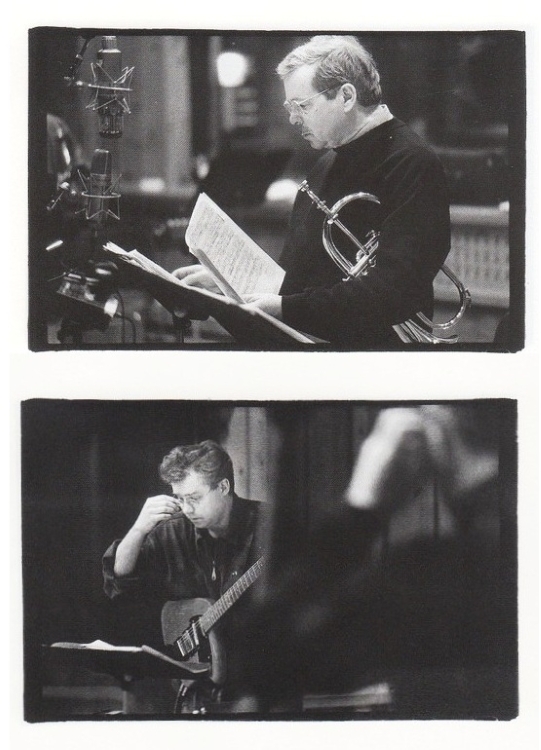
As Sylvian’s permanent relocation to the US saw him allowing the new environment to seep into his music and arrangements, Frisell’s sincere appreciation for the music of the States in all its richness provided a sympathetic avenue to explore. Following not wholly successful stints with Ryuichi Sakamoto and others in New York (Ribot’s session being a notable exception), and then a similar outcome with a range of participants at Real World in the UK, Sylvian worked alone on the material at home in Minneapolis before booking two days with Bill in the far North West at Sound House Studio in Seattle.
Having studied music in his home state at the University of Northern Colorado and then at the Berklee College of Music in Boston, Frisell had been based in New Jersey for much of the 1980s, an active participant in the New York scene as referenced by Marc Ribot in the BOOM magazine article. In ’88, Bill relocated from East to West Coast, finding a home in Seattle with his wife and daughter.
It was put to Sylvian later that the difficulties he experienced in drawing from collaborators the perfect performances to suit his latest material may have been because ‘the work is so personal that the only person who’d be able to elicit the emotional response you were after is yourself?’ To which he responded, ‘I think that’s very much a big part of it, yes.’
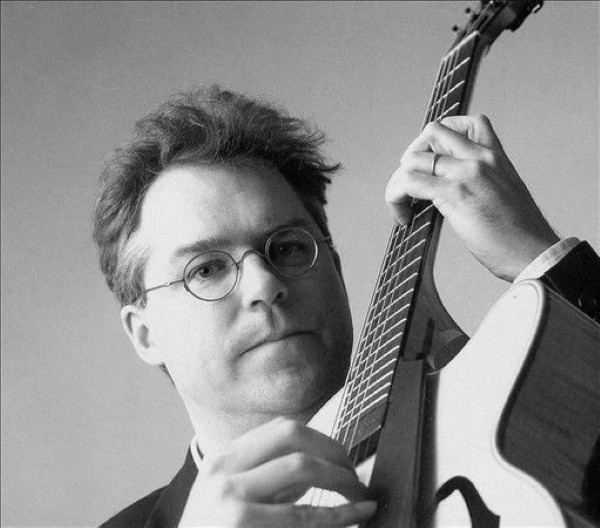
Frisell’s touch is present on ‘Krishna Blue’ and later ‘The Scent of Magnolia’, released on the compilation Everything and Nothing the following year and finally incorporated within the track-list of Dead Bees on a Cake for the first vinyl pressings in 2018. His contribution had been slated for more of the ‘ensemble’ pieces, but recent history repeated itself. ‘I was working with Bill Frisell in Seattle,’ Sylvian explained. ‘I obviously think Bill is an amazing guitarist. We did two days work together and he contributed a lot of work to many of the pieces. But when I got the work back home and started listening through to it, although the performances were beautiful, they didn’t draw out of the pieces the emotional response that I was looking for. So I had to go back and actually replace many guitar parts with my own guitar playing, which is technically inferior, obviously, to Bill’s playing.
‘I was able to bring to the work the emotional content that I was trying to draw forth out of the composition. So I had to replace some technically proficient and beautiful work with something that was less proficient but remained truer to the piece of the music. That’s something I’ve never really had to do much of in the past; I could rely on a key person’s performance to be totally in sync with the piece of music that I was working on. Maybe as I’ve matured I’m looking for something far more specific and therefore I was being more demanding of the people that I was working with and when I didn’t find it, it meant that I had to go back and find the resources within myself to put that on to disc.’
There was, however, a key moment at the close of recordings at Sound House that would leave an enduring impression on the album. ‘I was recording with Bill…and at the end of the two day session he still happened to be sitting out in the studio with dobro on lap and I just asked him to improvise a number of pieces for me that I could respond to in time, when I had time. He did that. I think there were six in all. None of them lasting more than two minutes.’
The dobro is an acoustic guitar with a steel resonator cone within the body which amplifies the sound, lending it a bright, metallic tone. ‘It’s a kind of guitar. A steel guitar,’ said Sylvian when asked about the track ‘Dobro #1’ from Dead Bees… ‘Bill Frisell was playing the guitar, he improvised the performance for me…He said he found his dobro in like a flea market. He came across it, it was like $50 – it sounded great. And I just responded to his improvisation, by putting the vocal on. It just fell together very easily.’
The challenge that Sylvian set to Frisell – and by extension to himself – was a foretaste of his interaction with Derek Bailey for Blemish a few years later: to improvise a solo guitar piece leaving space for Sylvian to respond with a vocal line at a later date. The immediacy of the process seems to have been a welcome interlude to hunting illusive arrangements for his compositions, some of which had been written several years previously.
The opening ‘I Surrender’ sets out the theme of a ‘life of sorrows now collapsing into joy’, its accompaniment blooming with flourishes of Kenny Wheeler’s flugelhorn and Lawrence Feldman’s flute. Immediately, however, we are wrong-footed as a shadow is cast through the mild discordance of Bill Frisell’s dobro and Sylvian’s oblique lyric apparently referencing the consequences of disrespecting the sanctity of a living thing…
‘I stole a life
With braids of fire
And it rained on my house
All summer’
By very definition, the shadow can never be far from the light. ‘Darkest Dreaming’ later manifests deeply held fears – but does so in the context of beseeching a partner to remain at the protagonists’ side. ‘Dobro #1’ is altogether more bleak.
‘There never was any freedom here
All I feared the most came back around
And it rained on my house
It rained on my house all summer‘
Sylvian said on release that the track carried ‘one of my favourite vocal performances on the album.’ His voice is high at the front of the mix against the sparse background of Frisell’s six-string picking and a rumble of dark clouds mustered from the keyboard by the song’s writer. The recording is so intimate that the words seem to catch in Sylvian’s throat, delivered with breaking deep vibrato.
Being liberated from the pressures of a commercial studio environment suited the singer’s purposes. ‘When we moved to California, we lived for a short time in a small cabin in the Napa hills [‘minutes from Shree Maa‘s ashram’], away from civilisation. That was quite an experience. And that’s where I actually recorded all the vocals to the album. By that time the family had moved out and we were living where we live now, which is further into wine country. So I was isolated up in the hills recording the vocals, which was wonderful. I could take my time. There was the peace and quiet of the environment. It was beautiful.’
Isolation was not just a product of the remote location, as David could approach the task without another soul. ‘It was a wonderful way of working, because I’ve never worked entirely alone before, I’ve always had an engineer or a producer present. It gave me the freedom to record and re-record the vocals until I was happy with them. I don’t sing on a daily basis, I don’t have exercises… when it’s time to sing, I start. And it took me a while to get the nuance right for each particular song. But it was worth it. I really feel more at home with this album than with anything I’ve done in a very long time.’
When Sylvian came to approach a long put off retrospective project for Virgin as follow up to Dead Bees on a Cake, among the out-takes that he returned to were the remaining dobro improvisations by Bill Frisell. For Everything and Nothing he recorded vocals to two further tracks, #5 and #6, using the same methodology as employed for #1. ‘I took a good look at the remaining five and had a bash at the ones that seemed most promising,’ he said. The other improvisations ‘didn’t hold much promise for a vocal contribution.’
The later re-sequencing of the tracks into Dead Bees… for double vinyl release places them strategically into the flow of the album. ‘Dobro #1’ remains as a disruptor – along with the following ‘Midnight Sun’ – in sharp contrast to the revelation evident in ‘I Surrender’ and the wide-eyed ‘The Scent of Magnolia’, now alongside at the outset of the album.
‘Albuquerque (Dobro #6)’ closes the second of the four vinyl sides, placing it between ‘Krishna Blue’, Sylvian’s paean to the Hindu god and to his guru Amma Amritanandamayi, and ‘Thalheim’ which recalls his visit with Ingrid to Mother Meera in the German village of the same name. Albuquerque was a location of significance to the couple, being Ingrid Chavez’s birthplace.
‘He arrives by night
Open up the door and let him in
She’s the sole proprietor
Exchanging two for one
She’s the sole proprietor
There is no other’
I’ve never heard Sylvian comment on the lyric. Is his lover the ‘sole proprietor’ of the protagonist’s heart? As elsewhere, this lover might be an earthly partner or the divine mother. Given its placement in the running order, it’s possible that the piece refers to a visit by Amma to his wife’s home-town, the Sylvian family’s habit being to follow in the guru’s footsteps as her annual yatra made its way across the US. Certainly Amma was visiting New Mexico by this time. Just as in ‘I Surrender’, ‘I’ve travelled all this way for your embrace’…
‘Who would have thought she’s in Albuquerque
When mother calls he must come’
‘Shades of mid-life crisis
Eyes of petrochemical blue‘
Finally, ‘Aparna and Nimisha (Dobro #5)’ takes a place on the third side, which it shares with ‘Alphabet Angel’. It’s another lyric expressing the joy of parenthood, a simple everyday scene sketched from the family’s experiences together. Whereas ‘Alphabet Angel’ is centred on Sylvian’s relationship with his first-born daughter Ameera, ‘Aparna and Nimisha’ is addressed to her younger sister Isobel. The names in the title are Hindu girls’ names, Aparna being one of the names of goddess Parvati and Nimisha meaning the twinkling of an eye. The play mates were friends made in India – the family made one of their visits to Amma’s ashram in Kerala, South India in 1999, between the completion of Dead Bees on a Cake and the recording of the vocal for ‘Dobro #5’.
‘Little girl
Won’t you come inside and play?
Aparna and Nimisha
Have played with you all day
Isobel… come inside
The sun is setting, it’s getting dark
Nimisha’s gone away
Come inside
…and play’
The inclusion of the additional tracks on the expanded Dead Bees on a Cake mean that it bears more of Bill Frisell’s fingerprint. He is present on five of the numbers, equivalent to those featuring Marc Ribot. The directness of the dobro tracks captures the listener’s attention and draws you close in. As stripped back miniatures they are in stark relief to the fuller arrangements of the surrounding tracks.
One of the characteristics of Frisell’s playing is restraint: the maximum expression through an economy of means. Perhaps it’s rooted in a character trait that has caused some to wish that the guitarist would break free more often. (Sylvian would reflect: ‘Between Kenny [Wheeler] and Frisell it was a toss up who was the most self effacing.’ (2019)) Bill’s ultimate participation in the record may not have been precisely what Sylvian had in mind when he headed for Seattle, but in the end it was this restraint in his craft that rendered him perfectly suited to provide the catalyst for Sylvian’s successive impromptu reflections on the darker side of life, the lure of the guru and delight at family life.
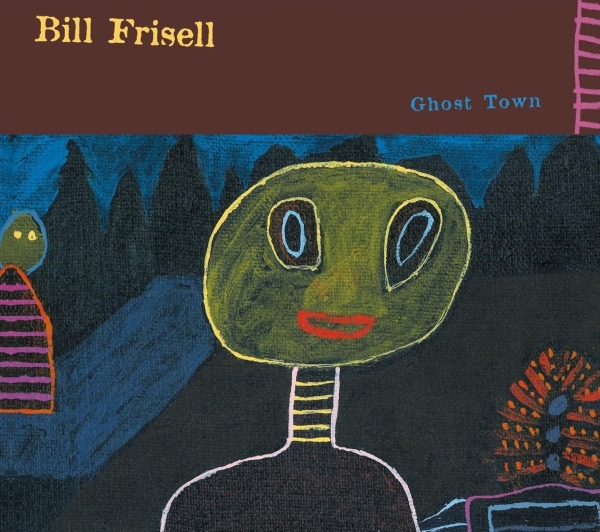
Bill’s extensive catalogue features a number of ensemble recordings from around this time, but a particular favourite record of mine is Ghost Town which was released on the Nonesuch label in 2000. It’s a completely solo endeavour including tracks where Frisell overdubs his own playing with additional parts, sometimes calling upon looping effects. The tracks I like the best are those that sound closest to unadulterated single takes and on my playlist these are interspersed with the Sylvian/Frisell dobro collaborations. Bill’s version of John McLaughlin’s ‘Follow Your Heart’ is a measured meditation on the original, ‘My Man’s Gone Now’ – the Gershwin classic from Porgy and Bess famously recorded by Miles Davis with Gil Evans – is a spare steel-stringed gem, while the heavy reverb of ‘Big Bob’, a Frisell original, oozes the Blues.
‘Dobro #1’
Bill Frisell – dobro; David Sylvian – keyboard, vocal
Music by David Sylvian and Bill Frisell. Lyrics by David Sylvian.
Produced by David Sylvian. From Dead Bees on a Cake, Virgin, 1999.
Lyrics © copyright samadhisound publishing
‘Dobro #1’ – official YouTube link. It is highly recommended to listen to this music via physical media or lossless digital file. If you are able to, please support the artists by purchasing rather than streaming music.
‘Albuquerque (Dobro #6)’
Bill Frisell – dobro; David Sylvian – vocal
Music by David Sylvian and Bill Frisell. Lyrics by David Sylvian.
Produced by David Sylvian. From Everything and Nothing, Virgin, 2000.
Completed 2000.
Lyrics © copyright samadhisound publishing
‘Albuquerque (Dobro #6)’ – official YouTube link. It is highly recommended to listen to this music via physical media or lossless digital file. If you are able to, please support the artists by purchasing rather than streaming music.
‘Aparna and Nimisha (Dobro #5)’
Bill Frisell – dobro; David Sylvian – synthesiser, vocal
Music by David Sylvian and Bill Frisell. Lyrics by David Sylvian.
Produced by David Sylvian. From Everything and Nothing, Virgin, 2000.
Completed 2000.
Lyrics © copyright samadhisound publishing
‘Aparna and Nimisha (Dobro #5)’ – official YouTube link. It is highly recommended to listen to this music via physical media or lossless digital file. If you are able to, please support the artists by purchasing rather than streaming music.
All quotes by David Sylvian are from interviews conducted in 1998-2000 unless otherwise indicated. Full sources and acknowledgements for this article can be found here.
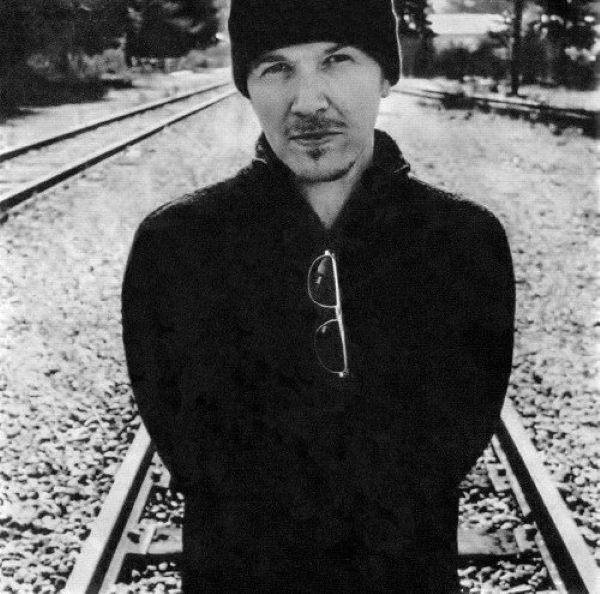
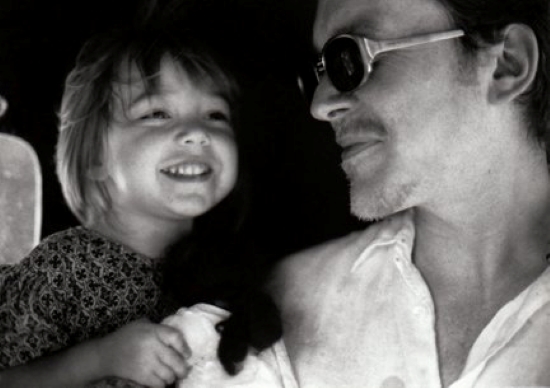
The featured is a publicity photograph for Dead Bees on a Cake taken by Anton Corbijn.
Download links: ‘Nicolette’ (Apple), ‘Kind of Gentle’ (Apple), ‘Dobro #1’ (Apple), ‘Albuquerque (Dobro #6)’ (Apple), ‘Aparna and Nimisha (Dobro #5)’ (Apple), ‘Follow Your Heart’ (Apple), ‘My Man’s Gone Now’ (Apple), ‘Big Bob’ (Apple)
Physical media links: Dead Bees on a Cake (Amazon); Everything and Nothing (Amazon), Angel Song (Amazon), Ghost Town (Amazon)
‘Bill is a wonderful collaborator and it would be fascinating to renew that collaboration.’ David Sylvian, 2003

More about Dead Bees on a Cake:
I Surrender
Midnight Sun
Thalheim
Alphabet Angel
Pollen Path
All of My Mother’s Names (Summers with Amma)
Praise (Pratah Smarami)
Darkest Dreaming
Related:
The Scent of Magnolia

Brilliant! The breakdown of the inner workings add even more enjoyment to these beautiful pieces…I am an enormous fan of Sylvian, Frisell and Ribot…and I find these Vista blogs superb.
LikeLiked by 1 person
Many thanks for the kind comment. I have been fortunate enough to see both Bill Frisell and Marc Ribot perform in London over recent years. A real privilege.
LikeLike