Life in Tokyo

‘propulsive repetition’
In the liner notes to his 1989 Sound and Vision retrospective collection, David Bowie recalls how ‘one day in Berlin, Eno came running in and said, “I have heard the sound of the future.” And I said, “Come on, we’re supposed to be doing it right now.” He said, “No, listen to this,” and he puts on ‘I Feel Love’ by Donna Summer. Eno had gone bonkers over it, absolutely bonkers. He said, “This is it, look no further. This single is going to change the sound of club music for the next fifteen years.” Which was more or less right.’

Continue reading “Life in Tokyo”

The Art of Parties – Methods of Dance – live

‘a new energy’

It seems that Masami Tsuchiya heard the music of Japan before the band discovered his. ‘I was very touched by Japan’s music from the very first album,’ he told Bamboo magazine, ‘and I told everyone about them – what great musicians they were. The word got around and Japan got to know about it’. Tsuchiya was a founder member of Ippu-Do, an outfit with an openness to European influences. Some sessions for their 1980 LP Real even took place at Hansa studios in Berlin, originating titles such as ‘German Road’, ‘Heidelburg Symphony’ and ‘Neu! (Changing the History)’ – tracks that boast a new wave sound with synthesisers, sequencers and vocoder vox accompanying driving guitar, bass and drums.

Continue reading “The Art of Parties – Methods of Dance – live”

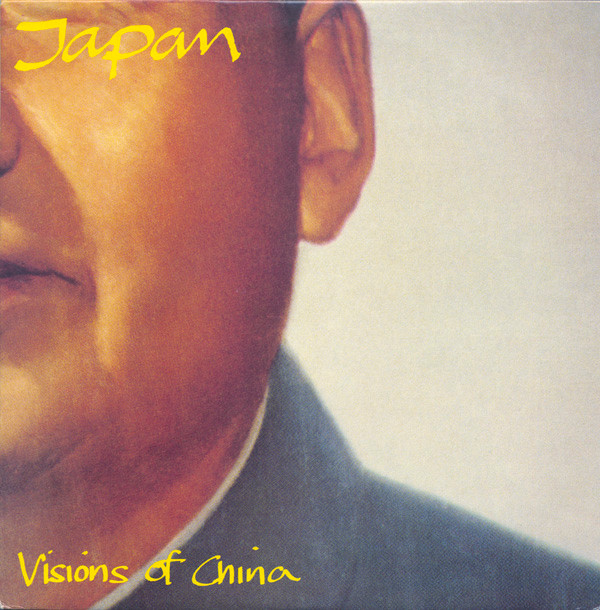
Visions of China

‘playing with images’

‘Credit where credit’s due. Yuka brought the first Chinese records home which filled my head with unknown sounds, and it was only a matter of weeks before they were circulated around the band and we were all hooked,’ writes Mick Karn in his book Japan & Self Existence of then girlfriend, Yuka Fujii. ‘I couldn’t get enough of them. It was always exciting to get home and listen to what I’d bought on the strength of the sleeve design alone. The best were the instrumental tracks, for it was the unusual instrumentation that left us wondering at how the absence of guitars, drum kit, synthesisers and anything else familiar, somehow still produced commercially driven music.

Continue reading “Visions of China”

Blackcrow Hits Shoe Shine City

‘this dark emotional experience personified’

As the sun set on an artistically fruitful 1980s and a new decade dawned, collaborative projects would be the primary outlet for David Sylvian. ‘For the past almost three or four years, I’ve being going through quite a powerful emotional change in my life and it took me a long time to come to terms with what was happening. So I thought, rather than just slogging away without getting to grips with it, I should perhaps collaborate and allow myself to work more on the spur of the moment,’ he explained in 1991, as the eagerly awaited reunion project of the former members of Japan – Rain Tree Crow – was first shared with an intrigued audience.

Continue reading “Blackcrow Hits Shoe Shine City”

The Other Side of Life

‘a new high mark of maturity’

There were fundamental differences in band preparations for Japan’s third LP. The material for the first two albums, Steve Jansen explained, ‘was performed extensively live before we had the opportunity to record it. Therefore, those albums serve more as a document of what we’d learnt as a group performing together. There was very little recording craft involved, just a lot of energy and influences from an eclectic mix of styles, which were all a part of our early teenage years onwards.

Continue reading “The Other Side of Life”