
‘Virgin were ecstatic when they heard the news from an equally ecstatic Richard Chadwick,’ said Mick Karn of the decision for himself and ex-Japan band-mates Sylvian, Jansen & Barbieri to come back together, ‘and within days came up with an amount for recording that made us ecstatic. None of us had ever seen such a large sum for recording before. And what’s more, once lawyers had prepared the contracts and suggested we have accountants carry out an audit on Virgin, they hastily sent us a substantial cheque each for Japan videos…
‘The four of us set forth on a driving holiday through Italy for a week in June 1989, to research some of the available residential studios we’d been considering. The budget would go a long way if we were careful, and the trip enabled us to spend time together bonding, and for me to show off my Italian as band translator. We decided on a studio Steve and Rich had already used, Condulmer, near Venice, and planned to be there for a month in November after starting the project in the south of France in Miraval for five weeks at the beginning of September.’
‘Not too much to complain about at all by the time we reached Italy,’ reported Karn of the musical endeavours as the plan was executed and the foursome moved on to Condulmer after a fruitful time developing material in the spacious rural environs of Miraval, his only reservation being ‘God-induced dinner arguments’ for which he had little appetite. So successful were the early encounters that on arrival they ‘set about trying to come up with the last track needed to complete the album, which boiled down to Steve and myself endlessly experimenting into the night.’
True to the spirit of the project, the track that emerged ‘was a real jam,’ recalled Jansen. ‘Mick playing wah wah bass, Dave was on guitar and I was playing an afro-type-funk thing. We started with a loop of shortwave radio voice and built it up from there,’ he explained, adding elsewhere that improvised ‘piano lines’ were also crucial in its evolution.
When the album came out some sixteen months later, the resulting instrumental had been sequenced as the album’s opener. ‘Big Wheels in Shanty Town’ announces the reunion with an energetic drive that has its roots in Jansen’s pulsating drums. Closing my eyes, I can see him at an acoustic kit carving out that pattern with absolute precision. Just as in their former incarnation, the bass is both locked with the drums and yet unconventionally expressive. The album credits bring this to life, the anchor coming from Mick’s ‘pulse bass’ (Jansen: ‘I think he had foam wedged in the strings to mute it down’ (2015)), with an idiosyncratic freedom flowing from his ‘Wah Wah bass’.
Listening deeply to the opening minute, all the care and attention of past recordings is again so evident, with a range of disparate elements incorporated, from a funky guitar riff, to voices from radio immaculately sequenced within the rhythm, and spiralling synthesised sounds. Such an abundance of stimuli does not make it overcrowded: rather, it heightens the senses at the outset of an auditory journey through the matured craft of the band members. Jansen: ‘The working title for this track was ‘Indoor Fireworks’ – no idea why… perhaps some of Richard’s fizzing keyboard sounds.’ (2016)
‘‘Big Wheels in Shanty Town’ turned out to be the most positive of all the tracks, despite the pressure on us,’ said Karn, ‘and still makes me smile when I think of the playful way it began life, almost as a joke between the interplay of our instruments…’
‘Peace through Culture’ is the pronouncement at the start of the track, a phrase on which I reflect more deeply as the years pass and the work of the musicians and artists I love serves as a vital antidote to this depressingly screwed up world. It’s quite possibly a direct reference to the phrase coined by Russian philosopher and mystic Nicholas Roerich, who wrote, ‘It is our duty to create for the young generation traditions of Culture; where there is Culture, there is Peace; there is achievement; there is the right solution for the difficult social problems. Culture is the accumulation of highest Bliss, highest Beauty, highest Knowledge.’ (1931)
‘I don’t recall who the voice belongs to,’ said Jansen. ‘It was one of David’s selections I believe. I was responsible for combining the German phrase sequence from a short wave radio recording, I’ve no idea what she’s saying – perhaps it’s the German shipping forecast, someone out there must know. Other voice appearances are from Gregory Peck (“who gives a damn”) and Oliver Hardy (“so far, so good”).’ (2016)
The Laurel and Hardy soundbite comes from their 1932 short film Towed in a Hole, its inclusion demonstrating a lightness of touch and sense of humour that is far from the over-earnestness that some attribute to this kind of music. The sample is placed perfectly, just prior to the rhythm taking the slightest pause for breath.
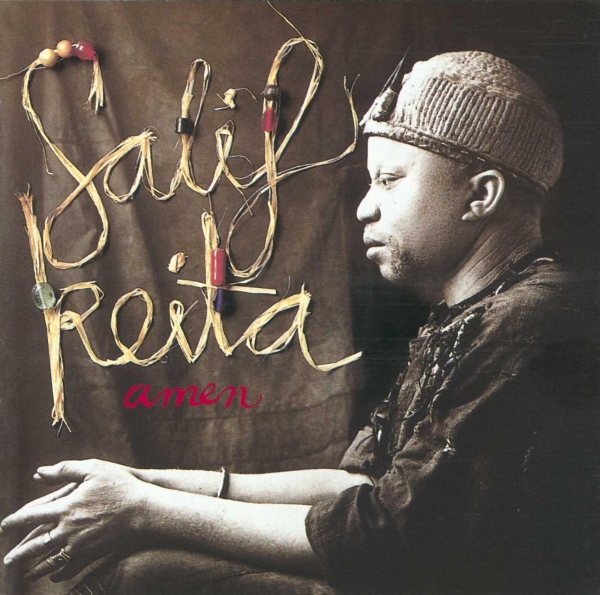
New flavours are in evidence through voices that complement the ‘afro-type-funk’. Djanka Diabete and Djene Doumbouya both hail from Guinea, West Africa and were backing singers to Malian singer-songwriter – and ‘Golden Voice of Africa’ – Salif Keita, including for his album Amen, released later the same year as Rain Tree Crow. Check out ‘Tono’ for a flavour of the vibe. It was Sylvian who proposed the idea to his bandmates. ‘It’s difficult working with a group because you have to sit down and discuss the next move,’ he explained. ‘If somebody brings up an idea and you don’t think it’s right, you really have to fight not to have that idea worked upon on the project, and they in reverse have to fight for their idea if they really believe that it is right. So it becomes something of a battle, and it can be a very important part of the creative process. On many occasions I came up with ideas, like using the African vocalists…and I have to sit down and explain my whole picture of the piece of music to the band, so that they could respond and either say “yay” or “nay” to using these people.’
Mick Karn’s woodwind was a regular feature in the later Japan recordings, but here his ‘brass’ is supplemented by The Phantom Horns, led by Gary Barnacle. Gary’s saxophone is all over 1980s recordings by Simple Minds, Level 42, Visage, China Crisis, Pet Shops Boys and many more – including David Bowie’s ‘Absolute Beginners’. So prolific was this session work that the Phantom Horns were an obvious choice for the band put together for the 1988 Prince’s Trust concert at the Royal Albert Hall. Mick Karn was the bass player in the Midge Ure All Star Band, playing alongside Rick Astley, Phil Collins, Peter Gabriel and more.
Interviewed for Anthony Reynolds’ book Cries and Whispers, Gary Barnacle confirmed this was where the contacts were made that led to his to participation in the reunion. ‘I got involved in the RTC project through the invitation of Mick Karn – after working with him in the house band for a Prince’s Trust project. Mick Karn had a great talent for expressing his very individual ideas via all of his instruments – whether that be bass…or sax…or woodwind…
‘I’m pretty sure all four members were present when Peter [Thoms] and I played on the ‘Big Wheels…’ track. I think that it took place at Marcus Studios in Fulham.’ The brass was arranged by Karn and Sylvian. ‘I think that Mick was the main point of contact generally that day. I really like the track that we played on…’ (2018). Gary would later play on Karn’s 1995 solo album, The Tooth Mother.
Somewhere along the line both Sylvian and Jansen added Hammond organ parts. Additional guitar was added by Bill Nelson at Pete Townsend’s Eel Pie studios as a finishing touch – he recalls playing his Yamaha SG for the Rain Tree Crow session.
Steve Jansen cites ‘Big Wheels in Shanty Town’ as an example of a piece with ‘a dynamic event as the middle section,’ the instrumental going through various movements (1996). It’s notable how the cymbal/metallic percussion strikes provide sporadic punctuation to the beat in the initial stages, then becoming integrated into the drive during the mid-section which is heralded by the second ‘peace through culture’ declaration. Later the rhythm falls away entirely for sampled laughter and the briefest of vocal lines.
In a 1993 interview, Richard Barbieri observed that creating instrumental pieces ‘is a lot more difficult – especially the way we approach it, in that we are very concerned about a piece becoming uninteresting and having no focal point – therefore we try to maintain the interest by creating a sequence of events, however subtle. So you have to apply yourself much more to achieve that. Whereas, writing with vocals in mind is considerably more straightforward. The piece is structured and once the vocal is there you set it off with instrumental passages that are usually easy to arrange as they have guidelines set by the song’s arrangement.’
I’ve never seen an official lyric for Sylvian’s indistinct lines at the end of ‘Big Wheels…’. ‘Your fear/face for the crime/birthday of time’ seems most convincing to me, but I can’t be sure. Richard Barbieri’s comment about this piece is spot on, I think: ‘Somewhat of an epic track really.’
After the Rain Tree Crow project ended as a result of disagreements that arose at the mixing stage, Jansen/Barbieri/Karn set up Medium as a mechanism to keep in contact with fans and get their material out into the world. Debbie Zornes, leading light of fanzine Bamboo, came onboard to manage the service and co-ordinate their various activities. Richard spoke of the new arrangements: ‘We are good friends and see each other frequently. We always found it pleasant to work with each other and we thought that the Rain Tree Crow project would have lasted longer. When all of a sudden this appeared to be not the case, it was a big disappointment for us. We wanted to keep the spirit though, so we decided to continue together. The only way to do that was to break with everybody and to do everything by ourselves, so we decided to start off our own record label. It had to become a label which would bring our own music on the market without compromise and unlimited.
‘In the past, in the days of Japan and the solo projects, we were allowed to release just one album every one or two years. That went much too slow. We work together with a lot of musicians, so there’s a lot of material being created we want to release. Big companies aren’t always eager to release all that work. So we decided not to work together as a group but more like a project.’ (1995)
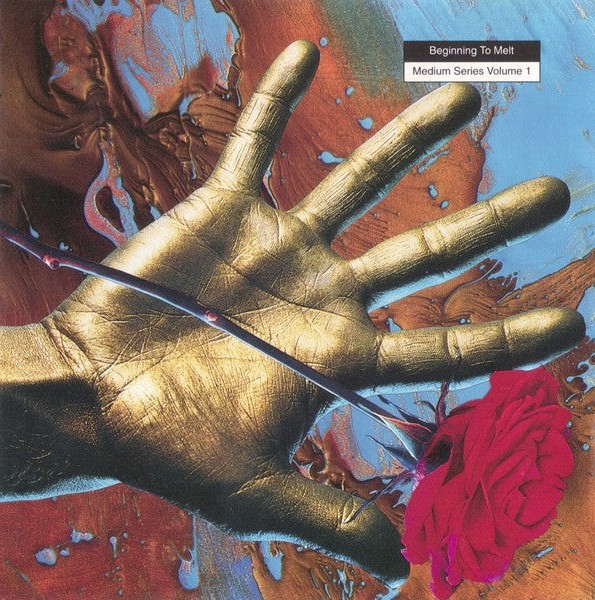
The first release in the Medium Series was Beginning to Melt (1993) and its title track is strongly reminiscent of the energy that Steve, Richard and Mick brought to ‘Big Wheels in Shanty Town’. Richard: ‘I had these chord progressions I was working on at the time, and I remember showing them to Mick during a visit to his place one day. The three of us would gather in one of Mick’s rooms and just play together and work through musical ideas. The full version of ‘Beginning to Melt’ came out of our time in that room. We really liked making tracks and just seeing where they’d go. That track in particular has a trance like feeling to it that some of the early Porcupine Tree material also had. There’s something nice about letting a track just breathe and go on for a bit. I don’t know if it’s just a seventies thing or something, but you just forget about commerciality and decide to let the material take you on a journey.’ (2026)
Mick’s familiar fretless is back at the forefront for ‘Beginning to Melt’, dancing around the construct of Steve’s drum pattern (programmed this time), with Richard’s sound design revealing new details with every listen. Like ‘Big Wheels…’ there are different movements within the piece as it develops, once again marked by changes in the percussive emphasis. There is some Karn brass and even electric guitar from Jansen. The ‘trance like’ feeling was enhanced on a remixed version included on a subsequent JBK ep, ‘Seed’, for which ‘the song went through a structural change’ (Barbieri, 1995).
This remixed version has an affinity for me with another piece that had been heralded even before Medium existed. Bamboo’s penultimate edition stated that ‘Steve, Richard and Mick have been working with No Man, a three piece band comprising of Tim Bowness on vocals, Ben Coleman on violin and Steve Wilson on keyboards and guitar. Together they have been collaborating on some studio recordings. The first quantities of No Man’s forthcoming album, Loveblows and Lovecries, will come as a double cd, the second disc containing a 21-minute collaboration with Jansen, Barbieri and Karn called ‘Song of Life and More’.’
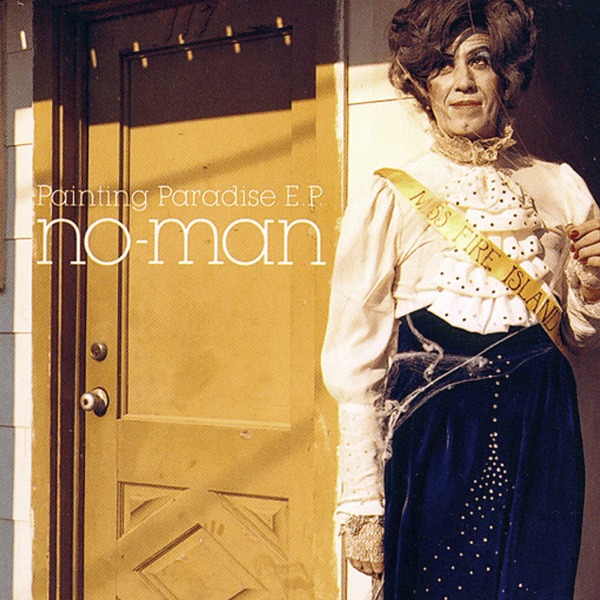
As it happened, the track in question – recorded in Autumn 1992 – was held back and the ‘bonus cd’ idea was scrapped, no-man explaining, ‘we have decided not to do this since the free cd would have used up money which we feel is better spent on promotion and touring’ (1993). The piece did, however, see the light of day on their subsequent cd single ‘Painting Paradise’, under a new title – ‘Heaven Taste’.
Steven Wilson recalled the background in an interview for Matt Hammers’ excellent site dedicated to the band, All the Blue Changes. ‘If I remember correctly, it was an ambient instrumental that I created for what I suppose might have been a really early incarnation of Bass Communion [his solo vehicle for such work]. I remember doing a lot of ambient instrumentals in the early ’90s with the idea that I was going to do a side project. I can’t remember whose idea it was to get JBK to work on it. The original instrumental was about 12 minutes long. The full 21 minute version was constructed by piecing together three alternate mixes of the same track. The piece in the middle with the hand percussion for example, that was originally buried under the main body of the track. I soloed it and created a kind of percussion based remix and edited that into the middle of the track. I kept doing these different mixes and eventually I had three mixes that I really liked. I edited the three mixes together to create the full 21 minute version.’ (2021)
There are some official remixes available, Steven producing an 11 minute edit of the track for a 2016 vinyl and digital release, with a mix by Jimi Tenor on the flip-side. Essentially ‘Heaven Taste’ is JBK with Wilson and Ben Coleman, no-man’s vocalist Tim Bowness being credited only with ‘saintly restraint’. Mick’s bass starts off not unlike the ‘pulse bass’ of ‘Big Wheels…’, but then there’s a gorgeous moment at around 13min 20secs on the original (or 4min 50secs on the edit) when the fretless breaks free, accompanied by blasts of Mick’s suona/dida that would have been at home on Tin Drum-era Japan.
Richard Barbieri: ‘Steven was overseeing pretty much all the music right from the beginning. He is an unstoppable creative force and can craft songs and arrangements in real time it seems. Working with Steven was strange at first because of the speed at which things move along. I had always been very methodical in my process, discarding many ideas in search of the perfect sound/overdub. So these rollercoaster recording sessions were daunting but I went with it. We had a good connection musically that continues to this day.’ (2021)
There was to be a footnote to the ‘Big Wheels in Shanty Town’ story that would provide a bonus to the musicians, like those unexpected royalties from Japan videos, albeit this time their music had reached an audience of an altogether different scale. The inaugural Medium newsletter of Spring 1993 carried a story under the heading ‘Virgin Exercise Legal Rights’. ‘The Production Company of the Cindy Crawford fitness video sought permission to utilise a Rain Tree Crow composition as part of the soundtrack. This was granted. The company at a later date announced that the track in question, ‘Big Wheels in Shanty Town’, would not be used. It transpires, however, that the piece was included, thinly disguised by an overdub. Those concerned at Virgin analysed the track and confirmed it as the original recording and are now seeking compensation for this on two levels.’
Mick Karn: ‘It was through Cindy’s work, if I may refer to her in such familiar first name terms, that after 19 years as a professional musician, I finally earned enough money to begin the process of buying the first and only flat I have ever owned in London. And none of it had anything to do with being a member of Japan nor through any endorsement of solo work, in fact, Cindy had probably been totally unaware of either.
‘With the exception of Jane Fonda’s Workout, I think I’m right in saying that Cindy Crawford was one of the pioneers amongst celebrities of making popular exercise videos. At the height of her career, Cindy sold millions of copies worldwide, and by doing so helped so many people inadvertently listen to my bass playing. It made front page news in all the daily papers…Virgin were in the middle of a lawsuit, in which they were claiming that music written by artists signed to their label had been used without permission, and no royalties paid to either. The artists, or band, in question were never named, probably because most people would have never heard of them. And that’s exactly why the musicians who’d composed the music for Cindy Crawford’s exercise video decided to throw in a track by Rain Tree Crow and call it their own: nobody would ever find out. Brought to our attention by an admirer calling our manager’s office, we were in no doubt.
‘It hadn’t been cleverly disguised, recorded over, sampled or looped, but was the full album version of ‘Big Wheels in Shanty Town’ used several times over. Musicologists were brought in. They agreed, and after what seemed to take forever, compensation was paid, one single payment, a percentage of 4 million copies rather than a meticulous division of the different royalty rates from different territories. Large portions were taken by Virgin and solicitors, managers and publishers, and a small amount left for the four of us. Enough for a deposit on a flat. But, other than financial, it felt like poor reward for such hard work. Music heard and understood by very few, emotional contributions that were painful at times. The culmination of four musicians’ work together in their re-union after a break of eight years, all of it reduced to background muzak for stretching and breathing in rhythm and time.’
At the time of writing, Richard Barbieri has been on the promotional round for his latest solo album, Hauntings. Inevitably, questions were posed about past endeavours. ‘Rain Tree Crow was very enjoyable for us to make as a group,’ he reflected. ‘We went into the studio with virtually nothing and let the ideas take shape as they came to us. The end result was something that sounded far more organic than anything we had done before. We found that the chemistry we all had was still intact even though we were working in a different way than we had with Japan. Looking back on it, it’s a remarkable album.
‘What ended up happening near the end of the recording process was that the label wanted us to have the record be released under the name Japan, which David was opposed to. We tried to get him to change his mind, but he was dead set on it not being seen as a Japan album. In hindsight, he was right to be unhappy with that suggestion. The other big change was David deciding to record his vocals and later mix the album away from the rest of us. That decision ended up bringing back old tensions that caused things to fall apart. It’s still an album that I look back fondly at, even though it did have a troubled ending.’ (2026)
‘Big Wheels in Shanty Town’
Richard Barbieri – synthesisers; Djanka Diabete – vocals; Djene Doumbouya – vocals; Steve Jansen – drums, percussion, Hammond organ; Mick Karn – pulse bass, ‘Wah Wah’ bass, brass; Bill Nelson – additional guitar; David Sylvian – Hammond organ, guitars, shortwave radio, electric piano, vocals; The Phantom Horns – Gary Barnacle & Peter Thoms (arranged by Sylvian/Karn).
Music by Rain Tree Crow. Lyrics by David Sylvian.
Produced by Rain Tree Crow. From Rain Tree Crow by Rain Tree Crow, Virgin, 1991.
Engineered by Pat McCarthy. Mixed by David Sylvian and Steve Nye at Olympic Studios, London.
Computer programming by Steve Jansen. Keyboard programming by Richard Barbieri and David Sylvian.
The album was recorded between September 1989 and April 1990 at Miraval Studios, Le Val, France; Condulmer Studio, Zerman di Mogliano, Italy; Marcus Studios, London; Air Studios, London; The Wool Hall, Bath; Ropewalk Studio, Dublin; Mega Studios, Paris, France; Eel Pie Studios, London.
lyrics © copyright samadhisound publishing
‘Big Wheels in Shanty Town’ – official YouTube link. It is highly recommended to listen to this music via physical media or lossless digital file. If you are able to, please support the artists by purchasing rather than streaming music.
Mick Karn quotes are from his book, Japan & Self Existence, 2009. Other artist quotes are from interviews in 1991 unless otherwise indicated. Full sources and acknowledgments for this article can be found here.
The featured image includes shots of Steve Jansen, Richard Barbieri and Mick Karn from the Medium Newsletter of Summer 1993 which announced the release of Beginning to Melt. The photograph of David Sylvian is from 1991 by The Douglas Brothers, from his artist facebook page.
Download link: ‘Tono’ (Apple); ‘Big Wheels in Shanty Town’ (Apple); ‘Beginning to Melt’ (bandcamp); ‘Beginning to Melt (remix)’ (bandcamp); ‘Heaven Taste’ (bandcamp); ‘Heaven Taste (Original Mix edit by Steven Wilson)’ (bandcamp)
Physical media: Rain Tree Crow (Amazon); Amen (Amazon); Beginning to Melt (discogs); Seed (discogs); ‘Painting Paradise’ (discogs); Heaven Taste (bandcamp)
JBK’s 1997 live version of ‘Big Wheels in Shanty Town’, featuring Steven Wilson on guitar, can be found on their album Playing in a Room with People here.
‘Atmosphere is very important for us. We like it to build up something slowly. It is a way of working we also used in the days of Japan.’ Richard Barbieri, 1995

More about Rain Tree Crow:
Red Earth (as summertime ends)
New Moon at Red Deer Wallow
Blackwater
Blackcrow Hits Shoe Shine City

Absolutely fascinating, I had no idea about the fitness video royalties. Thanks for this!
LikeLiked by 2 people
You are welcome!
LikeLike
Intertwining of artistic paths between individuals and bands so meticulously yet compelling crafted throughout all these years…
Thank you from the heart
LikeLiked by 2 people
I was living in Tokyo at the time the album came out, so naturally there were articles and interviews in the music magazines. In one interview, Jansen and Barbieri were asked if Rain Tree Crow could be seen as a sixth Japan album; I believe it was Barbieri who emphatically replied “it IS the sixth Japan album”. (Of course, the interview answers were translated into Japanese, so I can’t be sure of his exact words—but the sentiment was perfectly clear.)
Interesting details I hadn’t been aware of: I’d never noticed the Oliver Hardy sample before. Also, I’ve been mis-hearing the Gregory Peck sample (which I hadn’t recognized as being Gregory Peck) as simply “give a damn”.
LikeLiked by 2 people
I know this album for so long and never realised that there is a voice that speaks german in this track. So I tried to figure it out and it’s: “vier-neun, vier-fünf, vier-neun, vier-fünf, vier-neun, vier-fünf, vier-neun, Ende.” Which means: 4-9, 4-5, 4-9, 4-5, 4-9, 4-5, 4-9, end.
LikeLiked by 1 person
Thank you for this insight, Hannes! I love the way it’s woven into the music.
LikeLike
Bittersweet. 1989 was a dull time for British pop music. This was an opportunity…This article has made me want to visit the album beyond ‘Blackwater’ (which remains on my stick)…Another gem for me is ‘Pocket Full Of Change’…I disagree with Richard that the album is Japan…but these two tracks from it are Rain Tree Crow and could also be Japan…I agree (now) with David, that the album was right not to go out as Japan…but that, peversely perhaps, resulted in a lost opportunity in a dull time…apart from ‘Blackwater’ as a single, of course…I feel, rightly or wrongly, that ‘Boat’s For Burning’, signalled the end for both groups (the collective)…My gigging picked up markedly in the 90’s and I’m sorry that the whole collective didn’t come back before 2011, because there is no doubt that I would have seen and heard them…”Sash, next time we’re downloading a few tracks, please get ‘Pocket Full Of Change’ by Rain Tree Crow, for me”. X
LikeLiked by 1 person
Loved the article.
Might read it again in February as a warm up for the Exit North/Jansen/Barbieri gig
LikeLiked by 1 person
Looking forward to witnessing that show!
LikeLike