I Swallowed Earth for This

‘a supernova on a petal’

Spoken word has provided a rich seam within David Sylvian’s work over the last decade or so. He has vocalised the writing of some fascinating authors, from the poems of Arseny Tarkovsky for Ryuichi Sakamoto’s performance at the Concert for Japan and ‘Life, Life’ featured on his master-work async, to an extract from In the Solitude of Cotton Fields by playwright Bernard-Marie Koltès for a collaboration with Mark Wastell and Rhodri Davies released as There is No Love; from the descriptions of a myriad of lesser gods by Paal-Helge Haugen on Uncommon Deities, to Japanese haiku and death poems written by Buddhist priests for the Twinkle³ album Upon this Fleeting Dream. Indeed, at the time of writing this article Sylvian has just added to the canon by reciting Emily Dickinson’s poem ‘I Measure Every Grief I Meet’ for a collaboration with Icelandic cellist and film-score composer Hildur Guðnadóttir (link in footnotes).

Continue reading “I Swallowed Earth for This”

The Greatest Living Englishman

‘a creative act of erasure’

In 2003, Clive Bell (who would later feature with David Sylvian on recordings such as When Loud Weather Buffeted Naoshima and the Twinkle³ project Upon This Fleeting Dream) visited Tokyo for The Wire magazine to investigate a newly-emerged music scene, and to attend one venue in particular – Off Site. Bell’s in-depth report describes the location. ‘As you leave Yoyogi station in Tokyo, the 60-odd storeys of the NTT DoCoMo skyscraper loom high above you…Like the offspring of a thunderous mating between the Empire State Building and Big Ben, the tower features a spire, glowing green lights in recesses, and a colossal clock lit up in white.’ Incongruously, Off Site is just 50 metres away, ‘one of a row of old, highly ordinary houses somehow clinging on in the shadow of Shinjuku’s skyscrapers. These are flimsy constructions of wood and plaster. Inside, Atsuhiro Ito and his wife have converted their house into a spartan gallery and performance space on the ground floor, seating about 50 maximum, and, upstairs, a welcoming cafe which also functions as a book and record shop.’

Continue reading “The Greatest Living Englishman”

The God of Single Cell Organisms

‘the muscle that connects me with the world’

Two voices share the listener’s focus on the opening track of Uncommon Deities, Jan Bang and Erik Honoré’s reimagination of the audio-visual installation of the same name staged at their Punkt Festival in 2011. First, David Sylvian reads Paal-Helge Haugen’s poem ‘The God of Single Cell Organisms’ in English translation, his precise diction crisply conveying the poet’s characterisation of a forgotten lesser deity who ‘in his impotence…seeks refuge among the microbes.’ As we grapple with the concept of a god who is so insignificant that ‘we cannot find him there, with our immense microscopes,’ a tight burst of bowed strings serves as the introduction to the second voice.

Continue reading “The God of Single Cell Organisms”

Song

Last words

The first time I heard Franz Wright’s voice I had no idea of the identity of the speaker. It was 7 September 2013 and the premiere of The Kilowatt Hour, a trio of Christian Fennesz, Stephan Mathieu and David Sylvian, taking place at the Punkt Festival in Kristiansand, Norway. The venue was the main screen at the local cinema: the sound system powerful and detailed, the acoustics perfect.

Continue reading “Song”

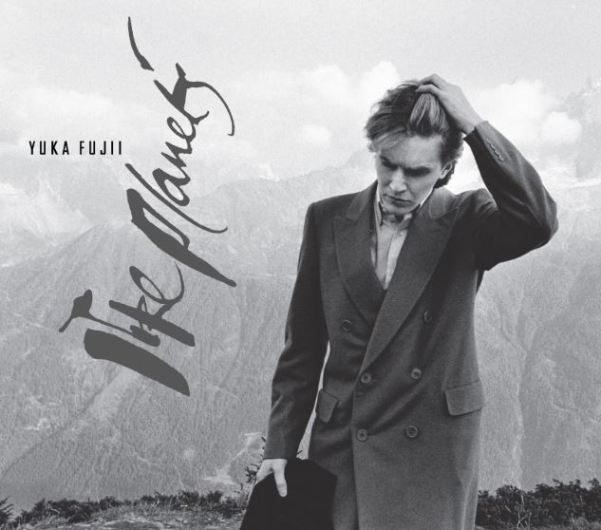
Like Planets – Nagarkot

The potency of the past

Alongside musical performances and live remixes at the Punkt festival there is a seminar programme embracing a wide range of topics related to creativity and innovation in the art of sound. For the fifteenth festival in 2019 the seminar curator was musician, musicologist and writer David Toop. ‘The theme of the Punkt seminars this year is Voices of Memory: sounding, listening and the sense of who we are,’ he wrote in the festival programme. ‘Memory is vital to music, if only because sound is always running away from us, slipping into the air like a ghost. To understand form, relationships, the developing shape of a musical piece depends on keeping a memory alongside our immediate sense of what is happening…There are many facets to musical memory, ranging from personal and cultural identity, to archival and technological memory, to the different memories involved in notation or improvisation, to the way we constantly rewrite our memory of music in relation to our changing selves.’

Continue reading “Like Planets – Nagarkot”