Do You Know Me Now?

‘something was lost somehow’

English artist Phil Collins was a nominee for the prestigious Turner Prize in 2006. The Tate Gallery website offers an insight into his work in the supporting text for his exhibit: ‘Phil Collins often operates within forms of low-budget television and reportage-style documentary to address the discrepancy between reality and its representations. In his projects, Collins creates unpredictable situations and his irreverent and intimate engagement with his subjects – a process he describes as “a cycle of no redemption” – is as important for his practice as the final presentation in the gallery.’

Continue reading “Do You Know Me Now?”

Grains (sweet paulownia wood)

‘put a crown upon his head’

The collaboration between Ryuichi Sakamoto and Alva Noto, alias German electronics pioneer Carsten Nicolai, began with the album Vrioon in 2002. When the pair first met, Ryuichi was engaged in a bossa nova project with Jaques and Paula Morelenbaum which probably couldn’t be farther removed from the music that they would make together. ‘I like collaborating with people who have something I don’t have – a skill, an idea,’ said Sakamoto. ‘I’m always looking for something surprising – like everyone else, I need inspiration and triggers. Listening to new things, looking for new sounds has become part of my nature. And I think that’s why you collaborate – to stay open. Unexpected things happen and you must be very flexible. You can of course hide by yourself, digging into your inner depths – we all need that kind of space sometimes. But working with other people’s ideas and artistic presentation can be so enriching.’

Continue reading “Grains (sweet paulownia wood)”

The Devil’s Own

‘underlying tension, doubt, nervousness’

Gone to Earth was released in September 1986, well over two years after David Sylvian’s debut solo LP, Brilliant Trees. Customary press interviews coincided with the release of the double album and were published in September and October that year. A few months later, I was scanning the magazine racks in WH Smith at a London railway station, hungry for news of my favourite musicians, and I remember my surprise at spotting a photograph of Sylvian on the cover of Sound on Sound magazine. Sure enough, within the pages of the March 1987 edition was to be found a new interview with Sylvian undertaken by respected music journalist, Mark Prendergast.

Continue reading “The Devil’s Own”

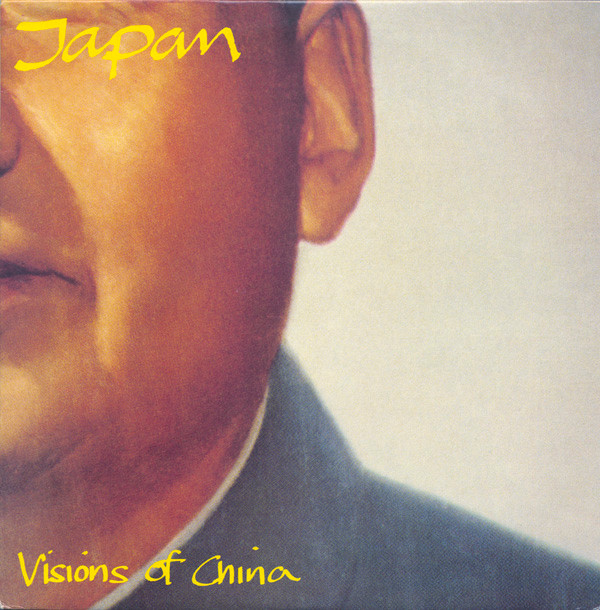
Visions of China

‘playing with images’

‘Credit where credit’s due. Yuka brought the first Chinese records home which filled my head with unknown sounds, and it was only a matter of weeks before they were circulated around the band and we were all hooked,’ writes Mick Karn in his book Japan & Self Existence of then girlfriend, Yuka Fujii. ‘I couldn’t get enough of them. It was always exciting to get home and listen to what I’d bought on the strength of the sleeve design alone. The best were the instrumental tracks, for it was the unusual instrumentation that left us wondering at how the absence of guitars, drum kit, synthesisers and anything else familiar, somehow still produced commercially driven music.

Continue reading “Visions of China”

Redemption

Approaching Silence

In 1989 a new building was opened for the Tochoji Zen Temple in Yotsuya, Tokyo. Initially established in 1594, the modern development was commissioned under the design of Takashi Serizawa to commemorate the Temple’s 400th anniversary. By now situated just minutes away from the Tokyo Metro amidst the bustle of modern Japanese urban life and commerce, the new complex skilfully combined modern design with a traditional aesthetic. Uniquely, Serizawa incorporated a basement auditorium within the layout and devised a plan for temple activities to be expanded to include cultural projects, particularly in the arena of contemporary art. Soon afterwards this basement venue was officially named ‘P3 art and environment’.

Continue reading “Redemption”