Wonderful World

‘how beautiful life is’

The US leg of the Everything and Nothing tour wound to a close with a show at the Wiltern Theatre in Los Angeles on 14 May 2002. It wasn’t long before David Sylvian’s attention turned towards new work after an extended period compiling and completing material from the preceding 20 years, firstly for the excellent vocal cd set which gave the tour its name and then for its instrumental companion, Camphor, which came out a couple of weeks after the LA gig.

Immediately following the tour, Sylvian’s brother, Steve Jansen, who had performed as drummer and percussionist in the stage band, took up residence at the New Hampshire property that was home to Sylvian, his wife Ingrid Chavez and their young family. ‘God, it gets increasingly difficult to place events firmly in time,’ wrote Sylvian later when the Nine Horses record – a trio with Jansen and Burnt Friedman – was released in 2005. ‘I’m trying to recall how this project got started. I’m not entirely convinced of the dates nor of the intervals between, but it seems that Steve and I started writing together in the late summer or fall of 2002, at least that’s what the dates on the digital photographs appear to tell me.’

Continue reading “Wonderful World”

A Danger to Ourselves – Covenstead Blues

‘working obsessively with sound’

‘I’ve been slightly afraid,’ revealed Lucrecia Dalt as her album A Danger to Ourselves was released after months of intricate crafting and then the best part of a year taken up with the practical machinations required for its public launch. ‘I say afraid because I recognise it as a fear to expose the personal in music. I’ve always been somewhat reluctant to do it, so it felt more comfortable to invent a whole story that I could talk about, so I could detach emotionally and create something based on that. But in this one it felt for the first time, very naturally, like I wanted to work from the process of pretty raw sincerity.’

Continue reading “A Danger to Ourselves – Covenstead Blues”

Cosa Rara

‘a strange thing’

The Attenborough Centre for the Creative Arts is part of the University of Sussex, occupying an impressive building within their Brighton campus. Originally opened in 1969, the architecture was the design of Basil Spence, facilities being housed within three red-brick rings which apparently represent the unity between the arts. Despite earning listed building status in recognition of its architectural significance, the space was closed in 2007 due to funding difficulties. It ultimately reopened for public use in 2016 following extensive refurbishment.

Continue reading “Cosa Rara”

Alphabet Angel

‘unconditional love’

At the peak of Japan’s popularity in 1982, David Sylvian was posed a question during an interview with The Face: ‘Do you like children?’ The 24-year old’s response was: ‘I hate children. Children in airplanes is my biggest hate, I just cannot stand having children in such close contact and not being able to get away from them.’ Whilst some might sympathise regarding experiences when flying, Sylvian’s outspokenness reminds me how young he and his fellow band-members were at the height of their success, and how they had existed within a relatively insular world to that point.

Continue reading “Alphabet Angel”

Blackwater

‘the possibility of new life’

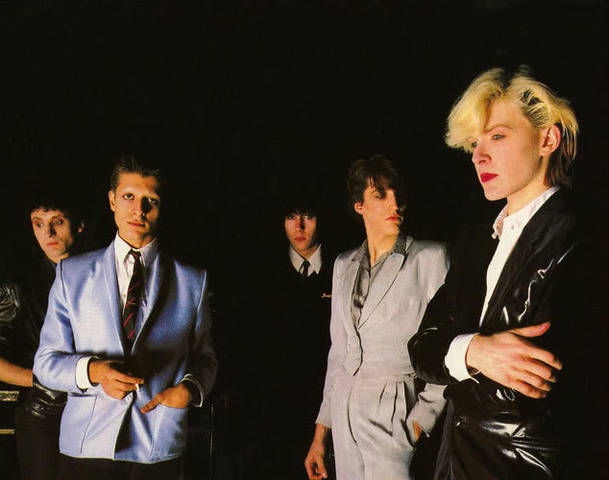
The story of the ‘reformation’ of Japan (or to be accurate, of the four members who created the band’s final studio album, Tin Drum) was something that I followed in real time through the pages of the fanzine Bamboo. The first hint of such momentous news was contained in the Summer 1989 edition and almost comically understated, undoubtedly because the situation developed whilst the print publication was being finalised.

Continue reading “Blackwater”