Protopunk – Brightness Falls

‘live in lightness’

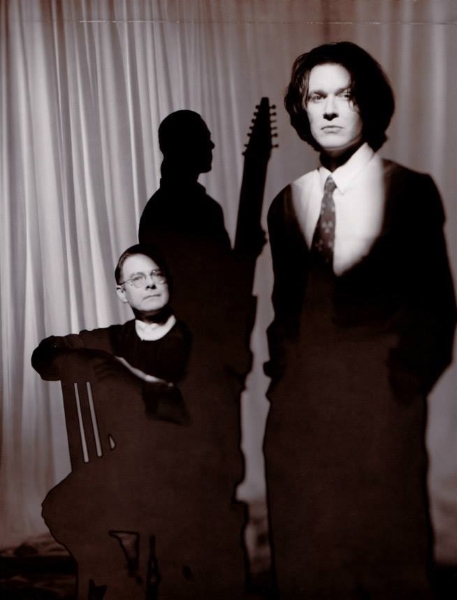
Trey Gunn knew that he wanted to pursue a life in music and, despite the prevailing spirit of contemporary culture, was keen to develop an understanding of the fundamentals. ‘I went to the University of Oregon and I studied composition. I had played classical music as a kid, like from 6 or 7, and played Bach or Bartok or whatever you did back then on piano, and transitioned to bass and acoustic guitar. I was in punk rock/new wave bands in the late ’70s and it was counter to the culture to study music. It was, “I’m going to go my own way,” and, “I’m NOT going to learn!” – I’m talking about the punk culture – and sometimes that was cool, sometimes that would produce unusual things…but I still felt like if I was going to be a professional, whatever that meant… basically on track to get really good at something, then I should learn about the materials, even though it was counter to everyone I knew… I thought, if I was a writer, I would want to learn how a sentence is structured; it just makes sense, even if you are going to be deviant… I wanted to learn more stuff and get exposed to more things.’

Continue reading “Protopunk – Brightness Falls”

Salvation

‘realising emotions in music’

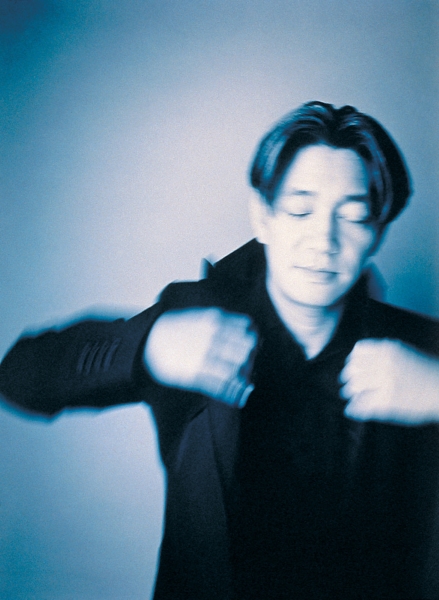
An article was posted on Ryuichi Sakamoto’s official website under the heading: ‘Sakamoto has successfully ended his tour of the world.’ The text was a short message from the artist himself:

‘Our world tour which started in June has finally come to a close, ending in Osaka on September 1. Although only a week has passed since this last show, I am still feeling a bit burned out.

Continue reading “Salvation”

Midnight Sun

‘finding common vocabulary’

Dead Bees on a Cake opens with the album’s longest track, ‘I Surrender’, a song David Sylvian said ‘encapsulates the theme of the album’, being – as he described it – ‘love, devotion and divine intoxication.’ Embraced by a golden glow of inner-longings fulfilled, we are transported to a place where finally ‘the stars are all aligned’ and bookish enquiry is cast away in favour of first-hand experience: ‘“Come find the meaning of the word inside of me.”.’

Continue reading “Midnight Sun”

The Greatest Living Englishman

‘a creative act of erasure’

In 2003, Clive Bell (who would later feature with David Sylvian on recordings such as When Loud Weather Buffeted Naoshima and the Twinkle³ project Upon This Fleeting Dream) visited Tokyo for The Wire magazine to investigate a newly-emerged music scene, and to attend one venue in particular – Off Site. Bell’s in-depth report describes the location. ‘As you leave Yoyogi station in Tokyo, the 60-odd storeys of the NTT DoCoMo skyscraper loom high above you…Like the offspring of a thunderous mating between the Empire State Building and Big Ben, the tower features a spire, glowing green lights in recesses, and a colossal clock lit up in white.’ Incongruously, Off Site is just 50 metres away, ‘one of a row of old, highly ordinary houses somehow clinging on in the shadow of Shinjuku’s skyscrapers. These are flimsy constructions of wood and plaster. Inside, Atsuhiro Ito and his wife have converted their house into a spartan gallery and performance space on the ground floor, seating about 50 maximum, and, upstairs, a welcoming cafe which also functions as a book and record shop.’

Continue reading “The Greatest Living Englishman”

The Beekeeper’s Apprentice

‘subtle shifts of perception’

“The quality of art is that it makes people who are otherwise always looking outward, turn inward.” The Dalai Lama

The above quotation headed David Sylvian’s artist ‘statement’ in the 1991 book of the Ember Glance: The Permanence of Memory installation, the centrepiece of a boxed set commemorating the event held in Tokyo the previous year. Sylvian expanded upon the thought in his own reflections:

Continue reading “The Beekeeper’s Apprentice”