The first music that I heard performed by Michael Brook was undoubtedly the soundtrack to the 1986 film Captive, a joint project between Brook and The Edge of U2. To be specific, it was the single ‘Heroine’ that caught my attention, the theme to the film sung by a teenage Sinéad O’Connor over guitars and effects by the main protagonists with drums by Edge’s U2 bandmate Larry Mullen Jr. I played the vinyl endlessly.
How I came to be aware of this album is lost in the mists of time. I’d enjoyed the way Brian Eno and Daniel Lanois had transformed U2’s sound for The Unforgettable Fire, heading on a whim to Wembley Arena without a ticket when they toured the album and being lucky enough to obtain a ‘restricted view’ seat at the box office on the day, my vantage point high up to the side of the stage. That I couldn’t see the backdrop did not detract one bit from the experience.
‘Heroine’ was released as a 7″ in October 1986, the month before Sinéad appeared at a party organised by Bamboo fanzine at the 100 Club on London’s Oxford Street. There she was accompanied by Japan guitarist Rob Dean for five numbers – one her own cover of ‘All Tomorrow’s Parties’ – in what the fanzine stated was ‘her first live performance.’
When I caught up with Michael Brook recently, I asked him about working with O’Connor at the very start of her musical career. ‘She was around 19 when we did that and just this sort of wide-eyed teenager who was very keen to do recording, and she did a great job.’ The songs for her debut album, The Lion and the Cobra, existed in demos at the time and the two discussed Brook taking the production role. In the end a label producer was appointed, whose work O’Connor profoundly disliked, so recording was restarted with one of the engineers from the Captive soundtrack, Kevin Maloney, co-producing with the artist. Rob Dean features on the majority of tracks. Michael observes that the final version was faithful to the spirit and sound of those original demos.
Brian Eno is a figure entwined within Brook’s musical world, not only introducing him to The Edge, but also being the driving force behind his move to the UK. The two first came into contact through Jon Hassell. ‘How I met Brian was through Jon. I’d met Jon in school in Toronto and helped him, a little bit, make his first record. And then he asked me to do some concerts with him, so I was kind of mixing, sampling and looping, and playing guitar on stage. And we did quite a bit of touring, which was great. Then we came back from France and we went to Dan Lanois’ studio in Hamilton to work on Jon’s album, and Brian was helping with that.’ That record was Dream Theory in Malaya – Fourth World Vol 2, capturing Jon’s sound that David Sylvian would weave so effectively into ‘Brilliant Trees’ and the Words with the Shaman ep (read more here). ‘He had his own thing,’ says Brook of Hassell. ‘It was the real deal. A very creative, original person.’
Michael is credited with bass on two tracks, ‘Courage’ and ‘Dream Theory’. ‘I actually ended up not being that involved, but because I was there, I had a lot of spare time, so that’s when I built the infinite guitar.’
Brook’s innovation of the “infinite” guitar satisfied his desire to create a signal from the instrument with undiminishing sustain, over which could be layered multiple other sounds and textures. He was yet to encounter an EBow, something he would first discover when witnessing a live performance by Bill Nelson. By the time he did acquire such a device, he figured that his home-built electronics were preferable, particularly given that they left both playing hands free rather than one being occupied engaging the EBow with the string.
Eno was the catalyst for Michael to take the plunge to become a full-time musician, and to make a move across the Atlantic to pursue his profession. ‘I had been working with Brian quite a bit, helping him with his video editing and installations, so we’d done a lot, all over the world. And he helped me make my first solo album, Hybrid. Back then I still had a day job. And so when he said he was setting up this management company, and he was moving from New York back to England, I thought, “Well, it’s an opportunity that I probably won’t get again!” So, I moved to England, took a chance.’
And when Brook landed in London, helpful connections were facilitated. ‘Brian thought that Edge would be interested in the infinite guitar, so he introduced us. Edge came to my bed-sit in Monmouth Road and asked me to make him one, which I did. And then we just kind of became friends.’ As well as Captive, the link-up gave the world U2’s ‘With or Without You’, its signature sound being borne of Brook’s invention, as credited on the sleeve of the multi-million selling The Joshua Tree (1987), another Eno and Lanois production.
It was in the late ’80s that Michael first encountered David Sylvian. ‘I knew David a bit because we had the same manager, Richard Chadwick. Maybe I met David through Russell Mills who organised these concerts at the Vauxhall church. I played there, I think Dead Can Dance, some 4AD people, John Foxx. He was a very good friend to me when I first moved to England.’ Russell socialised with his artistic friends of the time in a nearby pub, which Michael remembers them nicknaming “The Ambient Arms”.
In ’89 came an invitation from the ex-members of Japan to produce their reunion album, which we later came to know as Rain Tree Crow. More about this in a future article, but Michael remembers a positive experience at Miraval studios with extremely capable musicians who really didn’t need his input. After a few weeks, a mutual decision was reached that he would step back from the project. By then Brook had participated in some of the improvisations and when the record was ultimately released, a few of these parts remained – including an infinite guitar part on ‘Blackcrow hits Shoe Shine City’.
Before Sylvian and Brook would work together again, Michael undertook what would be a defining project. ‘I first met Peter Gabriel at the very first WOMAD in 1980, when I was playing with Jon Hassell, and then we sort of crossed paths again when Dan Lanois was producing the first record they worked on together [the Birdy soundtrack]. And then David Bottrill [later co-producer of Sylvian/Fripp’s The First Day] who I had worked with in Toronto along with Dan, ended up staying on and working with Peter for a long time. So we kind of crossed paths every once in a while. And then Dan Lanois did a concert, I think on the South Bank, and there was a little after party and Peter was there. He’d heard Hybrid and he knew about my involvement with Jon Hassell, and I think he thought from what was on Jon’s work and on Hybrid, that I might be a suitable producer for Nusrat Fateh Ali Khan.’
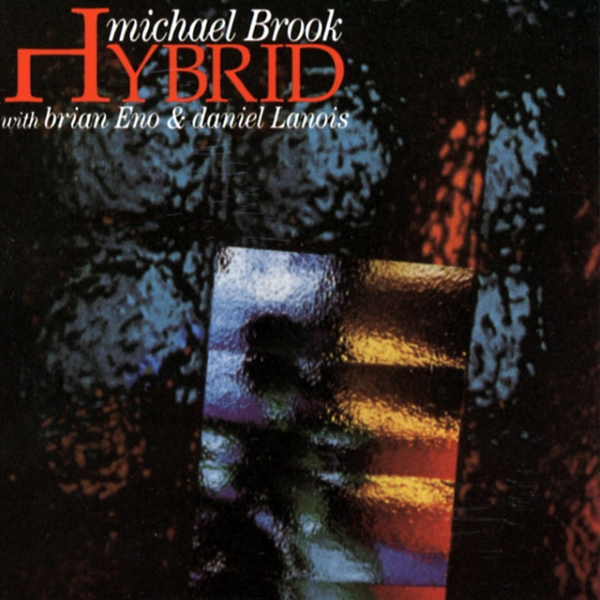
The atmosphere on Hybrid is heavy with influence of India, drones and ethnic beats to the fore. The title track could be drawn from Hassell’s own catalogue. The album’s name comes from Michael’s fascination for bringing together influences from both ancient music and modern, unconstrained by geography. ‘I’d been playing with Jon for a couple of years and was excited about combining things from multiple cultures. It was kind of a first attempt at that.’
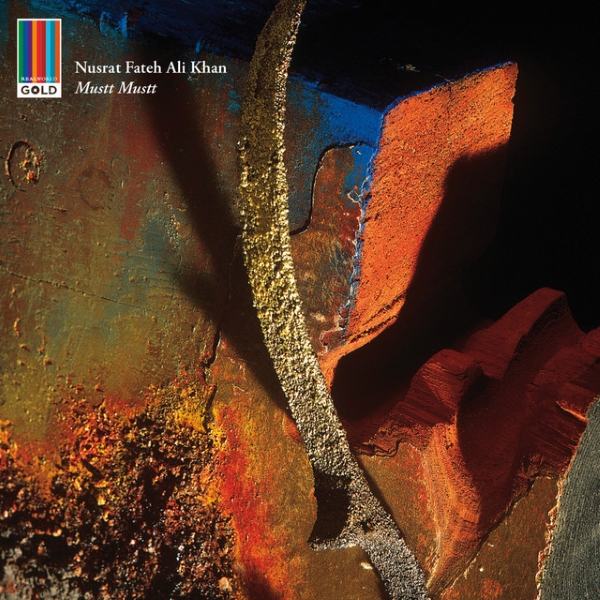
WOMAD and then Gabriel’s Real World label, established in 1989, were exposing an inquisitive audience to musical traditions from across the world, placing performers in a new context through ‘East meets West’ collaborations. Michael’s first experience of working with Sufi qawwali devotional singer Nusrat Fateh Ali Khan yielded Mustt Mustt, released in 1990, engineered by David Bottrill and adorned with a Russell Mills artwork sleeve. Emphasising the cross-cultural influences at play, a Massive Attack remix of the title track closed out the running order.
Another studio encounter was with Senegalese singer Youssou N’Dour, Brook producing his album Set, also released in 1990. What was it that qualified him for these assignments with musicians from such diverse backgrounds? ‘I think it’s partly a kind of naivety. I don’t know anything about those cultures…They do, so they are going to stay to whatever degree they choose in their culture, and my job is to try and make it that the music feels right, feels good. And maybe it’s even helpful to be a little bit ignorant about it. You are not caught up in “is this adhering to a rule that I don’t know about?” I’m not worried about that. Maybe it helped focus them on the performance and the emotion which is what ultimately I think what most listeners connect with.’
Fast forward to 1993 and Michael Brook is part of the five piece band for Sylvian/Fripp’s The Road to Graceland tour. Drummer Pat Mastelotto and Brook are the two musicians added to the trio which had played live in Japan and Italy before The First Day was recorded, Stick player Trey Gunn being the constant along with the protagonist duo. Pat has recalled on this site his experience of auditioning at Real World studios (read here). Michael’s selection was more straightforward.
‘I’d crossed paths with Robert but I didn’t really know him,’ says Brook. ‘It was through David. I don’t remember how it came about, but it was great. I didn’t do an audition and I probably would have failed it! I’m a slow learner. The rehearsals that I was involved with, the main ones, were at Prince’s studio in Minneapolis because David was living there then. We were there almost a month or something. I don’t think we rehearsed anywhere else.’
Brook was not particularly familiar with Sylvian’s work, and this was a new context in which to work. ‘I really wasn’t listening to a lot of contemporary music at the time. So, I didn’t know it very well. The main struggle in doing all that was that I had very little experience learning other people’s music for one thing… that is a skill. And I’m really inexperienced at remembering music. I never had the training doing that kind of thing. So the learning curve for the material was difficult for me because I’m just not innately good at it or experienced at it, but we got through it.’
Odd time signatures were a particular challenge. ‘It was a great learning experience playing the Sylvian/Fripp material, some of which I wasn’t the best person for. You know, I’m not a kind of math rock person. There was one piece, it was in like 35/4, the time signature, and I don’t count when I play. I really shouldn’t have played on that song, because I really screwed it up half the time. But other things worked fine, I think.’
Once the tour kicked off in Japan, Michael realised that this was on a different level to his exploits up that point. ‘I mean, I’d never done proper touring before, it was always lugging suitcases of gear. It was kind of a dream come true playing in a proper band in proper places, everything was good. I hadn’t really done anything like that, I guess with Martha and the Muffins we had crew. This was music I was more into, plus I got to do my opening act. It was hard work. I completely enjoyed it.’
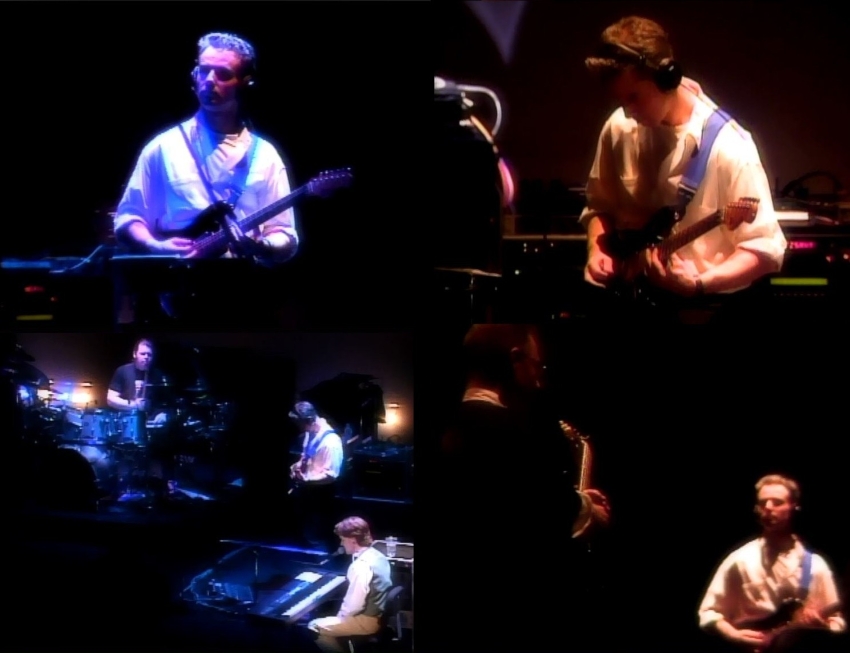
I remember being enthralled by Michael’s solo set, performed as support for the main act of which he was an integral part. It was a showcase of the possibilities opened up by the infinite guitar and the latest sampling and looping technology of the time. It’s been a real treat to relive this, more than 30 years on, through a video recently posted on Brook’s official YouTube site of his full Sylvian/Fripp support set on the fifth date on the tour, the Festival Hall in Osaka on 21 October 1993.
The closing segment of Michael Brook’s support set in Osaka, 21 October 1993. Link to the full video in the footnotes.
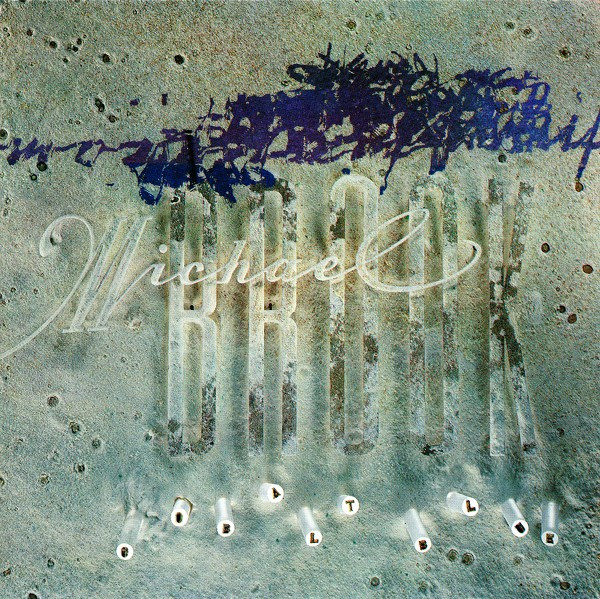
The music is rhythmic, bright and melodic, with five of the six tracks taken from Brook’s second solo album – Cobalt Blue (1992). For Michael, it was material that evidenced his growing confidence. ‘I was more familiar with recording for Cobalt Blue,’ he says, ‘but I think I was also quite inspired because I’d moved to England, I was a full-time musician, there was a lot more stuff going on. And I felt less inhibited, too. Hybrid I recorded in Toronto and I was around a new music scene that was very anti-melodic and anti-tonal, and touring with Jon, who was very tonal – and I always liked that – but I almost felt embarrassed to play guitar, play a melody or something. And when I was working on Cobalt Blue I didn’t feel that any more. I felt a bit liberated and I had enough equipment at home to be able to develop ideas and so on. It’s a little bit more free-feeling, I guess. Just go where the music takes me.’
Brian Eno’s hand was still much in evidence, his credit for multiple of the tracks noted on the sleeve as ‘structural rearrangement’. ‘I did a lot of work on my own and then from time to time other people would come in and maybe play or Brian would give me feedback on it. In retrospect, I really didn’t think much about structure and arranging so much. I think I could make good moments that resonated emotionally, but he had much more experience, and one of his great talents is arranging and structuring. He made a pretty big difference to the album, I think.’
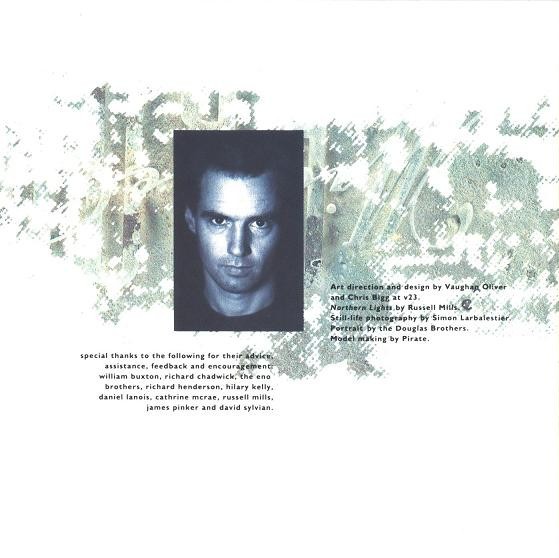
‘At the time it was notable technologically,’ says Michael of his Sylvian/Fripp opening set. Looking back, he realises how much jeopardy was involved in his complete reliance on new technologies. ‘I’ve been doing some concerts recently. You have to have two of everything in case something dies, anything that’s mission critical. Back then you never thought of it – and nothing ever broke, ever. The sequencer that I used, it never screwed up – and if it had, I would have had to stop the concert.’
To complement the film of Michael’s support on 21 October 1993, we have the full Sylvian/Fripp show from Nakano Sunplaza, Tokyo on 26 October. Released on laser disc in Japan but still neglected from official release on DVD, we can witness the band hitting its stride in front of an audience. Robert Fripp’s presence is supremely poised, perched on a stool in the half-light as he performs a range of lead lines from blistering to lyrical.
What strikes me most about Michael is just how much he seems to be enjoying himself. There are slide guitar parts on ‘Every Colour You Are’ – a Rain Tree Crow number that he did not appear on for the record – and the reinvigorated ‘Wave’ that Sylvian has stated was a superior interpretation to the original on Gone to Earth. He grooves to the intricacies of ‘Jean the Birdman’ and the funk of the band’s version of Fripp’s ‘Exposure’, enthusiastically adding to the downright assault of ‘Firepower’.
Just as Sylvian has attested, Michael was impressed by Robert’s total commitment to the act of performing. ‘He’s so monk-ish in his dedication to it, and as the French say, formidable. He’s an incredible player. I’m a big fan of the stuff he did with Eno, which I think is some of the most interesting and enjoyable guitar playing ever.’ That David would strike out on tour with a new-born baby in tow was a show of his and Ingrid’s own devotion to the endeavour. ‘Of course, none of us had had babies, so we didn’t know anything about it!’
Concentrated rehearsal and then an intense schedule of shows had the effect of honing one’s craft. ‘I got to play a lot of guitar and I ended up in really good shape, because I was playing two hours a day…’
At the end of the Live in Japan laser disc comes the encore, ‘Blinding Light of Heaven’. Fripp’s distorted opening comes from the bass register of his Les Paul, bursting out into solos, first finger-tapped then rising to frenzies from the highest notes on the fretboard as the song reaches its crescendo. Sylvian adds guitar lines between his vocal, Trey Gunn takes the bass part on Stick, whilst throughout Michael maintains a deliciously catchy, crunchy treble riff. For Sylvian’s subsequent remix of the live album, Damage, there is less crunch and more of a wah-wah treatment to the sound.
It strikes me that, even with Trey often occupying the bass frequencies and Sylvian downplaying his own prowess, there are potentially four guitarists in this line-up… ‘So we were lucky, we probably couldn’t have had a wider spectrum of characteristics as guitar players,’ says Brook. ‘There’s David, Fripp, I don’t know where I am in that, and Trey, as you say, was sometimes in that spectrum. We thought it might be a challenge but it actually never was. Guitar players are a little bit like actors. Somebody might play a part super-simple – not that David’s not a very good guitar player – but I could never play like him. He’s got his style and, of course, he writes in that way a lot, using it.’
What Trey could command from the Chapman Stick was seriously impressive. The instrument might bear some resemblance to a guitar, but the differences in technique were vast. ‘It’s like starting over again on violin or something. It’s so complex. I thought of getting one but I think I played Trey’s a bit and it’s a bigger learning curve for me.’
Pat Mastelotto, ‘a lovely guy and a great drummer’, recounted to Anil Prasad for his excellent Innerviews site how Fripp’s attention to being wholly present in the performance would manifest in unusual ways for their encore. ‘Now, dig this. At one of the first Sylvian/Fripp shows in Japan, as we’re about to go out for an encore to play ‘Blinding Light of Heaven’, Robert said to me, “Throw me off tonight.” What the f*ck? He wanted me to play something so totally outside that he couldn’t play with it? I’ve never had anyone ask me to do that before.
‘So, for several shows, I’m doing the craziest fills I can think of. I’m doing whatever I can to throw him off, but none of it worked. Then one night, I counted off and did a big drum fill and stopped where I’d normally play. I put silence in there. Robert was left completely hung out to dry and looked like he almost fell off his stool. He looked at me with the biggest smile…’ (2017)
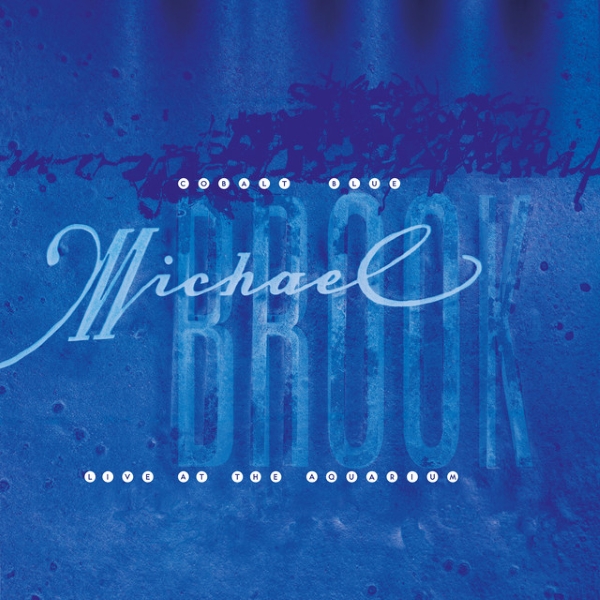
4AD have recently re-issued Cobalt Blue on both vinyl and cd in double album format with Live at The Aquarium, a 1992 solo set from the press launch of the original which gives us five of the six pieces performed before the Sylvian/Fripp crowds in crystal clear sound. What a delight. Also re-released by Real World on ‘rose green leaf vinyl’ is the follow up to Mustt Mustt, this time a full collaboration between Nusrat Fateh Ali Khan and Brook. Night Song (1995) brings that mystical voice into the context of Michael’s soundscapes, with Mick Karn appearing on the track ‘Intoxicated’ in a post-RTC reunion with Brook. The album would be Grammy nominated, The Guardian describing it as ‘a quite sensational slow-burner of an album… Nusrat’s incredible vocal control and gift for wending his way round an evocative melody is bolstered by Brook’s sensitive ambient, gently beat-based arrangements.’
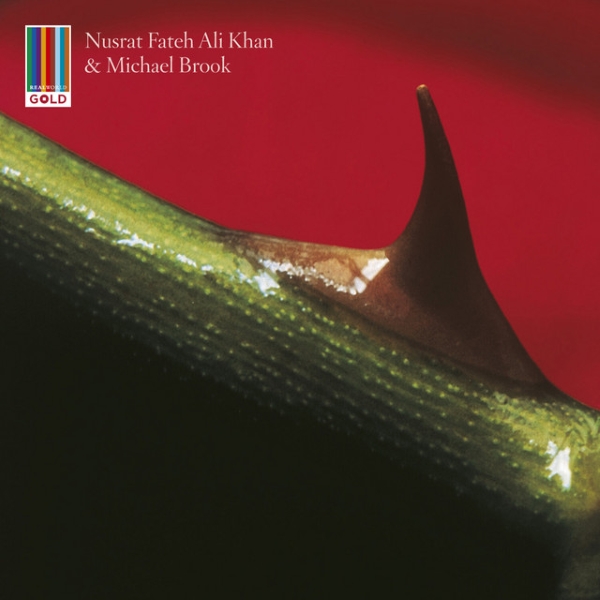
‘He was now a little more familiar with multi-track recording options and so had ideas for over-dubbing and things like that,’ remembers Michael. ‘Whereas on Mustt Mustt, I don’t think he’d been exposed to it that much, so it’s kind of like you’ve got his performance and that’s kind if it. Night Song was definitely more collaborative.’
As we chat about Michael’s work with such mercurial talents as Nusrat and Djivan Gasparyan – the Brook-produced Moon Shines at Night (1993) yielding the duduk line we’ve come to adore on Sylvian’s ‘Darkest Dreaming’ (read more here) – Michael stops me in my tracks with an observation that leaves me contemplating the complex relationship between influence and innovation in the music I value the most. ‘I learned from these cross-cultural collaborations a little bit about our culture that was sort of invisible to me. Certainly musically, but maybe in other ways: intellectually and culturally. It turned out that a lot of the people I worked with like Djivan, Hukwe Zawose, and Nusrat, they mostly just did the thing they had been trained to do and that they were incredible at. And we sort of changed the framing around that. But if you look in a detailed way at what they were actually doing, it was pretty much verbatim what they were doing in their culture. For a while I thought, “Why don’t they just do something a little different?” And then I realised, they spent decades learning how to do this thing this way, and had not really too much looked into trying make it different. You’re not entirely trying to perfect it, though there’s an element of that, you’re trying to get to the heart and soul of it. So, you stay within that culture. You know, Western culture is perhaps the most flexible of all the cultures.’
‘Blinding Light of Heaven’ – live
David Sylvian – keyboards, vocals; Robert Fripp – guitar, frippertronics; Trey Gunn – chapman stick, vocals; Michael Brook – infinite guitar; Pat Mastelotto – drums
Music by David Sylvian, Robert Fripp and Trey Gunn. Lyrics by David Sylvian.
Produced by Robert Fripp and David Bottrill. From Damage, Virgin, 1994.
Later re-released, remixed and produced by David Sylvian, Virgin, 2001.
lyrics © samadhisound publishing
‘Blinding Light of Heaven – live’ – official YouTube link. It is highly recommended to listen to this music via physical media or lossless digital file. If you are able to, please support the artists by purchasing rather than streaming music.
Many thanks to Michael Brook for his generous input to this article. The featured image is a series of stills from the Sylvian/Fripp laser video disc Live in Japan, 1995.
Sources and acknowledgements for this article can be found here.
Michael’s complete Sylvian/Fripp opening set can be viewed on YouTube here.
Download links: ‘Hybrid’ (Apple), ‘Ten’ (Apple), ‘Lakbossa (live)’ (Apple), ‘Blinding Light of Heaven’ (Apple), ‘Intoxicated’ (Apple)
Physical media links: Hybrid (discogs), Damage (David Sylvian remix) (burningshed) (Amazon), Cobalt Blue/Live at the Aquarium (4AD) (Amazon), Night Song (Real World) (Amazon)
‘Touring with a proper crew and a good set up, having roadies and all that was great – and I got to do my thing in front of audiences I never would have.’ Michael Brook, 2026

More about The Road to Graceland tour:

Excellent and valuable interview about a period of Sylvo’s music I confess however to finding a bit ‘difficult’…but an important musician. If people haven’t heard it, I’d also recommend Michael’s soundtrack to Paul Schrader’s movie ‘Affliction’, particularly the main title theme.
LikeLiked by 1 person