
In 1984, the Penguin Cafe Orchestra released their album Broadcasting from Home on the Editions EG label. A familiar name listed in the accompanying sleeve-notes was that of Ryuichi Sakamoto, with a co-composition credit for the track ‘Heartwind’. The PCO’s leader, Simon Jeffes, had already enjoyed a long association with Japan by this time, his first visit having been in 1972. ‘It’s as if I discovered myself there and became more confident, musically and personally,’ he said. ‘That trip to Japan was a very formative experience which I expressed in writing. That’s how the Penguin Cafe was conceived. Really it’s a state of mind, but I started writing about this place where you would feel at home and just be yourself. You could meet other people and some kind of home music would be played by an orchestra or a band. The Penguin Cafe Orchestra is now playing that music.’
An early version of the Jeffes/Sakamoto tune that became ‘Heartwind’ can be found on a compilation of soundtracks for commercials by Ryuichi, titled Works II – TV/inst. Here the track is called ‘Snake & Lotus’ and is identified as dating from 1982. The PCO played live in Tokyo in June of that year, and it may be that Jeffes’ visit to Sakamoto’s studio coincided with that event. He recalled the experience warmly in a perhaps unlikely 1985 interview in Electronic Soundmaker & Computer Music magazine, given the predominantly acoustic nature of the PCO’s output. ‘Heartwind’, for instance, boasted credits for Jeffes playing the ukulele and Geoffrey Richardson the tin whistle.
Given that Ryuichi Sakamoto was from the Yellow Magic Orchestra, ‘one of the most hi-tech outfits in the world,’ enquired the interviewer, ‘didn’t that lead to problems?’
‘Not really, it’s obviously partly a matter of taste,’ responded Jeffes, ‘but the stuff Ryu had done with David Sylvian was just about the first electronic music I had liked since Switched-On Bach [by Wendy Carlos]. And he’s got a tremendous understanding of the technical side of the synths and computers, so there was none of the struggle which would have got in the way if I had tried to use that stuff myself.’
‘Nowadays we get this mechanical electronic music,’ Simon told another interviewer. ‘It’s powerful because it has a certain basis and certain fundamental rhythms that affect people. But the bulk of music that uses drum computers and synthesisers sounds fairly dead to me. However, through working with Ryuichi Sakamoto and David Sylvian, and through listening to Tin Drum, a lovely album which Steve [Nye, Penguin Cafe Orchestra pianist] produced, and some of the Yellow Magic Orchestra pieces, I’ve found some music which in a strange way does move me. I don’t feel love or compassion or direct human warmth coming from it, but it does have a kind of aching beauty.
‘So I can’t sit here and say synths and drum machines are rubbish — some of my best friends use them and use them very well.’
Simon Jeffes had, in fact, enjoyed a front row seat for the first collaboration between David Sylvian and Ryuichi Sakamoto as artists in their own right, the earlier ‘Taking Islands in Africa’ being on Japan’s disc Gentlemen Take Polaroids. This was prior even to the PCO’s ’82 trip to Tokyo. When the pair got together in March 1982 to record a single at Martin Rushent’s Genetic Studios in Berkshire – Japan then being on a break for solo projects and Ryuichi having just completed sessions for Akiko Yano’s Ai Ga Nakucha Ne at Air studios in central London – Jeffes was invited to contribute.
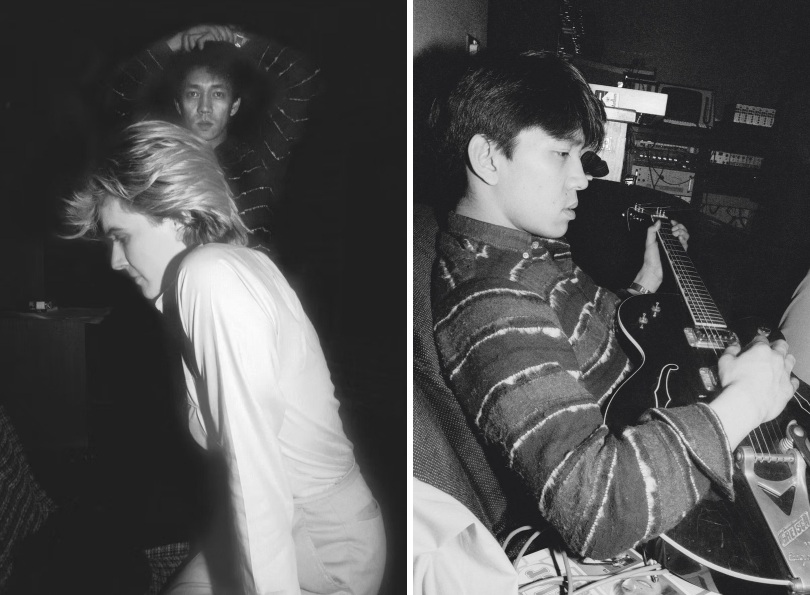
Steve Jansen was also involved and, as was so often the case, documented the proceedings in informal photographs that treat us to an insider’s perspective. Jeffes can be seen bowing a Gretsch guitar – very likely to be his own instrument. ‘When an idea comes,’ he would share, ‘I get it down as quickly as possible on whatever’s available, maybe my guitar, an old Gretsch Tennessean. (It’s a pig to tune, but I wouldn’t dream of getting rid of it, it’d be like throwing out my grandmother!)’
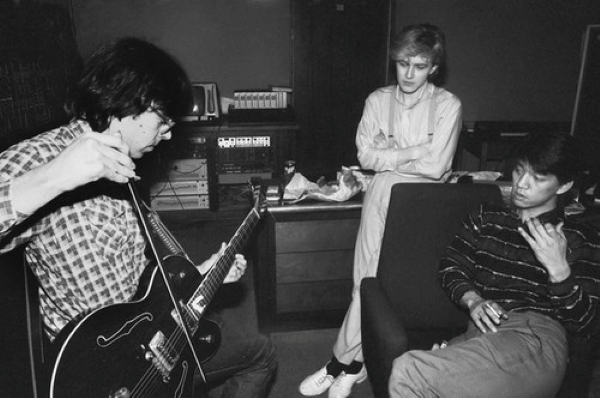
The common thread running between the musicians was provided by Steve Nye, co-founder of the Penguin Cafe Orchestra with Jeffes, producer of Sakamoto’s ground-breaking 1980 album B-2 Unit, co-producer of Japan’s Tin Drum, and who was sharing production duties for the new project in hand – a double ‘A’ sided single.
As it turned out, Jeffes’ contributions were not used in the final mix for the Sylvian/Sakamoto single. For ‘Bamboo Houses’, with the exception of some marimba performed by Ryuichi, the protagonists preferred an electronic approach. The trio’s paths would, however, cross again over the coming years. Simon was recording at Hansa studios in Berlin – as I understand it, for the Thomas Wilbrandt project The Electric V – when Sylvian’s seminal sessions for Brilliant Trees were taking place, Jeffes enjoying the superior facilities according to Sylvian’s recollection. Following Ryuichi’s contribution to Penguin Cafe Orchestra’s Broadcasting from Home, Jeffes returned the favour for Sakamoto’s Ongaku Zukan (1984) playing the cuatro – a Latin American guitar – on the track ‘Replica’. And Sylvian enlisted Jeffes to create a string arrangement for Gone to Earth’s ‘Wave’, which we got to hear only on the sublime instrumental version later included on the Camphor compilation.
Sylvian recalled that the final time he and Simon met was in 1988. The artistic respect was mutual. ‘He invited Yuka Fujii and I to a performance by the Royal Ballet Company. Dances choreographed around PCO’s music. We sat together. He was in great humour, obviously delighted and proud by this odd turn of events. That was the last time we saw one another.
‘Simon’s was always a gentle presence although that was accompanied I gather by a strong will and determination…He was smart with a sharp wit. There was an enviable makeshift quality about his early work with the PCO. His studio where many recordings were made had a homely quality to it. How he managed to squeeze all of the members of the band into that tiny space I don’t know, but it must’ve felt intimate in the same way that those gatherings of musicians in the pubs of Ireland sometimes feel. Core groups of well trained musicians reaching beyond themselves with humour and invention.
‘He appeared to be constantly excited by the researching of new forms, creating hybrids, making new connections. At least that’s the impression that stays with me. I was, after all, an acquaintance rather than a close friend, so these are just surface impressions’ (2002). Simon died in 1997 at just 48 years of age.
Listening back to ‘Bamboo Houses’ over 40 years after its first release, it’s still evident why the recording met with Simon’s approval. ‘Too often people are overwhelmed by electronic instruments and that leads to a certain blandness in the sound they produce with them,’ he observed, bemoaning the fact that synth owners were guilty of ‘getting bowled over with the first sound it produced, and that was that!’
Whilst the single might not be regarded as a huge stylistic step forward from Japan’s Tin Drum, it again demonstrates an unflinching desire to programme unique sounds from the equipment at the musicians’ disposal. Sounds that, whilst synthetic, were scrupulously designed to convey an authentic feel. Whilst ‘Bamboo Music’ was always going to receive the most attention as the more commercial offering of the two ‘A’ sides and boasting a promotional video, ‘Bamboo Houses’ was my favourite track from the outset. It’s a fantastic headphone listen, tones bouncing from one extreme of the stereo mix to the other, and a joy to pick out the many different synth lines and follow them through the track.
Steve Jansen was asked about their ‘ever-increasing standard of recording’ in an interview undertaken around the time of the Genetic Studios session. ‘It seems to take more and more time,’ he acknowledged. ‘I thought it would be quicker, but we’re always looking for getting more out of it. I’ve been working with Dave on this thing for Ryuichi, and it’s taken three weeks – for a single, it shouldn’t be allowed, but that’s the way it’s been because of the way we work now.
‘We don’t just go in the studio and put down the first thing that sounds good, we listen to it and make sure it’s going to stay sounding good, which you can’t do in an hour, you have to live with it, which isn’t cheap. But that’s the way we get results.’ (1982)
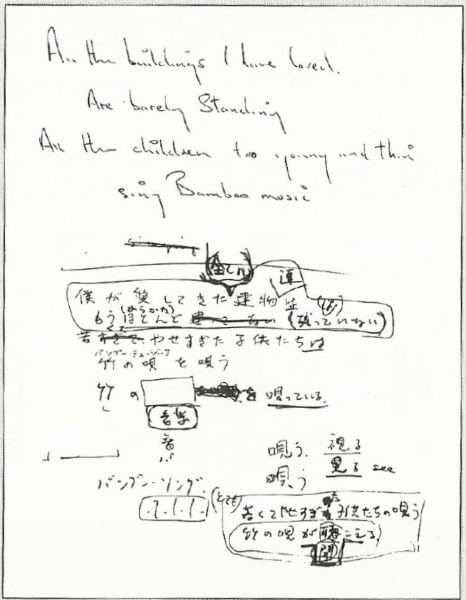
The longer notes in the intro have what I can best describe as an in-built rhythmic oscillation. Ryuichi’s close mic’d recitation – uttering in translation similar lines to those that Sylvian later sings – exudes both intimacy and mystery. The mid-song break changes the dynamic with the entry of the marimba, and I adore the way the track resolves as the arrangement is pared right back.
‘All the buildings I have loved
Are barely standing
All the children so young and free
Sing bamboo music’
‘I’d admired Yellow Magic Orchestra’s albums from the first record onwards,’ said Sylvian, ‘and there was a similarity in approach to sound that could be identified in both his group and mine. I suppose it was being excited by sound and working with it on an interesting level. Ryuichi was the most accomplished musician I’d ever worked with. He’s a classically trained pianist and has worked in various areas of music, so when I first worked with him it opened up the possibilities of what writing and recording could be like.’ (1987)
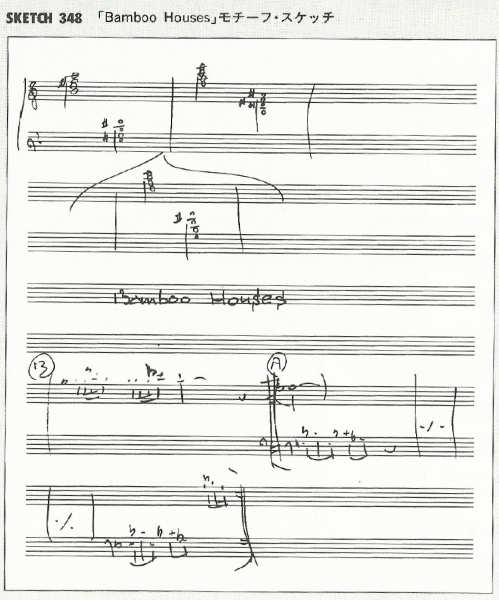
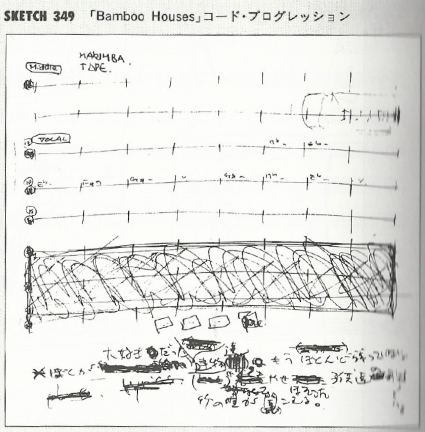
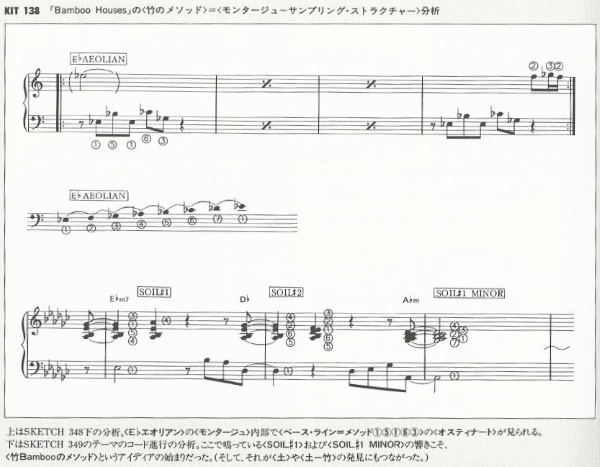
‘‘Bamboo Houses’ was primarily my piece,’ Sylvian later shared. ‘The main chord sequence, primary synth melody, mid-section and bass were mine, while Ryuichi provided the counter melodies which open the track, sequenced drums and marimba. I asked Ryuichi to speak on the piece before he was forced to leave mid-session. ‘Bamboo Houses’ was far from complete when he departed which is why I play a more prominent role in its musical development. I have a greater recollection of it, as I remixed it for the compilation album Everything and Nothing around the year 2000.’ (2023)
It’s a rare occurrence for Sylvian to remix a track where he had a production credit for the original and his approach to the reinvention, working with his trusted engineer Dave Kent, was quite radical. Previously unheard synthesiser melodies can be heard at both ends of the register. Perhaps these were complementary melodies recorded in the original sessions but excised before the track was finalised, or perhaps they were a playfully addition for the remix. The track is also given a harder edge with Ryuichi’s spoken word degraded, as if being heard through low quality speakers.
It is well documented that Sylvian re-recorded vocals for some earlier tracks included on the Everything and Nothing compilation, with new takes of the Japan tracks ‘Some Kind of Fool’ (heard there for the first time) and ‘Ghosts’ – at risk of interfering with the perfection of the original – as well as the numbers selected from Brilliant Trees. My attention must have been taken up by the refreshed musical setting of ‘Bamboo Houses’, as for a long time I missed that this version boasts a new vocal. Listen to the changed way in which Sylvian sings ‘young and thin’ for the most marked difference in delivery. Of course, it’s logical that the track be re-sung as the motivation was to give the collection more consistency, especially given the tracks were not sequenced in the order of their production.
Sylvian pronounced himself satisfied with the result, reflecting, ‘There was…pleasure to be found in bringing ‘Bamboo Houses’ up to scratch with a fresh mix.’ (2023)
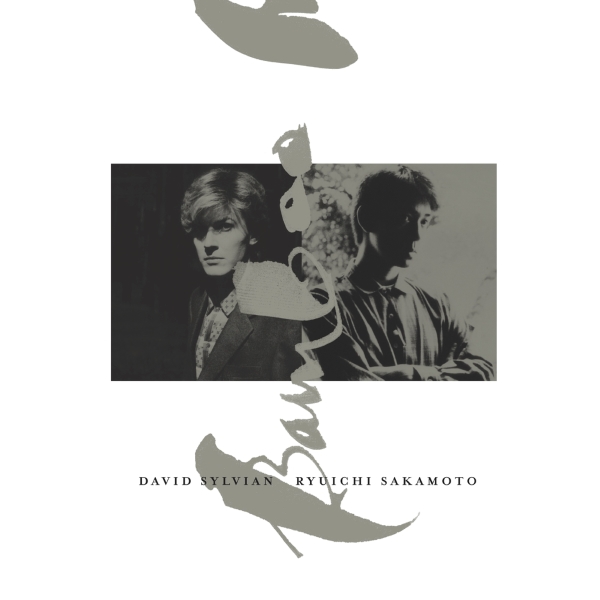
The single would subsequently be reissued on vinyl for Record Store Day in 2015, with distinctive new artwork by lead samadhisound designer Chris Bigg, including portrait photographs by Yuka Fujii. ‘Bamboo Houses’ was included in the 2000 remix version, its first appearance on vinyl.
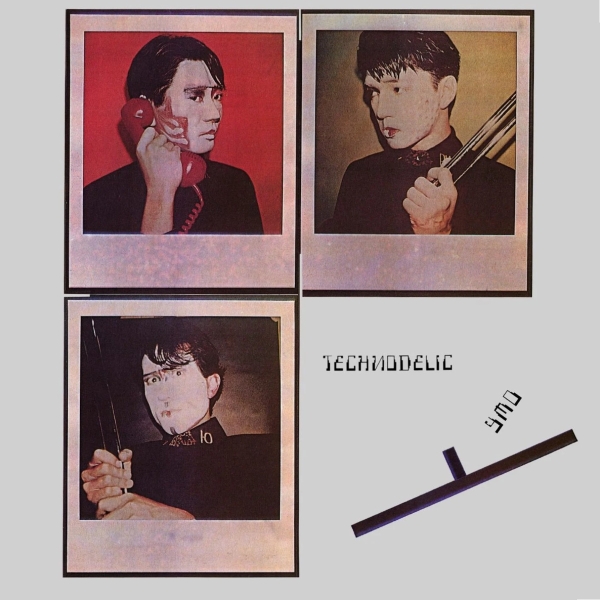
1981 was a year of prodigious output from Ryuichi Sakamoto: it’s no wonder that he and Sylvian could not coordinate diary time to record together that year. Two major albums were released by Yellow Magic Orchestra, BGM followed by Technodelic. The latter was recorded between August and October, just a few months before Ryuichi’s trip to London to record Akiko Yano’s album and his debut collaboration with David Sylvian.
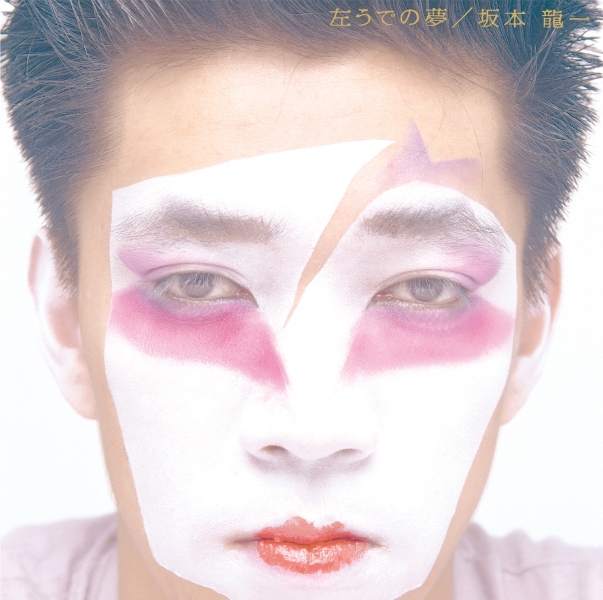
Sandwiched between the ’81 YMO records was a new solo album, Hidari Ude No Yume, recorded in July and August, immediately prior to Technodelic. A follow-up to B-2 Unit, the electronics here are less austere than was the case for the predecessor disc and are offset by the use of acoustic instruments. The opening track (for the Japanese release, or closing track for its European variant Left Handed Dream), ‘Boku No Kakera’, contains both violin and a traditional Japanese instrument – reportedly a hichiriki, the double reeded wooden flute prominently used in gagaku music. The track’s percussive impetus and Ryuichi’s spoken vocal in Japanese make it suitable context for ‘Bamboo Houses’ on my playlist.
By strange coincidence, having completed a draft of this article, Ryuichi Sakamoto’s social media pages, now operated by his estate and management, featured ‘Boku No Kakera’ as part of its excellent ‘SKMT dig’ series of dives into his back catalogue. ‘Built around taiko drums, gagaku instruments, Prophet-5 synthesizer, and the Roland TR-808, the piece moves with an open, unforced rhythm. Toward the end, Sakamoto’s quiet voice can be heard repeating:
あげるよ ぼくのかけら ありがとう きみのかけら
(‘This – a piece of me. Arigato – a piece of you.)
‘‘Boku no Kakera’ signals Sakamoto’s break from Western pop conventions. The album pursued what he called “festive music” – deliberately avoiding funk rhythms in favour of an indigenous percussive sound that abandons techno in search of something less codified, more fluid, and grounded in non-Western sensibilities.’
Yellow Magic Orchestra’s Technodelic is lauded as a pioneering release for its use of loops and early digital sampling techniques. The opening track, ‘Pure Jam’, shares similarities to ‘Bamboo Music’/’Bamboo Houses’ in both synth sound and programmed drums, but my favourites from the tracklist are the Sakamoto compositions ‘Prologue’ and ‘Epilogue’ which close out the album.
Looking at the sequence of these releases and how little time elapsed between each one, it only emphasises what a rich period this was, not only in the catalogue of Sakamoto et al, but in the development of new musical techniques and language, the impacts of which would be felt in both East and West for decades to come.
‘Bamboo Houses’
Steve Jansen – percussion, electronic percussion, keyboards; Ryuichi Sakamoto – keyboards, keyboard programming, MC4, marimba; David Sylvian – keyboards, keyboard programming, vocals
(credits for both tracks on the single)
Music by Ryuichi Sakamoto & David Sylvian. Lyrics by David Sylvian.
Produced by David Sylvian, Ryuichi Sakamoto and Steve Nye, from ‘Bamboo Music’/’Bamboo Houses’, Virgin, 1982
Mixed by Steve Nye and David Sylvian
‘Bamboo Houses’ – official YouTube link (incorrectly labelled ‘remix’). It is highly recommended to listen to this music via physical media or lossless digital file. If you are able to, please support the artists by purchasing rather than streaming music.
‘Bamboo Houses (remix)’
Steve Jansen – drum programming; Ryuichi Sakamoto – synthesisers, marimba vocal; David Sylvian – synthesisers, samples, vocal
Music by Ryuichi Sakamoto & David Sylvian. Lyrics by David Sylvian.
Remixed by David Sylvian with Dave Kent
Produced by David Sylvian, Ryuichi Sakamoto and Steve Nye, from Everything and Nothing, Virgin, 2000
Lyrics © samadhisound publishing
‘Bamboo Houses (2000 remix)’ – official YouTube link. It is highly recommended to listen to this music via physical media or lossless digital file. If you are able to, please support the artists by purchasing rather than streaming music.
Simon Jeffes quotes are from interviews in 1985-86. Full sources and acknowledgements for this article can be found here.
Steve Jansen’s photographs can be purchased through his website (here) or bandcamp page (here). The prints are always immaculately reproduced and are highly recommended.
Download links: ‘Bamboo Houses’ (Apple – incorrectly labelled ‘remix’), ‘Boku No Kakera’ (Apple), ‘Prologue’ (Apple), ‘Epilogue’ (Apple), ‘Bamboo Houses (remix)’ (Apple)
Physical media: Everything and Nothing (Amazon) (burningshed); Hidari Ude No Yume (bandcamp) (Amazon); Technodelic (Amazon)
‘After I’d decided that Japan should split, I recorded a double ‘A’ side single called ‘Bamboo Music’ with Ryuichi. I’d worked with him before on the album …Polaroids, so the relationship was already there. Japan were still committed to a tour and the mixing of the live album which was all done at the end of 1982.’ David Sylvian (1987)
Read the sister article:
More about collaborations with Ryuichi Sakamoto:
Forbidden Colours
Forbidden Colours (version)
Heartbeat (Tainai Kaiki II)
Zero Landmine
World Citizen – Chain Music
World Citizen (I Won’t Be Disappointed)
Concert for Japan
Life, Life
Dumb Type – 2022

I confess I hadn’t really noticed that the 2000 remix had a new vocal, but then I’ve never much liked the updated mix—most of the stuff Sylvian added (or restored) to the mix seems superfluous at best (except maybe that quasi-melody near the end of the piece). Fortunately, I still have the original mix on CD (the Japanese CD single/EP pairing “Bamboo Houses” and “Bamboo Music” with the two versions of “Forbidden Colours”.
LikeLiked by 1 person