
Spoken word has provided a rich seam within David Sylvian’s work over the last decade or so. He has vocalised the writing of some fascinating authors, from the poems of Arseny Tarkovsky for Ryuichi Sakamoto’s performance at the Concert for Japan and ‘Life, Life’ featured on his master-work async, to an extract from In the Solitude of Cotton Fields by playwright Bernard-Marie Koltès for a collaboration with Mark Wastell and Rhodri Davies released as There is No Love; from the descriptions of a myriad of lesser gods by Paal-Helge Haugen on Uncommon Deities, to Japanese haiku and death poems written by Buddhist priests for the Twinkle³ album Upon this Fleeting Dream. Indeed, at the time of writing this article Sylvian has just added to the canon by reciting Emily Dickinson’s poem ‘I Measure Every Grief I Meet’ for a collaboration with Icelandic cellist and film-score composer Hildur Guðnadóttir (link in footnotes).
Another entrancing piece which may sometimes be overlooked is Sylvian’s sole reading of poetry by Nils Christian Moe-Repstad. Sequenced at the end of the Uncommon Deities cd, Moe-Repstad’s words, in an English translation by Annabelle Despard, strike a different note to the pen-portraits of idiosyncratic deities that precede it. Yet it’s clear that related existential questions are being addressed.
The Punkt festival catalogue for 2011, the year in which the audio-visual installation Uncommon Deities was staged as part of David Sylvian’s artist-in-residence contribution, includes the following introduction: ‘Nils Christian Moe-Repstad (01.02.72) is a Norwegian poet who has published six volumes of poetry to critical acclaim, with the publisher Kolon. He has worked in various music constellations at Punkt and other live venues, with musicians like Arve Henriksen, Jan Bang, Erik Honoré, and Nils Petter Molvær. He has also worked with internationally renowned artists Jan Groth and Kjell Nupen.’
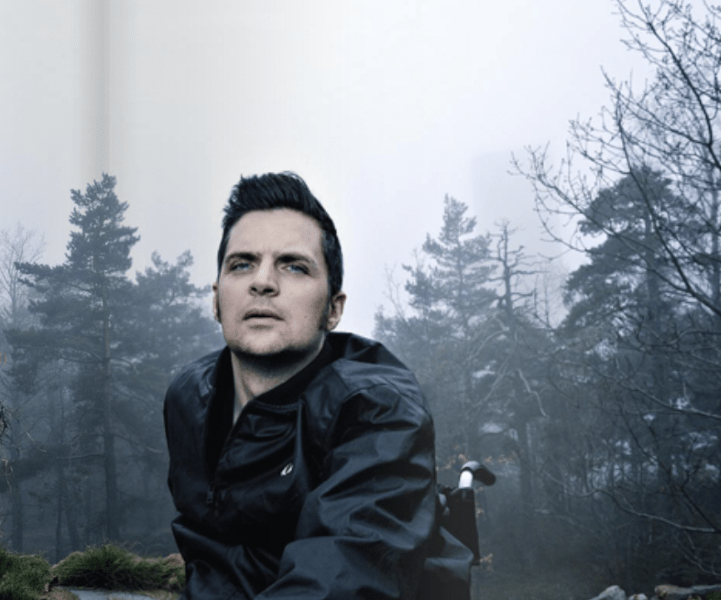
For the opening evening of the festival, held at the Sørlandets art museum in a gallery hung with the dreamscape images of Atsushi Fukui, Moe-Repstad was among the artists who brought the installation to life in word, sound and song. Alongside the improvisational talents of John Tilbury, Evan Parker, Sidsel Endresen, Arve Henriksen and Philip Jeck, both Paal-Helge Haugen and Nils Christian read from their Uncommon Deities texts in the original Norwegian, whilst recordings of Sylvian reciting English translations were interlaced with the live performances.
Moe-Repstad’s delivery was a deep but vulnerable whisper. The poet seemed assured but on social media that day, as he looked forward to the evening with David Sylvian in attendance, he wrote, ‘it feels pretty unreal for a Kristiansand poet, the nerves are all the way to the hair roots.’ A snippet of that evening can be witnessed in a short video published by samadhisound which can be seen on their vimeo channel and is linked within a sister article to this, ‘The God of Silence’. Seated beside Evan Parker, Nils Christian reads words from ‘I Swallowed Earth for This’:
‘synlig i tid
utvider vi varme fra brudd
skiller treets årringer
med rav og rust’
‘visible in time
we expand heat from fractures
part the growth rings of trees
with amber and rust’
When the poem is recited by Sylvian as the denouement of the Uncommon Deities album, what strikes the listener immediately is the personal nature of the expression. Each of the preceding readings has been a description by a third-party narrator of the quirks and characteristics of disparate minor gods. Here, the writer speaks in the first person:
‘I swallowed earth for this’
The contrast is as startling as is the image. Is it earth as in ‘dirt’? I became human for this? Or earth as in the planet, a surrealist image bringing side by side the existence of a single human being and the scale of the cosmos? Quite possibly both readings are implied.
Indeed, one of Moe-Repstad’s recurring skills is his proficiency in expressing how the present is as real as the millions of years that have preceded it, how the incomprehensible longevity of prehistory leads up to the moment that we experience as “now”:
‘Matter
in the layers between
crushed in time
matter
what they left behind
can be read on an arrowhead’
‘boned from evolution
you are, I am
a lecture on fossils’
Concepts so mind-shattering, summed up in the keenest of observations of the intricate beauty we can witness every day in nature:
‘is earth not
what we came from
a compression of
a true material
expanded at its brightest point
a supernova
on a petal’
The piece closes in wonder at the capacity of the human mind to grapple with the scale and significance of what has gone before:
‘we inflect trees
analyse a riverbed
years laid down in codes microbes millions atoms
in animals and the residue of plants’
As if to step back and give centre-stage to Moe-Repstad’s verse as read by Sylvian, the musical environment created by Jan Bang and Erik Honoré is architected around a simple synthesiser line with only subtle sampled embellishments, including a sound that summons the soaring of a shooting star as Sylvian intones a line about ‘expanding matter’.
‘It’s always been my goal that text and music shall be turned into some kind of symbiosis,’ Nils Christian was quoted in the samadhisound release notes. ‘Not that you’re going to have a text or a poem accompanied by music or vice versa, it’s always been very important for me that text and music sort of blend together.’
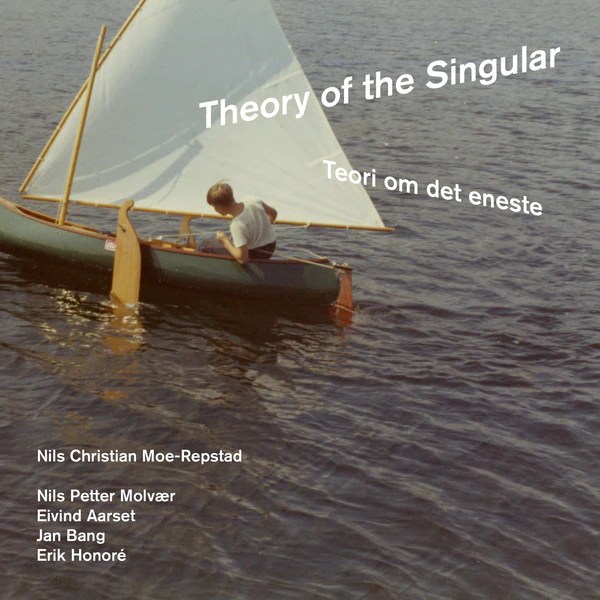
Bang, Honoré and Moe-Repstad would further their collaboration in the company of trumpeter Nils Petter Molvær, who contributed a wonderful remix of Secret of the Beehive’s ‘Mother and Child’ for Sylvian’s instrumental compilation Camphor, and guitarist Eivind Aarset, contributor to such latter-day Sylvian songs as ‘Where’s Your Gravity?’ and ‘Do You Know Me Now?’.
Their work together resulted in the boxset release Theory of the Singular, which I discovered when it was pressed into my hands by Mark, a Punkt festival regular since 2011, with the most heartfelt of recommendations.
Nils Christian: ‘For 10 years of collaboration with Jan Bang and Erik Honoré, but also many other amazing musicians, in and around the Punkt festival in Kristiansand, I have tried to make the literary text and the literary reading voice become more symbiotic with the element of sound. It’s been like walking a fine and fragile line, understanding bit by bit the balance and sensitivity it requires. But after a live performance in Oslo in 2013, where I released a two volume book, Theory of the Singular, both me, Jan and Erik, felt that we had material for a record, based on the live recording and the foundation of the book. So in December I’m releasing a record on Jazzland/Universal together with Nils Petter Molvær, Jan Bang, Erik Honoré and Eivind Aarset. It’s produced by Erik Honoré, and comes as a download version and a limited edition box set, where both volumes of the book – translated into English – are included, which makes this release quite unique.’ (2014)
The opening piece, ‘De Biologiske Undergangene’ (‘The Biological Demise’) revisits the themes of ‘I Swallowed Earth from This’, even to the point of recalling and developing some of the same imagery. English translations this time are from Ren Powell:
‘the matter along the edges
the earth’s crust
the memory’
Listening to this album takes me back to first witnessing Nils Christian reciting his work in Kristiansand in 2011. Understanding nothing of Norwegian, you are drawn in to listen all the more intently to the nuance of the voice, the beauty of the language. Over time, with the benefit of the track titles and the accompanying books, it’s possible to determine which poems are being read and to assimilate their English meaning into the appreciation of the music.
‘a million years’ decaying
granite over a family plot
who
as the singular
is with his hands
singular
enough to hold the dying
the bleedings
the veins of the heart
that fall
fall in on themselves
like the mouths of rivers’
(from ‘Hjertets vener faller sammen som elvemunninger’)
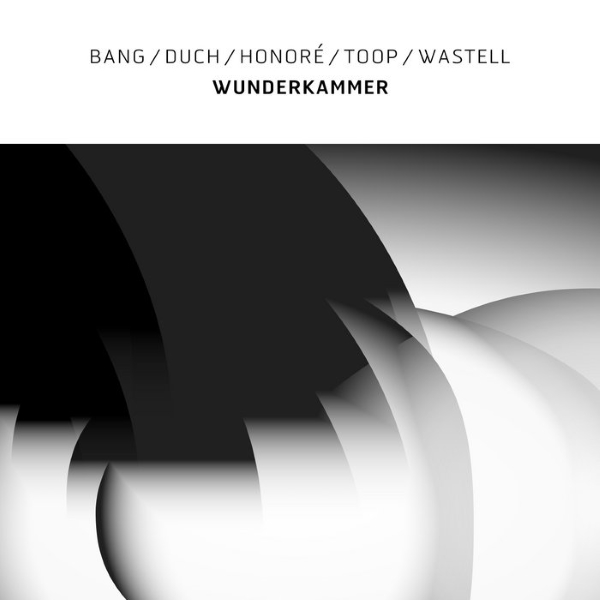
In 2016 Moe-Repstad published Wunderkammer, an incredible 850 pages encompassing what his publisher described as ‘stories, portraits, equations, essays, dissertations, theories, encyclopedias, biographies, aphorisms, riddles, paraphrases,’ all approached through the form of a three-line poem. A number of these pieces were incorporated within a project staged as part of Hull’s year as UK City of Culture in 2017. A ‘sound-walk’ was created across the Humber Bridge, the longest single-span suspension bridge that can be crossed on foot in the world. The interactive artwork involved a collaborative of artists including those from Norway, celebrating historic trade and shipping links across the North Sea. Sounds of the bridge itself were captured by Hull-based field recording artist Jez riley French and formed the basis for music created by Jan Bang, Eivind Aarset and Arve Henriksen, which was elaborated through stirring contributions from the chorus and orchestra of Opera North.
‘In preparation for the installation,’ Jan Bang told me, ‘I had asked Nils Christian to contribute with poems from Wunderkammer to be included as signposts at Humber Bridge. I came to his house and he picked out eight or ten poems from my proposed selection.’ For the sound-journey, visitors listened to the music and poems through headsets at specific points as they traversed the bridge, the poetry being voiced by Maureen Lipman, Barrie Rutter, and a young pupil from a local primary school. The released version, The Height of the Reeds, does not include the readings but the influence of the poetry lives on with each track taking the title of one of the poems.
Moe-Repstad’s life was touched by tragedy. At the age of 19 he was paralysed following a diving accident. In September 2022, aged just 50, he died after a long illness. A social media post on behalf of the Punkt festival communicated the ‘indescribably sad’ news, paying tribute: ‘his generosity and willpower were just as impressive as his talent.’ Nominated for both the Brage Prize and the Norwegian Critics’ Award, the poet had been awarded the Dobloug Prize in 2020 for his writing.
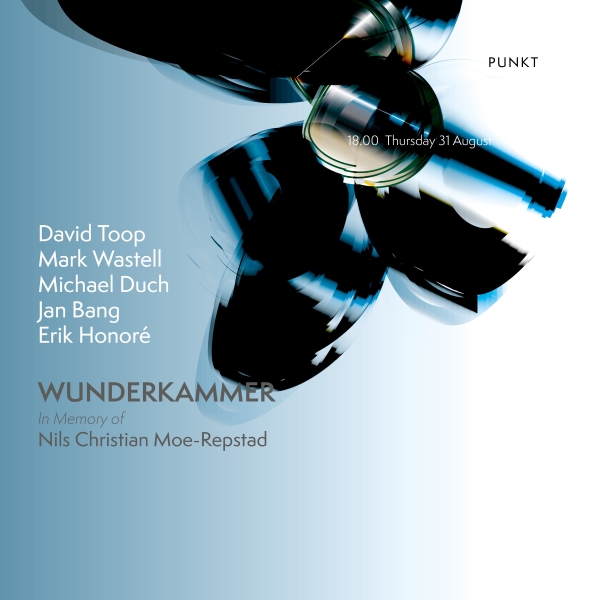
The following year’s festival began with a tribute concert where Bang and Honoré were joined by Michael Francis Duch on double bass, David Toop with an array of items whose percussive properties he could explore, and Mark Wastell (who collaborated with David Sylvian and Rhodri Davis for There is No Love) on tam tam and gongs. On this occasion it was David Toop who read Nils Christian’s words from Wunderkammer:
‘The swans bend their necks backward to see God,
they know the magnetism of the blue space, but the prayers say
God in Heaven: in the black space only black swans see Him, pulled between stars
and asteroids, meteors and satellites’
And then the familiar voice of the poet himself enters, words expressed in his native tongue.
The concert was reprised in August 2024 at Cafe Oto in London, albeit without David Toop who was unable to participate being laid low with Covid. The Punkt performance has subsequently been released on vinyl and digital download through Mark Wastell’s Confront label.
Both occasions were sensitive memorials in sound to the man and his work, a continuation of a partnership in art, and a reminder that the published and recorded poetry lives on, overcoming the limitations of time and the frailties of human existence.
Nils Christian authored the Opening Manifesto for the Punkt festival when it was inaugurated in 2005. It ends with these lines:
‘And we are documented and archived
in these sounds. Therefore a point has been created
not visible, but audible for those who listen through the noise,
the deafening silence transformed into music’
‘I Swallowed Earth for This’
Jan Bang – samples; Erik Honoré – samples, synthesizer; David Sylvian – voice
Music by Jan Bang & Erik Honoré. Text by Nils Christian Moe-Repstad, English translation by Annabelle Despard.
Produced by Erik Honoré, from Uncommon Deities by Jan Bang & Erik Honoré, featuring David Sylvian, Sidsel Endresen & Arve Henriksen, samadhisound, 2012
Recorded and mixed by Jan Bang and Erik Honoré at Punkt Studio, Kristiansand
David Sylvian voice recorded by David Sylvian at samadhisound
Text © Nils Christian Moe-Repstad
Sources and acknowledgments for this article can be found here. My thanks to Jan Bang and Erik Honoré for reviewing this article prior to publication.
Excerpts from Theory of the Singular, by Nils Christian Moe-Repstad in English translation by Ren Powell, © Flamme Forlag
The featured image of Nils Christian Moe-Repstad was taken at the Sørlandets Kunstmuseum, Kristiansand on the opening night of the 2011 Punkt festival by Freddy Larsen
Download links: ‘De Biologiske Undergangene’ (bandcamp); ‘Hjertets vener faller sammen som elvemunninger’ (bandcamp); ‘Wunderkammer’ (bandcamp)
Physical media: Uncommon Deities (as part of David Sylvian’s 10-cd boxset Do You Know Me Now?) (official store); Theory of the Singular (bandcamp); Wunderkammer (bandcamp)
Read more about the sound installation, The Height of the Reeds, and view a video at the Opera North website here. The music is available here (Apple) (Amazon).
David Sylvian’s latest spoken word piece is on the album rpm, a tribute to Philip Jeck who took part in the Uncommon Deities concert in 2011 alongside Nils Christian Moe-Repstad and others. The track is a collaboration with Hildur Guðnadóttir on which Sylvian reads the Emily Dickinson poem ‘I Measure Every Grief I Meet’. More details and purchase link can be found on bandcamp here.
I swallowed earth for this:
a strawberry leaf
twisted
the wind
gilded by water
Matter
in the layers between
crushed in time
matter
what they left behind
can be read on an arrowhead
Dripping stone
geologically: all we know
broken skull, broken rock
extracting information
in the hardest of materials
at the back of the neck
finding language
close to the lungs
expanding matter
darker
in the grass
in a drop of water
is earth not
what we came from
a compression of
a true material
expanded at its brightest point
a supernova
on a petal
and so we are ancient enough
in the beginning, volcanic:
gas, water, cells
in the sediments
in hollows, levels; uppermost:
bone, tissue, organs
visible in time
we expand heat from fractures
part the growth rings of trees
with amber and rust
boned from evolution
you are, I am
a lecture on fossils
we think that the watery substance
before the thinkable
is a sound in memory
a language we peer beneath
from the sound of marrow and fibres
thinkable enough, certainly
Out of these places
two types of grammar:
we inflect trees
analyse a riverbed
years laid down in codes microbes millions atoms
in animals and the residue of plants
Nils Christian Moe-Repstad (1972-2022)


Thanks for another inspiring story!
LikeLiked by 1 person