
At the peak of Japan’s popularity in 1982, David Sylvian was posed a question during an interview with The Face: ‘Do you like children?’ The 24-year old’s response was: ‘I hate children. Children in airplanes is my biggest hate, I just cannot stand having children in such close contact and not being able to get away from them.’ Whilst some might sympathise regarding experiences when flying, Sylvian’s outspokenness reminds me how young he and his fellow band-members were at the height of their success, and how they had existed within a relatively insular world to that point.
Fast forward a decade and Sylvian was newly married to Ingrid Chavez, whose son Tinondre was then aged 7, and very soon the couple would be expecting their first child together. ‘Personal relations are bound to have an effect on one’s life and work,’ said Sylvian in 1993. ‘The fact that I am married indicates an enormous change. The fact I am about to become a father indicates an enormous change in my ability to share my life and give.
‘I’ve been so wrapped up in my own experiences, my own work. Everything in my life has been geared towards the work and my own development. Psychologically, spiritually, whatever…and I guess I had reached a stage where having gone through a rather negative experience from ’88 through ’90, I began to surface, to realise I had to put a lot of things behind me in terms of relationships. I began to realise I had a greater strength which had been building up over a period of time…Meeting Ingrid was a very important time for me, and, at the time, I started working with Robert [Fripp]. His presence in my life has been very important to me.’
A fortuitous catalyst for meeting face-to-face with Ingrid was the recording of ‘Heartbeat (Tainai Kaiki II)’ with Ryuichi Sakamoto at the very end of 1991 (read more here) and the couple had reportedly shared in a marriage ceremony in the US by the time the Sylvian/Fripp/Gunn trio shows kicked off in Japan in March 1992. ‘A lot of changes took place – just during that period where Robert and I started talking about working with one another again…I’d been through a rather intense period in my life. It had been a period of about three to four years and I’d begun to see light at the end of the tunnel when I came to work with Robert…At that same time, I met my wife-to-be, Ingrid, and everything began to shift at that point. So, I made a move to the States and set up home in Minneapolis for a number of years. I had two beautiful daughters – and everything has turned around. It’s been a very rich, eventful, joyful period in my life, you know. It’s been a really wonderful period.’
When David and Robert set out on The Road to Graceland tour in October ’93, Ameera Daya, Ingrid and David’s firstborn daughter, was a babe in arms. ‘The roadies have been telling us they hardly ever see you because you’re always dashing back to be with Ingrid and the kid,’ observed an interviewer. ‘You know everybody always says that becoming a Dad is always a very special thing. Do you see it affecting you? Do you find spontaneous lyrics coming into your head about it?
David: (growing quiet) Ah, no. No.
Interviewer: Were you there at the birth?
David: Yes, it was an amazing experience for… all three of us! (laughs) It was a truly amazing experience, and it’s wonderful to be a father, and to be so in love with a child in the way that I feel towards Ameera. Is it changing me? Yes, it is. But the process is slow. You can see the changes taking place, and you can see a lot of your shortcomings, and you can see what work needs to be done, because you’ve taken on such an enormous responsibility.
Interviewer: It gives you more of an aim in life, for the future, that you must look ahead more.
David: Not exactly. I’m not the kind of person that looks that far ahead, to be honest. And I have enormous faith and that faith guides me, so I allow situations to present themselves, to unravel for me. No, it’s more on a daily basis, surrounding Ameera with what I think is the right environment and the right emotional conditions and so on and so forth.
Interviewer: Who named your daughter?
David: Ingrid and I, we both named her.
Interviewer: It’s not a common name…
David: Ameera … Actually, both words are Hindu. Ameera is a holy name. It also means miracle. Daya means graciousness. We were looking for the right name for some time, and Ingrid woke up one morning and the name Ameera was implanted in her mind. And Daya I stumbled across sometime later through a book that I was reading. And they work together and suddenly when they were put together, we realised that was her name. And that was before she was born, before we knew she was a girl… we had a very strong intimation that we were going to have a girl.’
A later film of the Slow Fire performance at Italy’s Time Zones festival includes some behind the scenes footage of Sylvian and Chavez which dates from the Italian Sylvian/Fripp shows in November ’93, giving us a window into the time when this interview was conducted.
Sylvian then disappeared from the public spotlight. ‘After the birth of our first daughter, it was wonderful just to spend as much time as I possibly could with her, because the first three years of any child’s life are tremendously important. I was working out of this studio built into the attic of our home, so I could make time to get up there and do the work. Nevertheless, I was distracted, there’s no doubt about it.’ It would be five years after the release of Damage, which documented those Sylvian/Fripp outings from ’93, when Dead Bees on a Cake emerged as Sylvian’s first solo disc for 12 years.
‘I saw the move to Minneapolis as something of a retreat. Consciously breaking ties, cultural and otherwise, afforded me greater isolation from what I perceived to be a virtual onslaught of stimuli. There was an intensity to my life in London that had become intolerable, unworkable. For years I’d found myself in a state of perpetual anxiety. My relationship with Ingrid, our lives together in Minneapolis and all that was to unfold there, resolved the situation for me…The long Minnesotan winters allowed for a fair amount of isolation, promoting a close-knit family life and a relaxed focus on writing. During the summers we travelled the length and breadth of America in the footsteps of our teachers. In the summer of ’97 we were drawn on impulse to make a move to Northern California. One month after arriving, on October 28th, our second daughter, Isobel Ananda was born.’ (Read more about the catalyst for the move here.)
This period ‘allowed me to be a father for a while without any other external pressures coming into play,’ he said. ‘Recording the album seemed part and parcel of life in the house. I was taking care of the children, working on material whenever I had a free moment. It was just part of family life…Maybe I should have been more disciplined. But it just became another facet of our lives together.’
‘You have different priorities, so music isn’t the be all and end all. And maybe even if I hadn’t had children, there would have been a shift in priorities because of my whole spiritual thing. It’s not that music is less important, it just has to take its place. There’s only so many things you can get to in a day, and music may be one of them. Ingrid’s been wonderful, because she’s put all of her creative energy into the children; that’s been an enormous sacrifice on her part, and the children have benefited from it. There’s actually a very creative environment with the children; we sing together, we paint together, we do all these activities together. And I find that actually very rewarding.’ Sylvian is pictured before a wall of family artwork on the reverse of the Dead Bees on a Cake cd. Separately he shared: ‘I dance with my children. And when I dance with my children, I play the Penguin Cafe Orchestra.’
By now, Sylvian had been inspired to respond in music to his experience of parenthood. ‘Alphabet Angel’, he said, was ‘actually a song for my first daughter, Ameera. It’s about her and my relationship with her. It’s a very short piece of music. The lyric just accounts for the period when I met Ingrid and just the miracle of Ameera’s presence in my life.’
‘It’s later than I thought it was
The shadows long and lost
Circle through the room
Swear as I met your mother there
In New Orleans
The sun was slipping into blue
The longest day is over
The longest day
My alphabet angel’s come out to play’
Having spoken by telephone after Ingrid left a letter for David at his management office in London, the couple first met in New Orleans late in 1991 before moving on to New York for the recording of ‘Heartbeat (Tainai Kaiki II)’.
A short film entitled Time Spent served as an Electronic Press Kit for Sylvian’s long-awaited album, including an enchanting sequence of David with his ‘alphabet angel’. Ingrid Chavez: ‘It is 1998 and David is about to release Dead Bees on a Cake. We are living in Sonoma and his record label wants him to do an EPK for the release. So, we convince them to give us the money and we immediately spend half of it on an 8mm camera and start documenting our life in Sonoma. Isobel is a baby, Ameera and Tinondre are really young children…I feel really fortunate to have this film documenting our life in California. Such a sweet snapshot of our young family…One thing I love in particular is the footage of David and Ameera by a pool that didn’t have the water in it, it was off season… just the colouring and Ameera in that little pink ballerina dress with the wings is just really precious to me.’ (2019)
Excerpts from the Time Spent EPK, my edit of ‘Alphabet Angel’ to visuals.
The excerpt above begins with a poem by Brenda Hillman from her 1993 collection Bright Existence, a volume shortlisted for the Pulitzer Prize. The book is dedicated to Hillman’s husband, the poet Robert Hass, who himself was quoted on the Dead Bees on a Cake inner sleeve. Given the fact that Hillman and Hass were residents of the San Francisco Bay Area, it’s possible that Sylvian and Chavez became aware of their work through the local cultural scene. Hillman’s ‘Untitled Fragment’ is taken from a series of poems entitled Gnostic Heaven and talks of a ‘dream pear’ that longs to be eaten. The words are laden with a sensuousness and mystical mystery redolent of this rich period in David and Ingrid’s lives, as documented across Dead Bees on a Cake. Sylvian: ‘Regardless of how this album’s received out there in the world, it remains as something of a wonderful document for us as a family, because it touches on some truly major events in life.’

‘I even have trouble referring to what I do as art, even with a small “a”,’ he reflected. ‘For me, everything that’s done in part of daily life, whatever that is, eating breakfast, feeding your children, whatever it is, sitting down and writing a song, is done with a certain presence of mind, a certain level of consciousness, and to me, the music’s just borne out of that environment, that conscious environment, and is just part of my day to day existence. I no longer feel the need to put it into any other kind of context. Because outside of that, it would seem to be role-playing – I’m a father, I’m an artist – and I can’t draw those boundaries. I’m none of those things, and I’m all of those things.’
The couple’s spiritual practice and enquiry were activities that the children were naturally involved in. ‘Obviously, at these ages – five and seventeen months – they’re soaking up the life their parents lead. They’re very influenced by it to one degree or another, but it’s hard to see how that’s going to play out right now. All we try and do is to introduce certain ideas, if you like, the notion of devotion, of worship, a quiet mind, a quiet heart: just ideas that we can speak about or represent in our daily lives together.’
The music for ‘Alphabet Angel’ is performed by Sylvian with just one other musician – Ryuichi Sakamoto, playing ‘pseudo rhodes’. There’s a bell-like clarity and brightness to the lead keyboard line, but just beneath the surface a series of discordant outbursts and echoes are mildly unsettling. The happiness and fulfilment portrayed exists in the context of a world full of complexity and uncertainty. (Robert Hass’ quote is again apt: ‘If we make a poem of celebration, it has to include a lot of darkness for it to be real.’)
Interviewing Sylvian on BBC Radio 3, future collaborator Clive Bell commented: ‘I was very struck by ‘Alphabet Angel’. You’re sort of painting in the background with sounds and washes. It seems a track like that links directly back to ‘Ghosts’, the Japan song… is that right?’ ‘Absolutely,’ Sylvian confirmed. ‘I compare it to ‘Laughter and Forgetting’ from the Gone to Earth album. Structurally it’s very similar. But, yes, obviously the influences go back to a piece like ‘Ghosts’. What I’m doing with that discolouration, if you like, lending these strange harmonics to the piece, is to create a greater emotional depth to the piece. If you take away those elements, the piece becomes quite gentle, quite sweet.’
Sylvian was asked: ‘And what has been the biggest learning experience for you since – say – becoming a parent? What has it taught you?’
‘Gosh, it’s so rich, you know. I mean — all the cliches are true, that the level of love – that unconditional love – that you feel for your children is tremendous – to have relationships as rich as that in life. I mean, the influence is immense. But it is also quite a challenge, being a parent, and I think it enables you to see the positive and negative aspects of your own nature – in the way that you respond to your own children. That allows you have a greater understanding of where you need to work on yourself. To improve yourself – as a parent, as a person. That is often the case with close relationships in life anyway, but I think it’s magnified to such an intense degree – in your relationship with your children.’
Much later he would reflect, ‘Beckett could’ve written his oft quoted line, “Fail again, fail better” for parents because our shortcomings are underlined every single day of our lives. But the beauty is that the love remains constant.
‘Forgiveness is another of those words bandied about a great deal but to feel it in your heart towards another, or to feel it directed towards oneself (by a child?) [is] quite powerful stuff. If we practiced forgiveness and gratitude every day of our lives we’d be transformed.’ (2010)
Becoming a parent also allowed a new perspective to be taken on his own upbringing. ‘I became far more forgiving of myself. I think the environment I grew up in was terribly unforgiving in many ways. And having children and seeing the world through their eyes, so to speak, enables you to re-experience your own childhood. Suddenly these things you’d completely forgotten come back to you with real clarity, don’t they? … But sometimes wounds go very, very deeply.
‘You know, children don’t come into the world without baggage. They respond to the world in different ways. It’s set up, preordained, and no matter what the conditions they’re in, they’re not going to turn out alike. That is eye-opening. I obviously came into the world with particular baggage that did not allow me to adapt well to my environment.’ (2003)
Of his own parents, Sylvian said, ‘It allowed me to view their parenting skills with a great deal more understanding and compassion. Also, there’s something about extending the family line which appears to draw us closer to one another. Don’t get me wrong, I’ve never been big on family ties, but this aspect does seem to draw attention to the relationships shared in this life, past lives, and the next. For example, when my youngest daughter was born I could feel the presence of my mother in her… but also that of my maternal grandmother. It’s this continuous chain, these ongoing relationships, that fascinate me.’ (2005)
‘Alphabet Angel’
Ryuichi Sakamoto – pseudo rhodes; David Sylvian – keyboards, orchestration
Music and lyrics by David Sylvian.
Produced by David Sylvian. From Dead Bees on a Cake, Virgin, 1999.
Lyrics © copyright samadhisound publishing
All quotes by David Sylvian are from interviews conducted in 1999-2001 unless otherwise indicated. Full sources and acknowledgements for this article can be found here.
Bright Existence by Brenda Hillman can be purchased here.
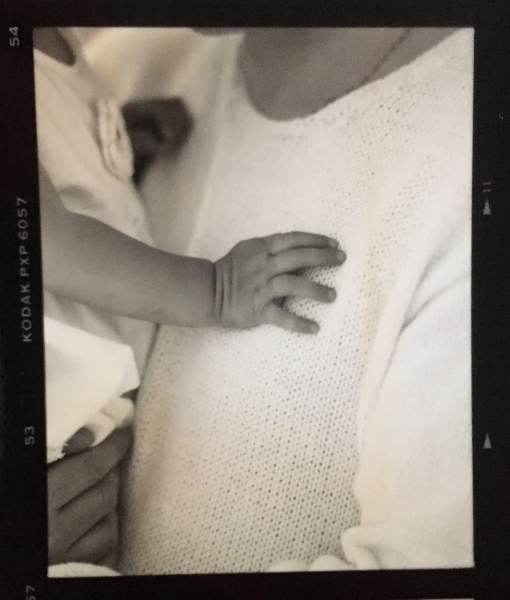
The featured image was taken by Ingrid Chavez, from David Sylvian’s Artist facebook page.
Download links: ‘Alphabet Angel’ (Apple)
Physical media links: Dead Bees on a Cake (Amazon)
‘The focus has become Ingrid, the growing family and our spiritual pursuits. My children unlock my heart, give me perspective and show me where there’s ample room for improvement and development in my life.’ David Sylvian, 1999

More about Dead Bees on a Cake:
I Surrender
Midnight Sun
Thalheim
Pollen Path
All of My Mother’s Names (Summers with Amma)
Praise (Pratah Smarami)
Darkest Dreaming

David N,
First off, I love the way you’ve juxtaposed ‘Blackwater – the possibility of new life’, with your latest piece, ‘Alphabet Angel’, it just seems, right.
They could be adjacent chapters in a biography. As I came out of my slumber, this morning, I read this and I’ll do it again.
It seems right because the history of the latest follows as the last left off – at the core, in 1991.
Thanks.
LikeLiked by 1 person
For me, the third, fourth and final paragraphs, made me think the most about David (Sylvian). Also, as a fan, I wanted to compare – as far as I could from the writing – David’s experience with my own. Similarities and differences, in personality and experience.
To me, this is also fundamentally about ‘attachment’, a very human need.
As always David (Nibloe) – thought provoking! VBW…
LikeLiked by 1 person
I’m wondering if this is the same David Nibloe I knew at school? If so, I know Nigel (Hoare) would be interested in seeing this, too!
LikeLiked by 1 person
Sure is, Tim. Lovely to hear from you. Nigel H gets a mention in one of the Quiet Life articles…
LikeLike
P.S. if you want to drop me a line there’s a ‘contact’ option which can be found under ‘About’ on the site menu.
LikeLike