‘One of the main influences for me is travelling. I really enjoy travelling and it stimulates the imagination,’ shared Mick Karn in a 1996 interview with Anil Prasad for his Innerviews website. ‘I think a lot of the way I write is actually to think of a place and to imagine that place, what pictures come up. It’s an old trick that we used to use a lot in Japan actually, where we would just give each other a name of a country and we would all go away and think about this country and then get together and try and write a piece.’
Mick wasn’t specific as to when the band were employing this approach to their work, but no doubt a matured iteration of the technique was employed during the lead up to the recording sessions for Tin Drum. Of course, the music on that album is most often associated with China given the sleeve image with its Chairman Mao portrait and the explicit references in the tracks ‘Canton’, ‘Visions of China’ and ‘Cantonese Boy’. But there are also other influences at play, for instance the Middle Eastern inflexions to be found on ‘Sons of Pioneers’.
The first track to be written for Tin Drum was ‘The Art of Parties’ which was recorded in its original form for release as a single, together with the B-side ‘Life Without Buildings’, the sessions taking place in March 1981 at Basing Street Studios in London’s Notting Hill. The previous month the band had staged their Polaroids tour – a single night in London (recorded for a BBC radio broadcast) followed by successive shows in Japan. Before heading home, the band spent a week in Thailand, the duration of their stay apparently due to a mix up of dates on the part of a promoter. The unexpected interlude was an experience that evidently provided many of the stimuli that Mick articulated.
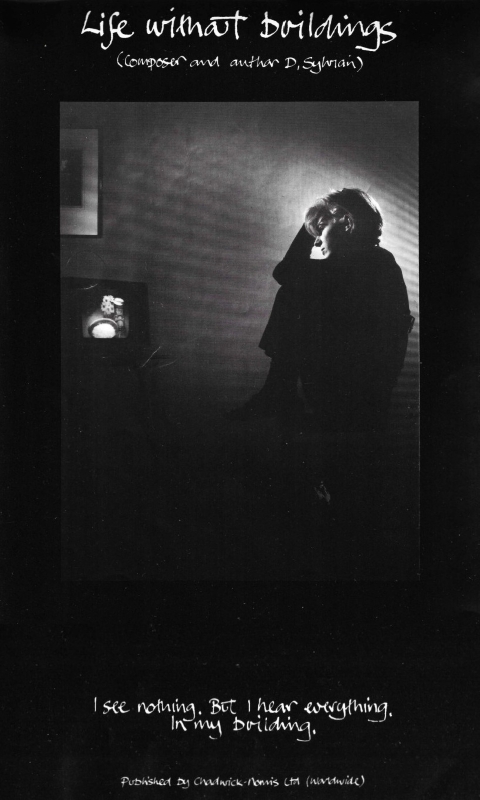
When the ‘Art of Parties’/‘Life Without Buildings’ single landed, initial quantities of the 7″ format were presented in a splendid fold-out format featuring some photographs by Steve Jansen, most likely scenes along the Chao Phraya encountered on that trip: shady waterfront dwellings, a resident wading into the river. A way of life portrayed that could hardly be farther removed from the South London roots of the band’s protagonists. The front cover shows an image of David Sylvian, one ear inclined to his Walkman headset, merged with a shot of a small wooden river boat laden with goods, speeding to its destination. A visual representation of the band’s horizons widening, new experiences being ingested into their art.
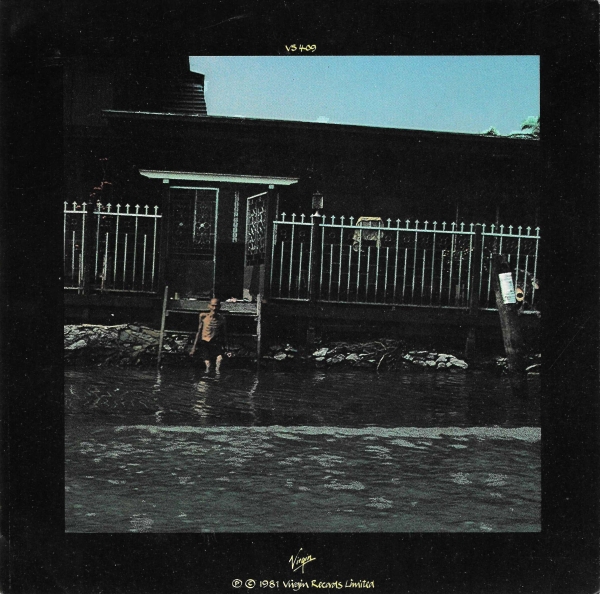

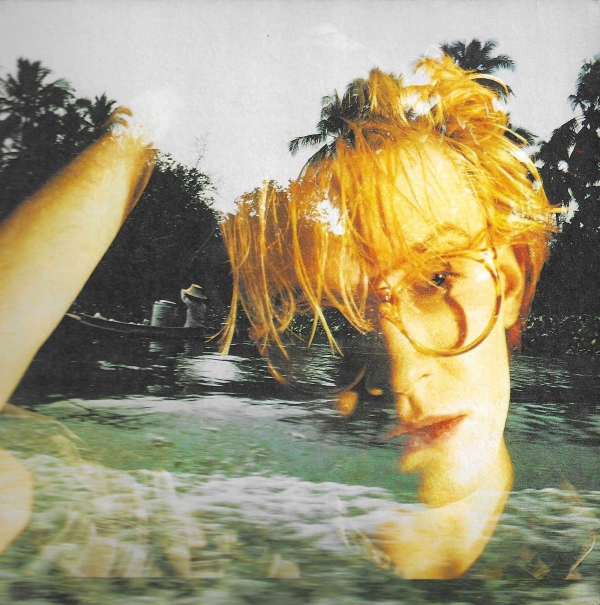
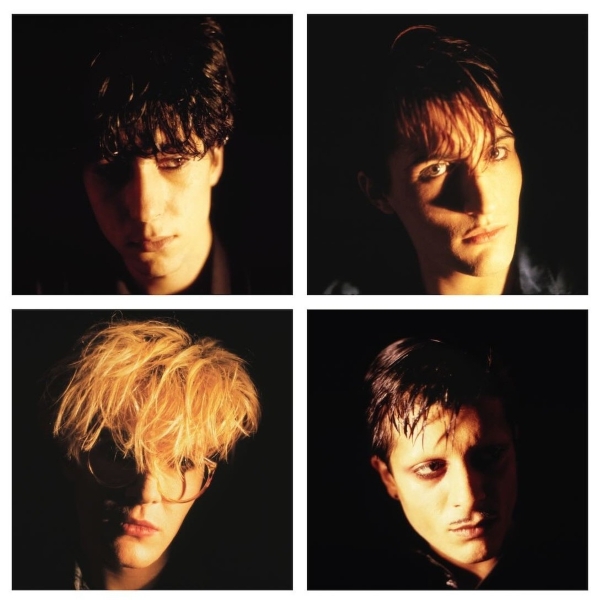
Portrait shots of each band member on the sleeve were also taken by Jansen who aimed to recreate the ‘sweaty and unkempt look’ of his bandmates during their time in Thailand. ‘And by the way, for anyone who’s interested,’ reveals Mick Karn in his autobiography, ‘the cover photographs were taken in my bedroom by Steve, with a bucket of water close by to give us the “tropically sweaty” look’ (2009). The featured image for this article is a composite of alternate takes of ‘The Art of Parties’ portraits produced by Steve for the box-set edition of his book Through a Quiet Window and available to purchase through his website (see footnotes).

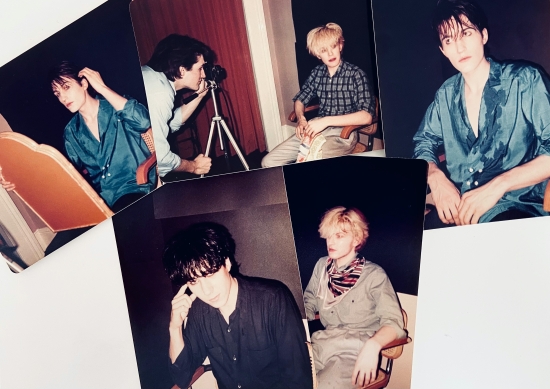
Things were changing for the band in many aspects with Rob Dean absent for the recording sessions at Basing Street, although he did perform for the subsequent UK dates in May ’81 to support the single’s release. Mick Karn: ‘Before the tour came the recording of a new single as a four piece with John [Punter]. It would be our last together, we were moving on.
‘We could all hear the similarities between Gentlemen Take Polaroids and Quiet Life, and that’s not meant as a criticism towards John’s work. He, like the rest of us, had found his own voice and left his mark, one that was inspiring a whole new generation of producers looking for the same sound recently adopted by New Romantics. But for us, moving forward had always meant changing everything that had come before, studio, producer, …appearance, and musical direction.
‘They would all be dealt with in time for a new album, but for now, ‘The Art of Parties’ with its B-side ‘Life Without Buildings’ was the first step in a direction we hadn’t yet found. They both hinted at something new, our styles had developed into trademark ways of playing, instantly recognisable and ‘Life Without Buildings’ remains for me one of John’s best works of production.’ (2009)
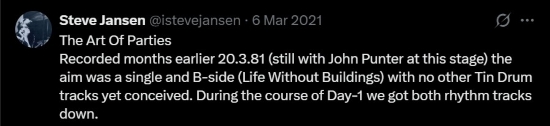
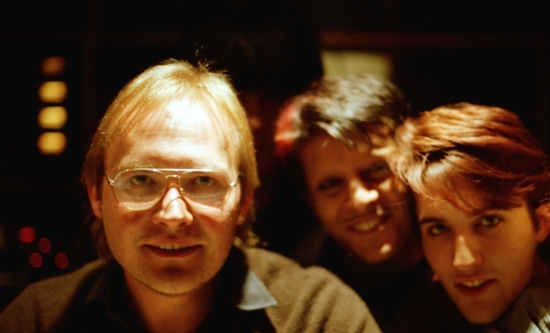
Steve Jansen agreed that ‘Life Without Buildings’ was a landmark recording, citing the piece when asked whether any track ‘you have been involved in had “aha!” moments when you knew you were doing something special?’
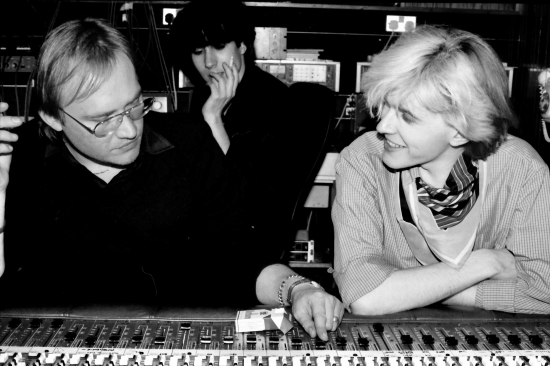
‘Probably around the commencement of recording Tin Drum with John Punter where we went into Basing Street studios to record a potential single which turned out to be ‘The Art of Parties’ and ‘Life Without Buildings’. With the latter of the two tracks, I felt there was an exciting shift into an area of experimentation in the studio which allowed a track to be incrementally constructed through playback.
‘Up to that point everything was fine tuned and completed in rehearsals (perhaps with the exception of ‘My New Career’ which was a late addition to the …Polaroids album and therefore took shape at Air Studios…). It was essentially the moment where I believe we as a band no longer felt that recording was merely a process by which something already composed and arranged was to be faithfully captured in a recording, and instead were able to use that environment more to our advantage by pushing our boundaries a little and experimenting with sonics instead of merely performance.
‘It was the beginning of creative studio production which up to that point was mostly the input of the hired producer.’ (2015)
The subsequent sessions for Tin Drum with Steve Nye co-producing are renowned for the meticulous care that was taken in the creation of sounds and their placement in the mix. With Steve Jansen’s insight we can trace the evolution of that approach to ‘Life Without Buildings’.
As the band built the track up in the studio from Sylvian’s original keyboard part, they certainly avoided any temptation to clutter it with unnecessary embellishment. Every sound contributes to the overall ambience, nothing is wasted. The pitch, tone and timbre of each note is carefully crafted, be it drums, percussion, bass or synthesiser. With the human voice pared back to a chant and three brief lines of lyric, we can hear how every instrument contributes the whole. At times the drums are to the fore, at others the bass steps forward, or a synthesiser melody transcends. As Mick said, by now each of the band-members has developed their own unique musical voice. Yet nothing here is a solo flourish, each contribution serves the others and in the completed mix melodies rise and fall in the work of the collective.
Speaking about the track for Anthony Reynolds’ biography of Japan, A Foreign Place, Steve sheds light on the precision that went into shaping the sounds. ‘The tom sounds on ‘Life Without Buildings’ were created by doubling the toms with a low synth sound to provide a bend note. Each note had a different synth note played with it. I did my best to play them in sync, but I could hear flamming, especially in the intro. The toms, and I think the drum ambience mics, were also processed through a harmoniser to give the kit more of a slur. You can hear this on the toms, but it’s also quite predominant on the hi-hat because it really affects the top end as it rings quite a bit.’ (2015)
Mick’s interview with Anil Prasad is illuminating on the subject of how he viewed the role of his bass. ‘When it comes to bass solos, to tell you the truth if I go to see a band and there is a spot in the show where there is a bass solo, I find that quite boring. But not because it’s a bass, I’d find any instrument soloing quite boring. A drum solo, I feel the same. So, in the same context, if somebody asked me to play a bass solo I really wouldn’t know where to begin.
‘I’m not really a soloist but I do think there’s a lot of ground for the bass to be the main melody, to be the voice of an instrumental piece let’s say, much more than just be the underpinning thing…I really think it can be a beautiful melodious instrument, but I think it has to be careful not to lose its role of being that rhythmic pin. I think there’s a centre point somewhere where the two can meet.
‘My big thing is rhythm. Drums are my favourite instrument, so anything that I do on the bass has to be rhythm-oriented, but that doesn’t stop the bass from being the main melody at all.’ (2009)
For David Sylvian, the music was becoming more strident. ‘The last two albums were meant to sound very neutral, for us as background music, but now we’re trying to do totally the opposite and irritate people, using sounds that are very aggressive rather than soft…I’m not so bothered whether it’s danceable or not. I can’t get away from the mood thing ’cause it’s built in. ‘Life Without Buildings’ you could say is in keeping with what we were doing on …Polaroids but it falls into the same category as ‘…Parties’… The basic idea behind that track is that it sounds very traditional. Both of those tracks are very rhythmic – it’s going to be a very rhythm-orientated album.’
‘I see nothing. But I hear everything.
In my building.’
‘As a rule, I don’t get a lot out of England inspiration-wise,’ continued Sylvian. ‘I tend to live five days a week in my flat, I never go out, but when I’m abroad I go out all the time. That’s what ‘Life Without Buildings’ is about really, it’s like in the city, people are so insular, they build a wall around themselves and live inside.
‘When we were in Bangkok, which is where I got all the ideas from, everybody lives outside, on their doorsteps, which is a wonderful thing. But it wouldn’t work in England – we don’t have a good community atmosphere.
‘People brought up in England – and I was brought up in the same atmosphere – are never really told that there’s a world outside, you think everything revolves around this country…’
Nestled discreetly among the drums and synth in the mid-section of ‘Life Without Buildings’ are spoken voices in an unfamiliar tongue, inviting in that wider world. Steve Jansen (again from A Foreign Place): ‘We were liberated by the fact that it was to be a B-side – it was sort of a licence to indulge. We explored some of the concepts that were of influence at that time – albums such as My Life in the Bush of Ghosts by Byrne and Eno and, prior to that, Movies by Holger Czukay. Both these albums utilised the placement of audio from sampled sources playing out like scenes from a movie amidst predominantly instrumental tracks. We, rather timidly in retrospect, tried it out on this final session with Punter and although it wasn’t to any great effect, it was probably the first buzz we’d felt of transforming a track by incorporating scenes from an outside source. The imagery it created took us outside of our own creativity and that was the purpose, I think.’

My Life in the Bush of Ghosts was released only the month before Japan assembled at Basing Street, so it was an influence quickly assimilated. ‘Regiment’ and ‘A Secret Life’ are perfect examples of David Byrne and Brian Eno’s use of external voices to widen the scope and impact of the music. ‘At that time there were no samplers,’ David Byrne recounted for a re-release of the disc, ‘so the found vocals were inserted into the music by trial and error. We’d have two tape machines playing simultaneously, one containing the track and the other the vocal, and, if the gods willed, which they often seemed to, there would be a serendipity, the vocal and the track would at least seem to feel like they belonged together, and it would be a ‘take’… We came to realise that high fidelity was a vastly overrated convention that no one had bothered to question… In searching for “vocalists” we gravitated towards the passionate… the natural cadences and metre of the impassioned vocal is innately musical.’ (2006)

On release of ‘The Art of Parties’/‘Life Without Buildings’ and looking forward to the band’s next LP, Sylvian said: ‘The new album will be done in stages, built up gradually, with the idea to use as many outside musicians as possible, to get that freeform feel, so a musician can walk in, be told there’s eight bars to fill, play what you like. If you pick the right people, it should work well.’
In fact, Tin Drum would be almost exclusively the work of the band themselves with the concept of extensively involving invited musicians carried forward to Sylvian’s debut solo album, Brilliant Trees. Holger Czukay would be among them, deploying his IBM dictaphone in an individualistic invocation of voices from other worlds, extending the approach tentatively experimented with by Japan. Richard Barbieri: ‘I would say the Movies album certainly informed us as regards the use of abstract voice and instrument samples.’ (2018)
‘Life Without Buildings’
Richard Barbieri – synthesisers and tapes; Mick Karn – fretless bass, finger cymbals; Steve Jansen – drums, acoustic and synthetic percussion; David Sylvian – vocals, synthetic brass
Music and lyrics by David Sylvian
Arranged by Japan
Produced by John Punter and Japan. From ‘The Art of Parties’ single, Virgin, 1981.
Recorded at Basing Street Studios, London
Mixed at Air Studios, London
lyrics © copyright samadhisound publishing
‘Life Without Buildings’ – official YouTube link. It is highly recommended to listen to this music via physical media or lossless digital file. If you are able to, please support the artists by purchasing rather than streaming music.
All artist quotes are from 1981 unless otherwise stated. Full sources and acknowledgements for this article can be found here.
Steve Jansen’s photographs can be purchased through his website (here) or bandcamp page (here). Here is the link to purchase ‘The Art of Parties’ band portraits composite image (website) (bandcamp). The prints are always immaculately reproduced and packaged robustly for despatch.
A set of badges based on the cover artwork, also including art cards of images of Thailand licenced from Steve Jansen, is available here.
The Tin Drum twitter listening party hosted by Steve Jansen can be replayed by visiting this link.
A Foreign Place by Anthony Reynolds is available from Burning Shed here.
Mick Karn’s 1996 interview with Anil Prasad can be heard on the Innerviews youtube channel here.
A live version of ‘Life Without Buildings’ was performed by Jansen/Barbieri/Karn with guest musicians Steven Wilson and Theo Travis at the Astoria 2, London, in 1997. A great memory! The recording can be purchased from bandcamp here.
Download links: ‘Life Without Buildings’ (Apple), ‘Regiment’ (Apple), ‘A Secret Life’ (Apple)
Physical media: Exorcising Ghosts (Amazon), My Life in the Bush of Ghosts (Amazon)
Interviewer: Japan – favourite album and track?
Mick Karn: ‘Favourite track, ‘Life Without Buildings’. Definitely.’ (1984)
About Tin Drum:
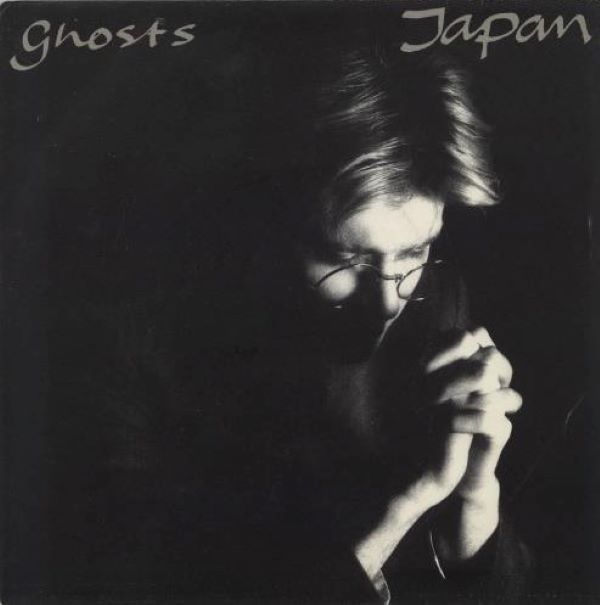
Ghosts
Still Life in Mobile Homes
Visions of China
Sons of Pioneers

What an excellent entry~ whole lotta thanks from the core of my heart
LikeLike
Life Without Buildings – an interesting (and deeply historical) idea, has to be a life with movement. The music definitely conveys this.
Even sitting in my chair listening to this track, I am compelled to move by it, the rhythms and percussion predominate. Imagine hearing this live at the start of a (Japan) concert, as if it wouldn’t be exciting enough already!
Mick loved movement. I’m not surprised Life Without Buildings was a personal favourite (1984 quote refers). His whole style was ‘virtuoso – but unshackled’ – hand cuffed by his homage to technique (his was great) but free on his feet!
David, Steve, Mick and Richard were young and brilliant (and John Punter more experienced – in production), healthy in mind and (the) body (creative).
What Mick said about solo’s – I know what he meant but two instances (one involving him) came into my mind. The (second) was Mick Ronson’s guitar solo on Ian Hunter’s ‘Once Bitten Twice Shy’ (1975) – that I really feel – every time I listen to it and the (first) was Mick (Karn) playing to Angie Bowie’s poetry (I’ve not checked the year – I think it was on The Old Grey Whistle Test, BBC) – for me that really worked. Everything referred to here (for me) contains a little (sublimated) libido and much pleasure. Thanks to the VB.
LikeLiked by 1 person