
Dead Bees on a Cake opens with the album’s longest track, ‘I Surrender’, a song David Sylvian said ‘encapsulates the theme of the album’, being – as he described it – ‘love, devotion and divine intoxication.’ Embraced by a golden glow of inner-longings fulfilled, we are transported to a place where finally ‘the stars are all aligned’ and bookish enquiry is cast away in favour of first-hand experience: ‘“Come find the meaning of the word inside of me.”.’
It’s quite a contrast then to be jolted from this celebration of love – heightened through ecstatic flugelhorn from Kenny Wheeler and Krishna-evoking flute from Lawrence Feldman – into the pair of tracks that follow. First comes ‘Dobro #1’ where Sylvian’s vocal is backed by the metallic resonance of Bill Frisell’s improvisation. He sings as one who ‘stole a life…/And it rained on my house/All summer’. Then comes ‘Midnight Sun’, drawn from a musical provenance unlike anything in Sylvian’s oeuvre to date, again mourning the absence of a vital life force and expressing the existential anxiety that ensues. Malevolent forces are at play that are the antithesis of those surrendered to in the opening number.
‘I didn’t want you to know what kind of album you were listening to until you were near the end of it,’ said Sylvian when his first solo album for a dozen years was released. ‘So, I programmed it in such a way that you really aren’t sure stylistically what you are hearing until you are towards the end and then in that way it remains a series of surprises initially…I liked that approach…I think it pre-empts people making assumptions as to what kind of album it is too quickly…
‘I actually don’t really look too much at the difference between one track and others stylistically, actually the content is more important to me, and I am the one consistent element that runs throughout all of the music, so I don’t feel there’s any conflict, you know…’
The blues arrangement for ‘Midnight Sun’ was a real surprise and led some to question whether Sylvian’s early ’90s emigration to the United States was responsible for these previously undetected influences now finding expression in his work?
‘I wasn’t drawn to America because of its culture,’ he explained. ‘I was drawn to America because of my wife, and because it was time to leave this isle, it was the logical step to take. It took me about a year to give in to liking America, to surrender to that to some degree. But having done so, I’ve really enjoyed my time there…
‘The way that it’s influenced my work? I can’t be sure. I know that Ingrid’s taste in music has had some effect on me. Her interest in my work was primarily the songs that I’d written in the past, more so than the instrumental work, so that refocused me on writing songs again. [Dead Bees on a Cake] is not adventurous in that respect, and I daresay I won’t return to this aspect of my writing in the near future, or maybe not again. I enjoy doing it, and it’s easy for me to return to that ground and write the material…
‘The kind of “R&B” aspect of the work that seeps through, I think that comes from Ingrid’s influence, in part, and other aspects are brought in by other musicians. ‘Midnight Sun’ is based around a John Lee Hooker loop. Originally it was very tongue in cheek and a piece of fun – I had no intention of recording it. I guess I’m still soaking up a lot of what’s going on around me.’
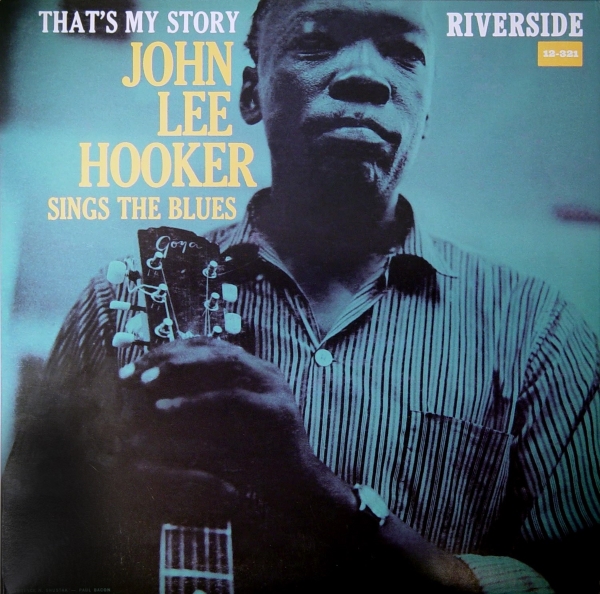
That John Lee Hooker track was ‘I’m Wanderin” from his 1960 LP That’s My Story: John Lee Hooker Sings the Blues. Louis Hayes’ drums and Sam Jones’ bass are instantly recognisable as the foundation from which ‘Midnight Sun’ was constructed.
‘Before I start writing material, I tend to spend a period of time either creating sounds on synthesisers, creating a library of sounds, [or] creating a library of samples,’ said Sylvian. ‘And this was the case in this instance. I’d taken a sample from a John Lee Hooker track and I started working with it…Initially, it was for the fun of it, because it was a genre of music that I’d never touched upon, an area of music that I didn’t think it would be appropriate for me to delve into.
‘But as I played with the idea further and further – and came up with this something of a hybrid – it appealed to me more and more. Through working with the blues as a writer, it just opened up that world to me to a greater extent — as a listener. But it was the notion of a hybrid that interested me – bringing in – I mean, first of all my voice – within the context of this blues track was interesting but then bringing in other elements. Such as Ribot, such as the kind of Gil Evans style brass arrangement and so on and so forth. So, I was trying to bring something to it, something to the blues that I’d never heard before. And, then that pushed me on and enabled me to take it on a far more serious level.’
For the album credits, Sylvian goes so far as to acknowledge that the composition ‘contains elements from ‘Drifting Blues’ written by Johnny Moore, Charles Brown and Eddie Williams,’ sharing authorship with the original writers. The source track was a blues standard that had been recorded by Johnny Moore’s Three Blazers in 1945, featuring lead vocals and piano from Charles Brown. It’s quite possible that Sylvian was familiar with John Lee Hooker’s recording of the track for Don’t Turn Me from Your Door – John Lee Hooker Sings His Blues (1963). Certainly both ‘I’m Wanderin” and ‘Drifting Blues’ appeared on a collection of John Lee Hooker’s work – The Original Mr. Lucky – in 1992. Listening to the two songs side by side, it’s evident that they share a common ancestry with their tales of wandering/drifting ‘like a ship out on the sea/foam’ and not having anyone ‘to care for me’/‘to speak a word for me’. The insistent underlying back-and-forth of the blues chords is a platform for successive emotional proclamations in Lee Hooker’s vocal, putting me in mind of Sylvian’s track.
‘A sample becomes a collaborative partner,’ said Sylvian, reflecting on the role of ‘I’m Wanderin” in the genesis of ‘Midnight Sun’. ‘It pushes you into a genre or area of music that you may not have otherwise been interested in. I saw a hybrid developing that made me want to pursue it further. That in turn allowed me to return to the blues and other music for the first time in years, because I’d found a way in as a writer. I’m anything but a rootsy musician! So, it was a new door, but was it due to my environment? See, I’d had that record in my collection for years. Was I more susceptible to the suggestions made by the sample because I was living in the States? Who knows? …Perhaps it’s surfaced when I’ve well digested it.’
Maybe it wasn’t such a surprise that Sylvian was an admirer of John Lee Hooker. In successive interviews around the 1987 release of Secrets of the Beehive he shared that whilst he existed in the ‘pop’ world, there was little in the then current output that aroused his interest, outside the work of two particular artists. ‘I’d never run pop down,’ he said in a Melody Maker conversation with Chris Roberts, ‘I’d only say that I can’t find too much of value in it myself at the moment, but that’s not to say others don’t. The people that I do enjoy – Robert Wyatt, Tom Waits – write the kind of songs I can respond to…’
He later said that ‘Tom Waits drags the blues kicking and screaming into the 21st century and in doing so renews its currency and extends its vocabulary’ (2004). There was something in his theme of taking points of reference and creating hybrids that resonated. Sylvian again: ‘Pop embraces so many influences and possible offshoots: John Lee Hooker as absorbed into the body of Tom Waits, Ali Farka Touré into Paul Simon, which, in turn, feeds the hunger of younger generations digesting the influences further, such as Vampire Weekend does.’ (2010)
When Sylvian was name-checking Tom Waits in ’87, a new guitarist had joined the ranks of the Waits band for the album Rain Dogs, in what was to be the start of a long association. Marc Ribot was the musician in question, and it was Ribot whom Sylvian called upon to bring his emotive touch to Dead Bees on a Cake in one of the earliest sessions for the album at Right Track Studios in New York.
Musicians chosen to work on the arrangements for Sylvian’s compositions in the studio ‘bring their history with them, and it becomes an integral part of the work in some way,’ he observed.
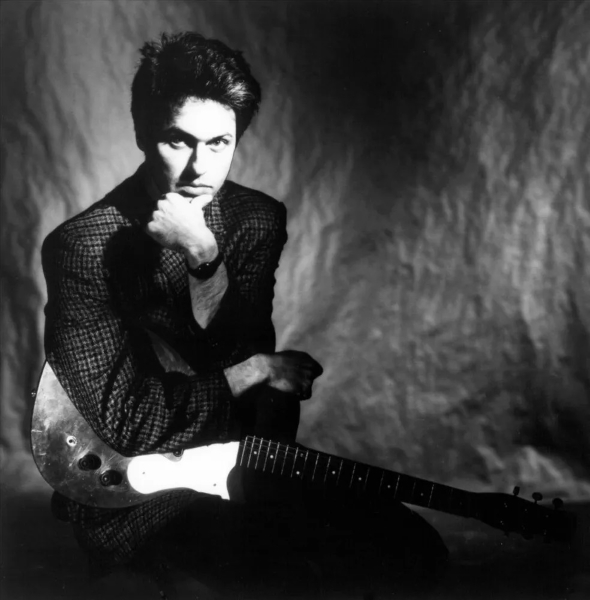
Speaking specifically about the qualities he seeks out in invited guitarists, Sylvian said: ‘I’m interested in players who take the instrument that extra mile to develop a vocabulary that’s entirely their own. I tend to listen to a lot of guitarists, and they’re often in my frame of reference. Whom I collaborate with depends on the nature of the composition, and, typically, the work cries out for a particular voice. For example, ‘Midnight Sun’ on Dead Bees on a Cake obviously needed Marc Ribot.’ (2005)
Throughout his solo recordings, Sylvian was desperate to find contributors who could make an ’emotional commitment’ to the work, ‘so, this method of making connections between particular compositions and bodies of work started to come about quite naturally. And, ultimately, I’ve ended up with more committed performances as a result – these are very unique players…
‘Working with Ribot for the first time was a wonderful example. We only worked for one afternoon together, but in that afternoon he gave me an enormous amount of work to deal with and not only is he a wonderful player, but he is a remarkable listener. His response to the work was entirely apt. In fact, he ended up playing on a lot more material than I originally had him marked for. So, that was – that kind of experience was/is rare, but makes the whole process worthwhile, you know – that moment of collaboration – of meeting on common ground, finding common vocabulary is really remarkable.’
Ribot’s guitar suits the sampled introduction so perfectly it’s as if he was in the studio decades previously recording a take alongside the original participants. His reverb-laden laments for the loss of the guiding moon embody the wails of the grieving.
‘They’ve stolen the moon
The magic is gone
And there in its place
A black midnight sun
The darkness is frightening
And love is denied
They’ve stolen the moon
God only knows why’
Setting aside the ‘collaborative partner’ of the John Lee Hooker sample, there is only one other musician involved in the track besides Sylvian and Ribot – Ryuichi Sakamoto who crafted the arrangement for brass instruments. ‘I can’t write music and he’s a very sympathetic orchestrator,’ enthused Sylvian, ‘he sticks to the original idea, the original plan, and so, you know, I love working with him for that reason alone. That’s reason enough, you know…He contributed the brass arrangement on ‘Midnight Sun’, a blues orientated track, a kind of Gil Evans arrangement which was really beautiful.’
Sylvian’s reference point was Miles Davis’ orchestral arranger for the trilogy of albums Miles Ahead, Porgy and Bess and Sketches of Spain. Gil Evans’ skill was to compose accompaniment that allowed room for Davis’ soloing but lent far more than mere ornamentation. Evans liked to employ an unusual array of wind instruments, at times combining multiple trumpets with the deep resonance of the tuba and French horn, or juxtaposing trombones with flutes. ‘I used to write and send Gil my scores for evaluation,’ said Davis. ‘Gil used to say they were good but cluttered up with too many notes. I used to think you had to use lots of notes and stuff to be writing. Now I’ve learnt enough about writing not to write. I just let Gil write. I give him an outline of what I want and he finishes it. I can even call him up on the phone and tell him what I got in mind, and when I see the score it is exactly what I wanted. Nobody but Gil could think for me that way.’ There’s a parallel in the way Davis spoke about Evans with the trusted relationship between Sylvian and Sakamoto. ‘Gil has a way of voicing chords and using notes like nobody else.’
Sakamoto’s arrangement provides an ominous setting for Ribot’s expressive outbursts. It’s an essential ingredient in the ‘hybrid’ that created such fascination for Sylvian.
‘The stars have lost their daughter
The devil’s thieves have won
And there in her place
A black midnight sun’
The influence of the music of America can certainly be traced in ‘Midnight Sun’, even if this may have resurfaced through his new surroundings rather than being initiated by them. One wonders too whether Sylvian’s new physical environment prompted his choice of imagery. He commented at the time that ‘Minneapolis has a beautiful light, the skies even in the dead of winter when it’s, you know, 50 below, the skies are crystal clear blue and it’s just a beautiful light there. Most of the year you have clear skies, some beautiful storms in the spring, and you’re close to nature even though you’re in a city. It’s not a big city…’
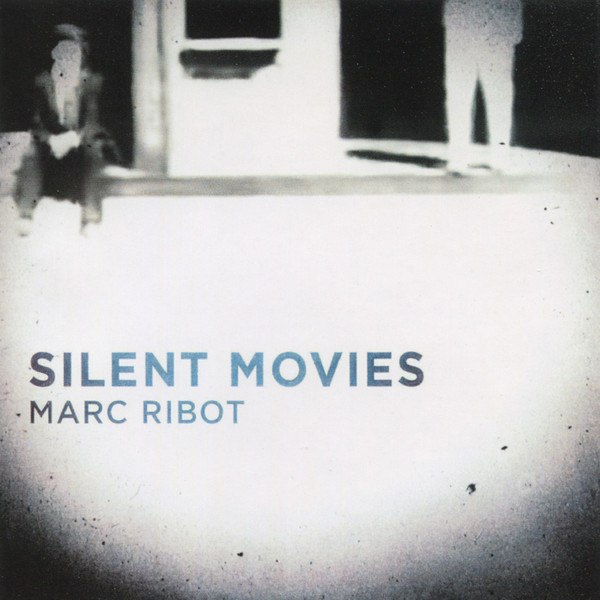
In 2010 Marc Ribot released a collection of solo guitar pieces which he described as ‘an album of film music: some were pieces originally composed for movie scores, others for films I turned down but found myself writing for anyway, still others for projects that never existed outside of my head.’ Amongst the track-listing of Silent Movies is ‘Fat Man Blues’. Just the man, his guitar, and a slice of the blues in the spirit of what Sylvian experienced that afternoon in New York when Ribot infused ‘Midnight Sun’ with his creative energy.
‘Midnight Sun’
Marc Ribot – guitar; Ryuichi Sakamoto – brass arrangements; David Sylvian – acoustic guitar, keyboards and samples
Music by David Sylvian/Johnny Moore/Charles Brown/Eddie Williams. Lyrics by David Sylvian.
Contains elements from ‘Drifting Blues’ written by Johnny Moore, Charles Brown and Eddie Williams and published by EMI Unart Catalog Inc. Used by permission. All rights reserved.
Contains samples from ‘I’m Wanderin” performed by John Lee Hooker, licensed courtesy of Fantasy Inc.
Produced by David Sylvian. From Dead Bees on a Cake, Virgin, 1999.
Lyrics © copyright samadhisound publishing
‘Midnight Sun’ – official YouTube link. It is highly recommended to listen to this music via physical media or lossless digital file. If you are able to, please support the artists by purchasing rather than streaming music.
All quotes by David Sylvian are from interviews conducted in 1999 unless otherwise indicated. Full sources and acknowledgements for this article can be found here.
The featured image is the cover of the standard vinyl re-release of Dead Bees on a Cake in 2018. The vinyl releases that year included additional tracks in the running order, with ‘The Scent of Magnolia’ included after ‘I Surrender’ and before ‘Dobro #1’ and ‘Midnight Sun’.
Download links: ‘Midnight Sun’ (Apple), ‘I’m Wanderin” (Apple), ‘Fat Man Blues’ (bandcamp)
Physical media links: Dead Bees on a Cake (Amazon); That’s My Story: John Lee Hooker Sings the Blues (Amazon); Silent Movies (bandcamp)
Interviewer: There’s a bluesy feel to ‘Midnight Sun’. It’s a very American-sounding track. In fact, it reminds me of Tom Waits…
‘It’s based on a John Lee Hooker drum loop which might account for your feelings, and also Marc Ribot plays guitar on it – Mark was a very important part of Waits’ band at one point. We should mention Ryuichi’s arrangement because he did like this Gil Evans arrangement, brass arrangement on it which is really beautiful – which lends it that scope that you are speaking of.’ David Sylvian, 1999

Wonderful article. I love understanding the creative process behind these great songs on Vista.
LikeLiked by 2 people
I agree with Michael, another wonderful piece. There is a transparency to the writing that makes the Vista author less visible and the subject almost the scribe. Real or imagined, this intimacy and insight to the creative process is very affecting. And Sakamoto’s brass arrangement is beyond marvellous.
LikeLiked by 2 people
Ultimately, history, in the broadest sense, is all we have and on his subject, the VB is the master – on a par, for me, with the Bauhaus masters. Since April ’18, a fine body of biographical work as well as (fan) forum (which I only picked up on from 2020, I think).
Who’d have thought (or known) that Sylvian shared some of the same (blues) influences as the kings Jagger and Richards!? Unless someone corrects me, I believe that DS and KR even live in ‘nearby’ States (?)
I agree with Michael and sike42’s comments. Other than this I would reiterate my (2021) Thalheim view.
BW and thanks…
LikeLiked by 1 person
Many thanks for the generous comments here. These are truly appreciated and encourage me that there is some worth in continuing to pursue this project. I am all too aware that there will be shortcomings, but what is here is offered humbly and to the best of my ability. I hope the music is always centre-stage, that’s certainly my intention.
LikeLike
Oh please continue your articles! I don’t always comment but I am truly appreciative of the the time and effort you put into your writing.
There is nobody that is doing what you do for Mr Sylvian.
LikeLiked by 1 person