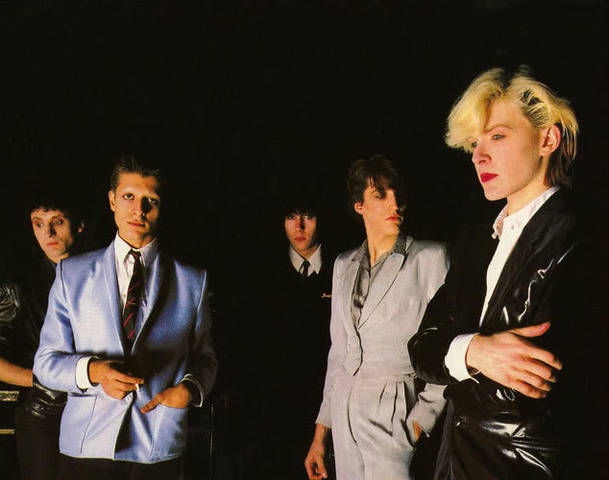
Richard Barbieri, Mick Karn and David Sylvian were all classmates at Catford Boys school in South London. Karn and Sylvian were friends, their surnames then Michaelides and Batt, the latter’s home being ‘close to the school,’ as Mick recalled, ‘so we would go there together for lunch, with his brother Steven Batt bringing a friend and joining us.
‘Music was our common interest, namely David Bowie. Steve was a big Alice Cooper fan and they were both very keen on T. Rex and their earlier incarnation Tyrannosaurus Rex… Every inch of their rooms were filled with posters, I’d never seen anything like it.’ A photograph of a teenage Sylvian shows him strumming a 12-string guitar with every inch of wall space taken up by pictures of his musical idols. Clearly visible is a shot of David Bowie performing ‘Cracked Actor’ on the Diamond Dogs tour of 1974, with dark glasses, cape and skull in hand, below there is one of Terry O’Neill’s images of the singer with an imposing dog – a publicity photograph for the album after which Bowie’s tour was named.

Another poster appears to be Bowie around the time of his iconic appearance on the BBC’s Top of the Pops programme performing ‘Star Man’. ‘When Bowie appeared on our TV screens in the early ‘70s, it was as if an alien had visited earth,’ Richard Barbieri would later reminisce in an interview with Anil Prasad for his Innerviews site. ‘It’s hard to convey the impact. You have to place it against the backdrop of a grim and grey UK at that time with plenty of union strikes and power cuts. All the musical heroes of the time seem to be beardy guys in t-shirts playing rock and prog, which I was well into, by the way. Bowie was up there for ridicule, but for us and thousands of others, he was pointing to a possible brighter future. That he had emerged from our own area in the South London suburbs was further encouragement. Along with Roxy Music, this represented the beginnings of glam and art rock.’ (2017)
Richard was more studious than David and Mick, the latter pair bunking off whenever possible, with Steve – in a younger year group – joining in when he could. ‘We spent one of those days off school roaming the streets of Lewisham borough with a picture of David Bowie,’ said Mick, ‘searching for a barber that would attempt to cut our hair in the same style, which we eventually found further afield in Downham.
‘Adorned with fresh Bowie cuts, Dave and Steve (who still had school regulation hair) somehow found out where David Bowie’s house was in Beckenham, and just hung around outside all day until it was dark. At some point, prompted by his older brother, Steve plucked up enough courage to knock on the door where a dark skinned young girl with a shock of white hair answered, looking like a negative of a photo, who politely told him Mr Bowie was busy.’
Japan would first perform publicly at Mick’s brother’s wedding in June ’74. Steve recently shared a picture of the hand-written set list online. Among the listed songs were ‘The Man Who Sold the World’ and ‘Queen Bitch’. Karn couldn’t remember playing either of these, but he was certain that the set kicked off with ‘The Jean Genie’. Bowie’s influence may even have played a part in the band’s hurried choice of a name. Karn: ‘We’d been watching an excellent weekly documentary on the people and customs of Japan and were endlessly talking about it, kimonos, tea ceremonies, raw fish, politeness, honour, sapuka [seppuku?], Samurai, every aspect a revelation. I don’t know which of us suggested the name, but one thing was for sure, apart from music, Japan was certainly uppermost in our thoughts. Steve remembers the name coming from a source other than the TV documentary, although that may have been used for the reasoning behind it. He recalls the band name being Dave’s idea, taken from a David Bowie song lyrics: ‘….like some cat from Japan,’ (‘Ziggy Stardust’). The one thing we did agree on, is that it would be a temporary name, we’d have to think of something better later.’
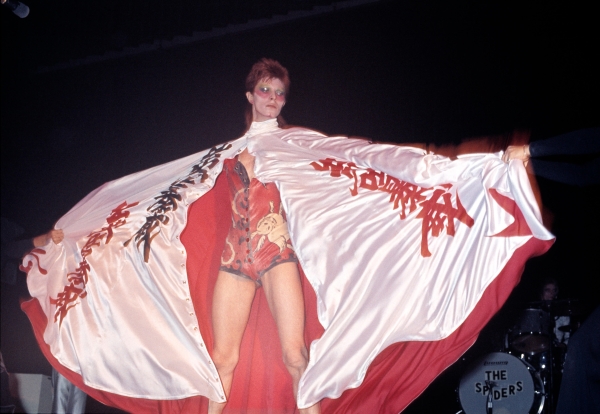
Bowie was associated with a fascinating ‘otherness’. Jansen: ‘It wasn’t just the hair styles or the shaved eyebrows, it was also his exploring of Japanese art and culture. This was the endorsement that Japan was a distant wonderland of inspiration’ (2023). Steve, Mick and David had all attended Bowie’s show at Earls Court in May ’73. It kicked off the latest leg of the Ziggy Stardust tour, albeit by now Aladdin Sane had been released, including ‘Drive-In Saturday’ with its lyric about ‘crashing out with Sylvian’ – a line that might have been the influence for David Sylvian’s adopted surname, although the man himself has denied it. Reports from these UK shows commented on Bowie’s bold make-up inspired by traditional Japanese theatre and new outfits designed by Kansai Yamamoto. ‘They were everything that I wanted them to be and more,’ said Bowie of the costumes. ‘Heavily inspired in equal parts by kabuki and samurai, they were outrageous, provocative, and unbelievably hot to wear under the stage lights.’ (2002)
If music could propel Bowie into a new and alluring world, why shouldn’t the fledgling Japan have similar dreams? After all, they shared the same geographical roots. ‘I think the only way I can view it is that it was so unbearably dull,’ said Sylvian of his childhood neighbourhood. ‘It was a place of such convention. There was no colour, and it was an incredibly insensitive world. You couldn’t be different. You weren’t allowed to show certain sides of yourself, you know. It was tough’ (2001). Maybe difficult experiences provide a necessary spark. Jansen: ‘My own theory (maybe someone else’s too) is that if your surroundings are unpleasant or lack inspiration, then you dig deeper creatively. It’s not often you’ll find a band originating in an idyllic location without any social struggles, producing “angst”…’ (2022)
The Earls Court show involved a bizarre interaction with Bowie’s then wife, Angie, who along with other members of the lead performer’s entourage were sat in the teenagers’ allotted seats. A few years later, Angie would become an even closer connection. Mick: ‘It was now early 1977, 24 February, during three days supporting Georgie Fame, who preferred not to acknowledge our existence, at Covent Garden’s Rock Garden, that David first met Charlie, a friend of Connie [Filippello]’s. Charlie was a stunningly beautiful Swiss model with chiselled features, looking quite unlike anyone we’d ever seen. They instantly like each other…Charlie, who had been drinking heavily and could hardly stand upright, insisted that her two flatmates had to meet Steve and myself, and so invited the three of us over to her Kensington apartment. We didn’t need much persuasion to not have to return to South London…
‘Without dropping names in a brash way, Charlie hinted at being part of an “in” crowd, a crowd she felt we were well suited to, and we stayed up talking till late, drinking and smoking joints, until one of the flatmates showed up. A dark skinned young girl with a shock of white hair, looking like a negative photo. It was the same girl that had answered the door to Steve three years ago in Beckenham. Daniella was her name, but before there was any time to get beyond introductions, the third flatmate appeared, Angie Bowie. With her larger than life personality, she effortlessly took over the proceedings, grabbed me by the arm and pulled me into the kitchen to help fry some halloumi cheese with onions for everyone. Angie was half Greek Cypriot and loved to cook as much as I did. I felt I was melting almost as quickly as the halloumi every time she gave me one of her wide smiles, talking all the while in Greek to each other as we prepared the early morning feast…
‘For the next seven months, life was centred around Kensington.’
It was during these months that David and Steve recall their sole meeting with David Bowie. ‘In 1977 we met Angie and her girlfriends after our Rock Garden gig,’ confirmed Steve. ‘We hung out for a few weeks… Bowie came to town, so we went with Angie to meet him at Maunkberry’s [a club in London’s Jermyn Street].’ (2023)
‘I bought him a beer. Marc Bolan showed up and the two of them chatted. Bowie recorded his appearance on Bolan’s TV show that week just prior to Bolan’s death in a car crash. I was 17.’ (2025)
This was early September 1977. David and Angie were not yet divorced. Japan were still to enter the studio to start work on their debut album. Bowie’s Low had come out that January and Heroes had been recorded in Hansa, Berlin between June and August but was yet to be released. He was making TV appearances to promote the title-track lead single. On 9 September, ‘Heroes’ and ‘Sleeping Next to You’ were recorded for Marc Bolan’s UK TV programme at the Granada studios in Manchester. Sylvian places the date of their meeting as ‘the night after the shooting of Marc’s TV show’ (2024). The subsequent day, Bowie recorded a performance of ‘Heroes’ and the duet ‘Peace on Earth’/’Little Drummer Boy’ at Elstree Studios in Borehamwood for later broadcast on Bing Crosby’s Merrie Olde Christmas. The ‘Heroes’ single would be released on 23 September and the Marc TV episode aired on the 28th. By then, Bolan – leader of the Batt brothers’ beloved T. Rex – was gone, killed in a car accident a week after the recording with Bowie. Bing Crosby also passed away before the Christmas special was shown on television.
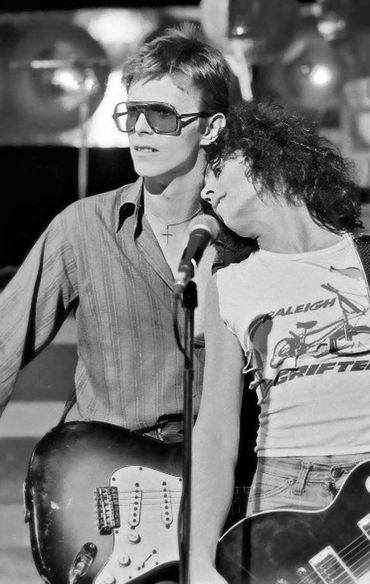
David Bowie was my parallel musical fascination alongside Japan in my early ’80s musical enlightenment. Scary Monsters (and Super Creeps) was his most recent album at the time but armed with a copy of David Bowie: An Illustrated Record by Roy Carr and Charles Shaar Murray, I devoured the back catalogue as quickly as my finances would allow, fascinated by the record-by-record shape and sound-shifting as I took in Ziggy…, Diamond Dogs and the subsequent ‘plastic soul’ of Young Americans.
‘I think that Bowie, at that age, is a sort of escapist figure,’ said David Sylvian of his own teenage fascination. ‘You could lose yourself in his world, in his theatrics, or whatever…Why do I find him appealing? I think it comes down to the fact that he’s exploring, not changing for the sake of change. I think it must have been Bowie that started that thing off, you know, the constant changing, the idea that every LP should be different. It should give something different in the way of value, of emotional experience.
‘And I think that honesty is something that can be conveyed in music, as well as emotion. An honesty in trying to uncover something about yourself. There is something that shines in a piece of work, and that comes from the honesty of the artist.’ (1984)
‘I don’t think we were massively influenced by Bowie in a specific musical sense, but more in a general way to be and exist,’ reflected Richard Barbieri. ‘It seemed very glamorous and important. Bowie was ever present. He was like a guiding light. A new Bowie album was an event because you really didn’t know what to expect. Each album was different, with a new persona and image. A new musical direction. If Bowie referenced a painter, a film or a poet, then you would check that out. He represented more art education than we ever received at school.’ (2017)
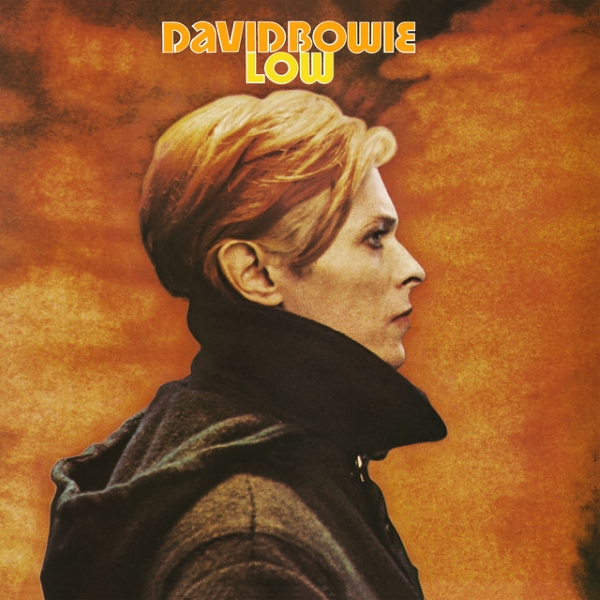
Low and Heroes saw Brian Eno move into Bowie’s orbit. The two had met after one of Bowie’s Wembley shows in 1976. Eno was a fascinating figure for the members of Japan, his part in the first two Roxy Music albums being particularly admired by Richard Barbieri (see ‘In Vogue’). David Sylvian even went so far as to declare after the demise of the band that ‘Japan’s biggest influence, if you have to take an individual figure, was Brian Eno.’ (1984)
Tony Visconti produced both the Low and Heroes albums. His use of the Eventide Harmoniser gave Low much of its distinctive sound, combining with Eno’s mastery of nascent synthesiser technology. Visconti’s involvement was prompted by a phone call. ‘David was calling from his home in Switzerland and Brian was on an extension. They told me they’d been writing songs for a couple of weeks and had ideas, one side being conventional songs and the other an instrumental side based on Brian’s ambient music compositions…David then warned me that this album was going to be purely experimental and it might never be released if it didn’t turn out well.’ (2017)
‘Warszawa’ is co-credited to Bowie and Eno, its low pulse and minimalist melody giving way to the singer’s impassioned, wordless vocal chant. Apparently, Bowie had glimpsed Warsaw on a train journey in the years preceding. ‘I attempted to capture and render musically the anguish which I had heard in these Polish folk songs,’ he said when the album was released. The following track, ‘Art Decade’, was said by Bowie to be about West Berlin, then a political enclave. ‘A city cut off from its world, art and culture, dying with no hope of retribution,’ as he described it.
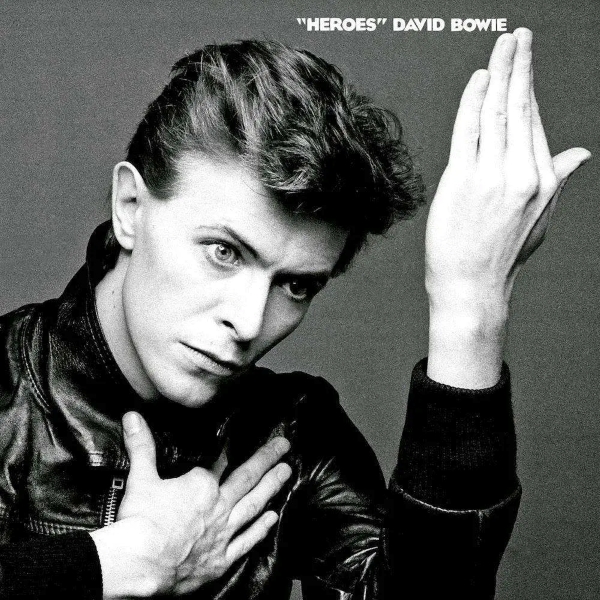

Heroes, of course, features the immaculate title track, blessed with soaring guitar by later Sylvian collaborator, Robert Fripp. ‘Fripp and Eno dazzled us as collaborators,’ said Visconti. Eno’s mastery of the EMS briefcase synthi was particularly impressive, sounds controlled by knobs and joysticks rather than a keyboard. ‘Every sound needed to be built from scratch and Brian Eno had already invested years in this instrument making it bend to his will.’ (2017)
There were instrumentals on this album too. ‘Sense of Doubt’ and ‘Moss Garden’ owing much to Eno’s “Oblique Strategies” cards. He and Bowie would each draw a card on which was described a creative approach, and use that prompt to guide their contributions, each one undisclosed to the other. ‘Moss Garden’ again has a strong sense of place, being a return to the influence of Japan – Bowie’s evocation of a Zen Buddhist temple in Kyoto. The koto playing on the track is by Bowie himself.
In the final stages of recording Gentlemen Take Polaroids in 1980, ‘John Punter had to work in Switzerland,’ Steve Jansen recalled, ‘so we made use of the time recording two instrumentals on The Barge moored in London’s Little Venice – every so often feeling that subtle movement …unsettling’. The two tracks in question were the Rob Dean penned ‘Width of a Room’ and Sylvian’s composition ‘Burning Bridges’. The latter ‘began as an instrumental but a few weeks later David had a vocal for it so…the vocal was added along with a few more keyboard overdubs…’ (2021)
As early purchasers of the album will know, ‘Burning Bridges’ was a late addition to the running order. It took the place of the ballad ‘Some Kind of Fool’ which would not see release until David Sylvian’s Everything and Nothing compilation – with a few alterations and overdubs – two decades later than had been originally planned. The change in track listing was communicated through an erratum sticker on the Gentlemen Take Polaroids sleeve which had already gone to print.

There are references to Bowie’s Low in the album’s lyrics, with ‘My New Career’ surely a nod to ‘A New Career in a New Town’, and ‘Speed of Life’ woven into ‘Methods of Dance’:
‘I could be sure if I were to live
At your speed of life’
It’s impossible to listen to ‘Burning Bridges’ without hearing the influence of the Low and Heroes instrumentals. The ‘helicopter’ sound is reminiscent of the aeroplanes that apparently tear through the air of ‘Moss Garden’. Richard, David and Steve are all credited with synthesiser, experimenting with the latest technology available to them to unveil new sounds just as Eno had done in the sessions with Bowie and Visconti. Mick plays saxophone, another Bowie hallmark as heard on Heroes for ‘Sons of the Silent Age’ and ‘Neuköln’.
‘It’s all behind me now
The work is done
We pull away from rivers
The light of a distant fire burns again’
Sylvian’s lyric was inspired by reading his brother’s copy of John Hersey’s Hiroshima, a horrifying account of the aftermath of the nuclear bomb explosion. As Bowie anchored his instrumentals in thoughts about specific locations and circumstances in Europe and Japan, so Sylvian evokes the rivers of Hiroshima and the firestorm that destroyed the city.

‘We didn’t hide our influences,’ Sylvian confessed. ‘Maybe we didn’t digest them enough before they surfaced in our own work. But we were all self-taught though, that’s also the strength of the band, a greater desire to experiment to overcome one’s personal limitations as musicians.’ (1999)
‘I see nothing wrong in admitting to influences,’ said Karn. ‘Being honest about where ideas had been borrowed from takes nothing away from the bass player and sculptor I later became, I was looking up to no-one for those. Yes, I played saxophone because of Bowie and Roxy Music’s Andy Mackay, they opened my ears to the sound and, as I already played bassoon, knew I could attempt another reed instrument without too much hardship. It was only through their influence that I would one day discover the clarinet, a much more comfortable instrument for me and played without any influences.’
Of course, Bowie appropriated many ideas himself. Barbieri: ‘He stole from everywhere like most artists, but in small chunks, cleverly disguised and he mixed all these elements together.’
1983’s Let’s Dance saw Bowie move into the commercialised arena of the mainstream just as Japan had split and were figuring their way as individual artists. Paths may have diverged, but appreciation for the impact of an admired artist never wavered. ‘Bowie’s recording output across the ‘70s without a weak album, while launching and resurrecting careers for other artists, writing, producing, painting, and acting in film and theatre are such significant achievements,’ said Richard Barbieri. ‘The man is unsurpassed in popular music and at 69 to end his days making an album that stands strongly alongside the best of his ‘70s output is simply incredible.
‘I think we pursued the art pop route just as Bowie and Roxy were becoming less inventive or more mainstream at the start of the ‘80s. Even though we were the second most commercially successful singles act of 1982, we were still considered slightly underground, which suited us.’ (2017)
When Bowie passed in 2016 the loss was felt keenly by fans, myself included. He had been present in my life through his music for the entirety of my adult years, and that presence had drawn closer with the release of Blackstar just days earlier, yet now he was gone.
David Sylvian wrote the following tribute online: ‘So much will be written over the coming months, decades, there’s little, if anything, to add. I’ll keep it brief. I was speaking with a friend recently about how, particularly those who grew out of the US punk era, created a classic album with their debut and how difficult that must be to live with but, to have created one classic album in a lifetime is more than enough. Bowie did much more than that. He changed the entire landscape of popular music and beyond. Who else managed to do that since the Beatles? Whom else since? Now that he was beyond any level of criticism it was as if he were about to throw caution to the wind and reach new levels of experimentation in his work… This is a significant loss. But Bowie’s status as legend is signed and sealed. At home with the stars, literally, metaphorically. My first thoughts were of David Jones the father and the loss this must be to his young family. Heart goes out to them. peace.’
‘Burning Bridges’
Richard Barbieri – Roland System 700, Oberheim mini sequencer; Steve Jansen – Prophet 5; Mick Karn – saxophone; David Sylvian – vocals, Prophet 5.
Music and lyrics by David Sylvian
Produced by John Punter. From Gentlemen Take Polaroids, Virgin, 1980.
lyrics © copyright samadhisound publishing
‘Burning Bridges’ – official YouTube link. It is highly recommended to listen to this music via physical media or lossless digital file. If you are able to, please support the artists by purchasing rather than streaming music.
All Mick Karn quotes are from his book Japan & Self Existence, 2009. Full sources and acknowledgements for this article can be found here.
The featured image for this article is a photograph of Japan by Nicola Tyson from the rear cover of Gentlemen Take Polaroids.
Download links: ‘Burning Bridges’ (Apple); ‘Warszawa’ (Apple); ‘Moss Garden’ (Apple); ‘Neuköln’ (Apple)
Physical media links: Gentlemen Take Polaroids (Amazon); Low (Amazon); Heroes (Amazon)
Steve Jansen’s twitter listening party for Gentlemen Take Polaroids can be replayed here.
‘He was one of the key influences in the early days…As a group, we wore our influences on our sleeve, which I think was endearing in some ways, but in other ways it was detrimental to our own development. So it was necessary to push that behind us and move on.’ David Sylvian on David Bowie, 2003

More about Gentlemen Take Polaroids:

A healthy, happy and prosperous New Year!
This piece, for me, is so rich, please don’t be surprised if I return to it!
The evolution of this band, the very best that I never saw or heard live, yet I know, is right here!
How could it not happen after that!? The personal experiences. Including the meetings…
The reaction to the ‘narrow-ness’ of early 1970’s British life, where T Rex, David Bowie & The Spiders From Mars, Roxy Music, in that order of ‘happening’, all saw an opportunity!
For me, a late developer, but for 1975 attitude, I can relate completely to the order of this art, sound and excitement. Ian Hunter very recently cited excitement, as a part explanation of his own involvement in the field..
I have to get up now but before I do, I’ll just say that Japan continued that spirit, into the early 1980’s, for me, very successfully and uniquely.
This couldn’t be achieved without the quality of the original songs and the quality in the playing and yes, presentation.
Thanks DN. Wow…
LikeLiked by 1 person
Wonderful article. I had never realised there was a connection between the band and Bowie.
LikeLiked by 1 person
Another superb piece, David!
Bravo!
LikeLiked by 1 person
Thanks Chris. Much appreciated.
LikeLike
I love the idea of wearing our influences on our sleeve – does that mean being unapologetic about our inspirations, even if they’re not entirely original? 🤔
LikeLike